

“Me, measuring brand awareness?”, you might be thinking, “don’t I need a big research agency to do that?”
Good news: you really don’t. The truth is, doing brand awareness tracking in-house has never been easier, and you too can learn how to measure brand awareness.
Here we’ll turn you into a champion of brand awareness analysis, with ten tactics to use and eleven metrics to focus on. It doesn’t get more practical than this.
Read on to learn how to measure and build brand awareness effectively.
First of all, let’s make sure we’re all on the same page: what do we mean by ‘brand awareness’?
Brand awareness is a measure of how familiar people are with your brand – whether they recognize your name, recall your products, or understand what sets you apart. It’s the foundation of brand growth, helping you stay top-of-mind with potential customers and stand out in a crowded market.”
TL;DR
- Brand awareness shows how familiar your target audience is with your brand and what you stand for
- Measuring brand awareness helps you prove marketing impact and guide better decisions
- Use a mix of survey data and behavioural metrics for a complete view
- Track metrics like recall, search volume, share of voice and engagement
- Combine multiple methods to understand both awareness and perception
Why tracking your brand awareness KPIs is important
Whether you’re launching a new business or trying to revive an old one, brand awareness metrics are vital in measuring the success of your marketing efforts.
These metrics track the performance of your brand across various platforms, from social media to search engines.
When measured and tracked over a period of time, businesses can directly attribute the effectiveness of their marketing campaigns, sales or sign-ups. Perhaps you’re looking for Qualtrics competitors or Latana alternatives— we’ve created rundowns of the best tools to look into.
If you haven’t started measuring brand awareness yet, take this as a sign!
Why measuring brand awareness matters
Understanding and tracking brand awareness isn’t just about reporting vanity metrics to your execs – it’s about making smarter marketing decisions.
Here’s why is brand awareness important:
1. Prove the impact of your marketing
Track how awareness changes over time to link campaigns to real outcomes. This helps you double down on what drives recognition and cut what doesn’t.
2. Understand how consumers perceive your brand
Measure how your brand is remembered and described to ensure it aligns with your positioning. This helps you refine messaging and strengthen brand associations.
3. Benchmark against competitors
Compare awareness levels with competitors to understand your relative position. This highlights where you’re winning and where you need to improve.
4. Spot growth opportunities
Identify gaps in awareness across segments or markets. This helps uncover new audiences or areas where visibility needs to increase.
5. Build stronger customer relationships
Higher awareness often leads to trust and familiarity. Tracking it helps you understand how relationships evolve over time, which is crucial for understanding why is brand equity important.
How to measure brand awareness: 10 strategies and metrics to grow your brand
The tactics we’re about to show you range from simply keeping tabs on certain types of website traffic, all the way through to conducting regular brand tracking studies across the year.
Ideally, you should combine these tactics to get an accurate view of your brand awareness. Ultimately, all the data you need is already in your organization, you just need to know where to look.
Here are ten tried and tested ways that help you measure brand awareness based on the most important brand awareness metrics. Just remember that there’s no one-size-fits-all approach to brand awareness analysis, and you’ll have to combine them to give more context to the data:
- Run regular brand awareness surveys
- Check your social media followers
- Use Google Trends data
- Let brand tracking software do the heavy lifting
- Look into your brand name mentions
- Look for branded search volume in your Google Analytics
- Check your share of voice and share of impressions
- Analyze your performance with earned media
- Dive into your referral traffic stats
- Keep an eye on how your content is performing
One last thing before we start: it’s important to note that brand ‘awareness’ and brand ‘recognition’ are slightly different things. To learn more, check out our guides on how to measure brand recognition and brand perception or chat directly with our consumer research experts with a demo.
1. Run regular brand awareness surveys
Metric: Brand recall, recognition and awareness levels
Insight: Shows how well your brand is remembered and understood by your target audience
Surveys are one of the most reliable ways to measure brand awareness because they give you direct input from your target audience. Simply select your target group – aka the people who you most want to be aware of your brand – and ask structured questions that uncover both awareness and perception.
For measuring brand awareness specifically, online surveys to consumers (rather than just your existing customers) are your best bet, as they reflect true market-level awareness.
Running brand tracking and brand perception surveys over time will reveal fluctuations in familiarity, understanding and sentiment. This allows you to spot trends early and act before they become bigger issues.
It’s important to have a clear strategy when creating a brand awareness survey. Decide whether you’re measuring unprompted recall, prompted awareness or deeper brand understanding, and align your questions accordingly.
Attest’s data shows clear changes across consumer perception and awareness. We get rich, insightful data on a regular basis, which means we can get on with building the strategies and campaigns we know will work.
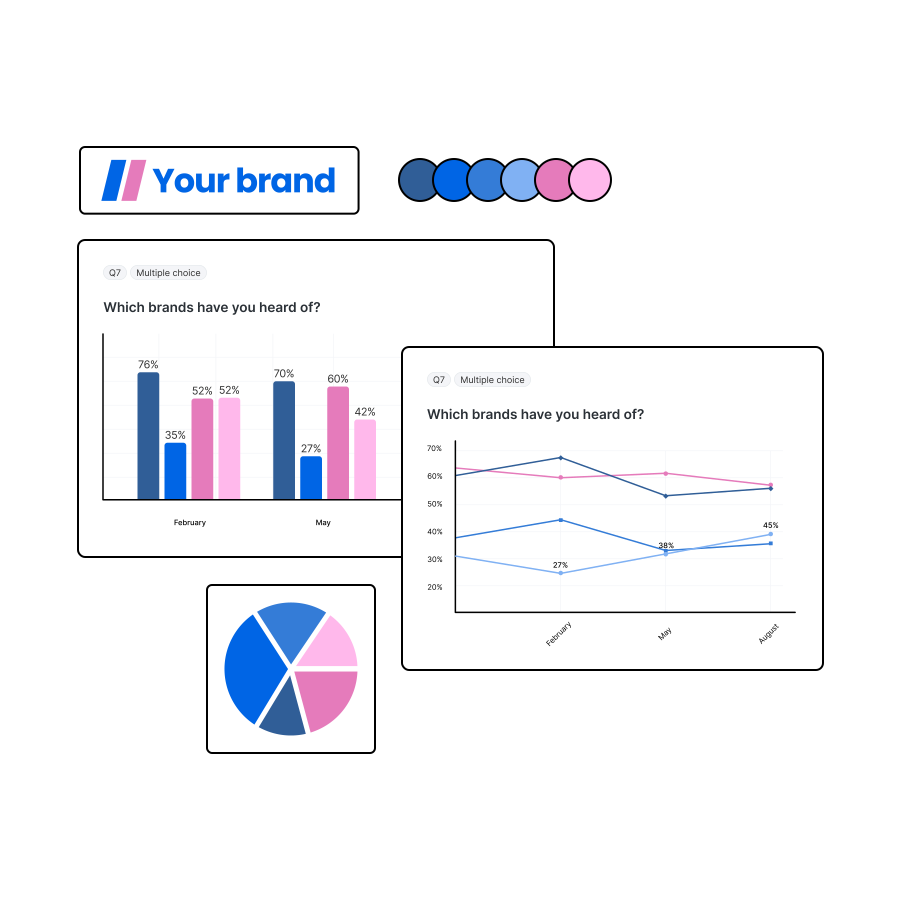
How to measure your brand awareness
Conduct unprompted brand recall surveys to determine the percentage of consumers who mention your brand when asked about your product category.
With a handful of the right questions, asked to the right target audience, you can measure your brand using key metrics such as:
- Unprompted brand awareness – when your audience names your brand without prompts
- Prompted brand awareness – when your audience recognizes your brand from a list
- Level of brand awareness – how accurately people associate your brand with the right brand attributes.
Running surveys regularly allows you to track change over time and link shifts in awareness to specific campaigns or activity. Using brand tracking or brand tracking software – alongside a brand awareness template – makes this process scalable and repeatable.
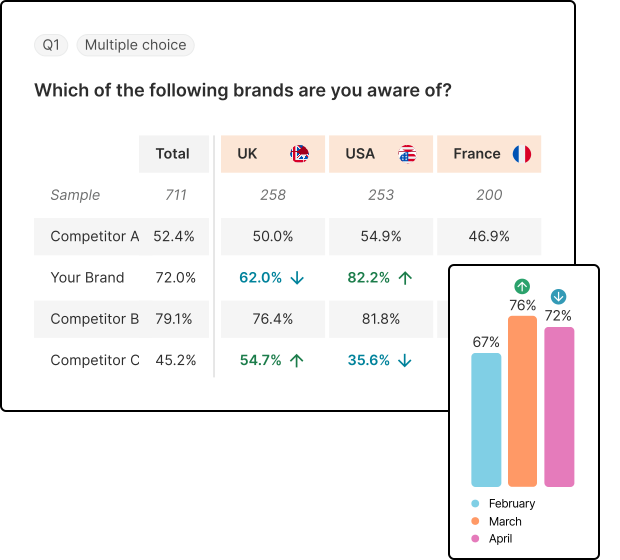
Find out if your brand work is working for you
Does your target audience understand your brand? Find out with brand tracking from Attest.
Measure your brand ROI2. Check your social media followers
Metric: Follower growth, reach and engagement
Insight: Indicates how many people are aware of your brand and how consistently they interact with it
Your social media following gives a directional view of how visible your brand is and how many people are choosing to stay connected with it. While it’s often labelled a vanity metric, it becomes more meaningful when paired with engagement and reach data.
If people are following you, engaging with your posts and seeing your content regularly, it suggests your brand is staying top-of-mind. In competitive markets, that consistency is key to maintaining and growing awareness.
Track post reach and engagement alongside follower growth to understand what’s driving visibility. If certain content formats or posting times increase reach, use that insight to refine your content strategy.
Tools like brand monitoring tools can also help you track mentions and engagement in real time, adding another layer of awareness tracking.
3. Use Google Trends data to measure brand awareness KPIs
Metric: Search interest over time and competitor comparison
Insight: Shows whether interest in your brand is increasing, decreasing or shifting relative to competitors
Google Trends provides a simple way to track how interest in your brand changes over time. By analysing search patterns, you can see whether awareness is growing, plateauing or declining.
You can also benchmark this data against competitors to understand your relative position in the market.
Context is key here. Always interpret Trends data alongside your marketing activity, product launches or campaigns to understand what’s driving changes.
For a more complete picture, combine this with competitive analysis tools to layer in additional market signals.
4. Let brand tracking software do the heavy lifting
Metric: Brand health tracking metrics such as awareness, consideration, sentiment and NPS
Insight: Provides a consistent, structured view of brand performance over time
Brand tracking software brings all your brand metrics into one place and allows you to measure them consistently. Instead of one-off snapshots, you get a continuous view of how awareness and perception evolve.
Brand awareness is just one of many brand health tracking metrics, but tracking it regularly helps you connect marketing activity to real outcomes.
With tools like Attest’s brand tracking software, you can run regular brand tracking surveys and access results quickly, without relying on external agencies.
Attest brand tracking software gives you full visibility of your data, helping you make confident, data-driven decisions.
If you’re bringing research in-house, it’s worth exploring how to approach brand tracking in-house effectively.
From the brand tracker we can understand the emotional drivers from users, to make both product and business decisions. We can see how our competitors are doing, we can see where the opportunities are for us to grow and disrupt the space even more.
5. Look into your brand name mentions
Metric: Volume and frequency of brand mentions
Insight: Indicates how often your brand is being discussed across channels and platforms
Tracking brand mentions helps you understand how visible your brand is in everyday conversations. Whether people are tweeting, blogging or commenting, these mentions reflect real-world awareness.
Using brand management tools, you can monitor mentions across social media, blogs and news sites. This not only shows how often your brand appears, but also gives you the opportunity to engage and shape perception.
6. Track your branded search volume
Metric: Branded search queries and branded traffic
Insight: Shows how many people actively remember your brand and seek it out directly
Branded search volume is a strong indicator of awareness because it reflects intent. When people search for your brand by name, it means you’ve already made it into their consideration set.
Look beyond total traffic and focus on the keywords driving visits. An increase in branded searches suggests growing awareness and recall.
Tools like Google Analytics and Search Console make it easy to track this data and monitor trends over time.
7. Check your share of voice and share of impressions
Metric: Share of voice and share of impressions
Insight: Shows how your visibility compares with competitors across your market
Measuring brand awareness in isolation can be misleading. You need to understand how you perform relative to competitors.
Share of voice captures how much of the conversation your brand owns, while share of impressions shows how visible you are across search and advertising channels.
Together, these metrics highlight whether you’re gaining or losing ground. You can support this with competitive market analysis and competitive analysis tools to identify opportunities.
8. Analyze your brand image awareness with earned media
Metric: Earned media mentions, backlinks and third-party visibility
Insight: Shows how external coverage contributes to awareness and brand perception
Earned media extends your reach beyond your own channels. Mentions in articles, blogs or third-party platforms increase exposure and reinforce credibility.
You can combine this with insights from brand image survey questions to understand how this visibility impacts perception.
While it’s not a standalone awareness metric, it becomes powerful when paired with others. It also helps you evaluate the effectiveness of your brand awareness campaigns.
If needed, a brand tracking company can help you interpret these signals, alongside examples from strong brand identity examples.
9. Dive into your referral traffic stats
Metric: Referral traffic volume and quality
Insight: Shows which external sources are helping drive awareness and visits
Referral traffic highlights how other websites and brands contribute to your visibility. When others link to you, they’re effectively introducing your brand to new audiences.
Use Google Analytics to track where this traffic comes from and how it behaves. High-quality referral traffic can signal strong partnerships or effective PR activity.
This plays an important role in growing your brand and should be analysed alongside other awareness metrics.
10. Keep an eye on how your brand’s content performs
Metric: Content engagement, views, likes and shares
Insight: Shows which content is driving awareness and how audiences respond
Content performance is a key indicator of awareness because it reflects both reach and engagement. When people view, like or share your content, they’re interacting with your brand.
Look for patterns in what performs well – whether that’s specific formats, topics or channels – and use that insight to refine your strategy.
Platform analytics from tools like Facebook, Instagram, YouTube and LinkedIn provide detailed data on how your content is performing and where awareness is growing.
Turn brand mentions into valuable consumer insights
All the brand awareness metrics discussed above have value if used right and can help you build brand awareness while measuring brand recognition.
The metrics you choose to measure will depend on your objectives—are you looking for deep insight into the connection your target demographic has with your brand or just a general understanding of trends?
With this in mind, you can start creating brand awareness campaigns that align with your marketing strategies and render real results, not just a vague concept and more web traffic: but getting in front of new audiences to raise brand awareness.
If you’re looking for more direct feedback, a brand awareness survey is a great tool to implement in your research. If you’re looking to track the overall impact of your marketing, using website traffic metrics or social listening tools can give you a good idea. Get in touch to send your brand tracking survey.
Looking for more on brand tracking? Head over to our Consumer Research Academy—it’s full of tips and guides from the experts in our Customer Research Team.
FAQs
Brand awareness is created by consistently exposing your brand to the right audience through channels like social media, search, PR and partnerships. The key is to deliver clear, memorable messaging that reinforces what your brand stands for and why it matters.
The purpose of brand awareness is to ensure your brand is recognised and remembered by your target audience. This builds trust, increases consideration and makes customers more likely to choose your brand when they’re ready to buy.
Brand awareness is measured using a mix of survey data and behavioural metrics. This includes recall and recognition from surveys, as well as indicators like branded search volume, social reach and share of voice across channels.
Common tools include brand tracking platforms, survey tools, Google Analytics, Google Trends and social listening software. These help you measure both what people say about your brand and how they behave across different channels.