
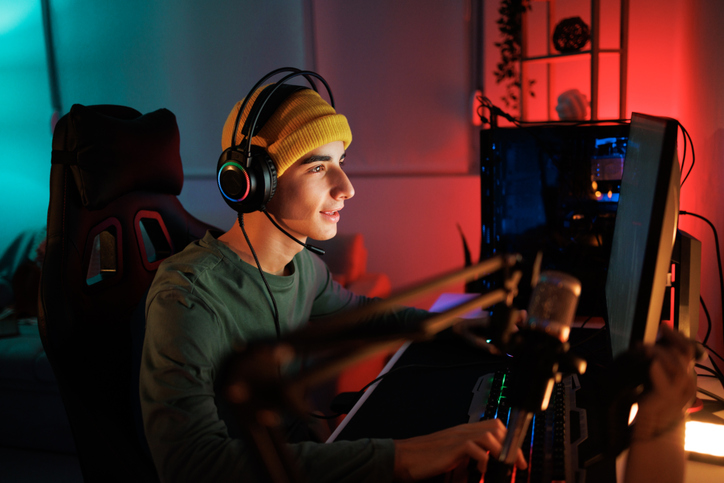
As the first cohort of true digital natives, Gen Alpha has different expectations for media; they want entertainment that is interactive, on-demand, and participatory. For broadcasters, streamers, publishers, and advertisers, this means getting to grips with fundamental changes in the media mix.
Where Gen Z dumped live TV in favour of streaming, Gen Alpha is shaking things up once again. Our Gen Alpha Reports, featuring data from 2,000 parents of 15–16-year-olds across the UK and US, reveal how gaming has become the leading form of entertainment for this age group.
Here, we set out what researchers need to know about this cohort’s distinct media habits.
UK results
Gaming is Gen Alpha’s “prime time”
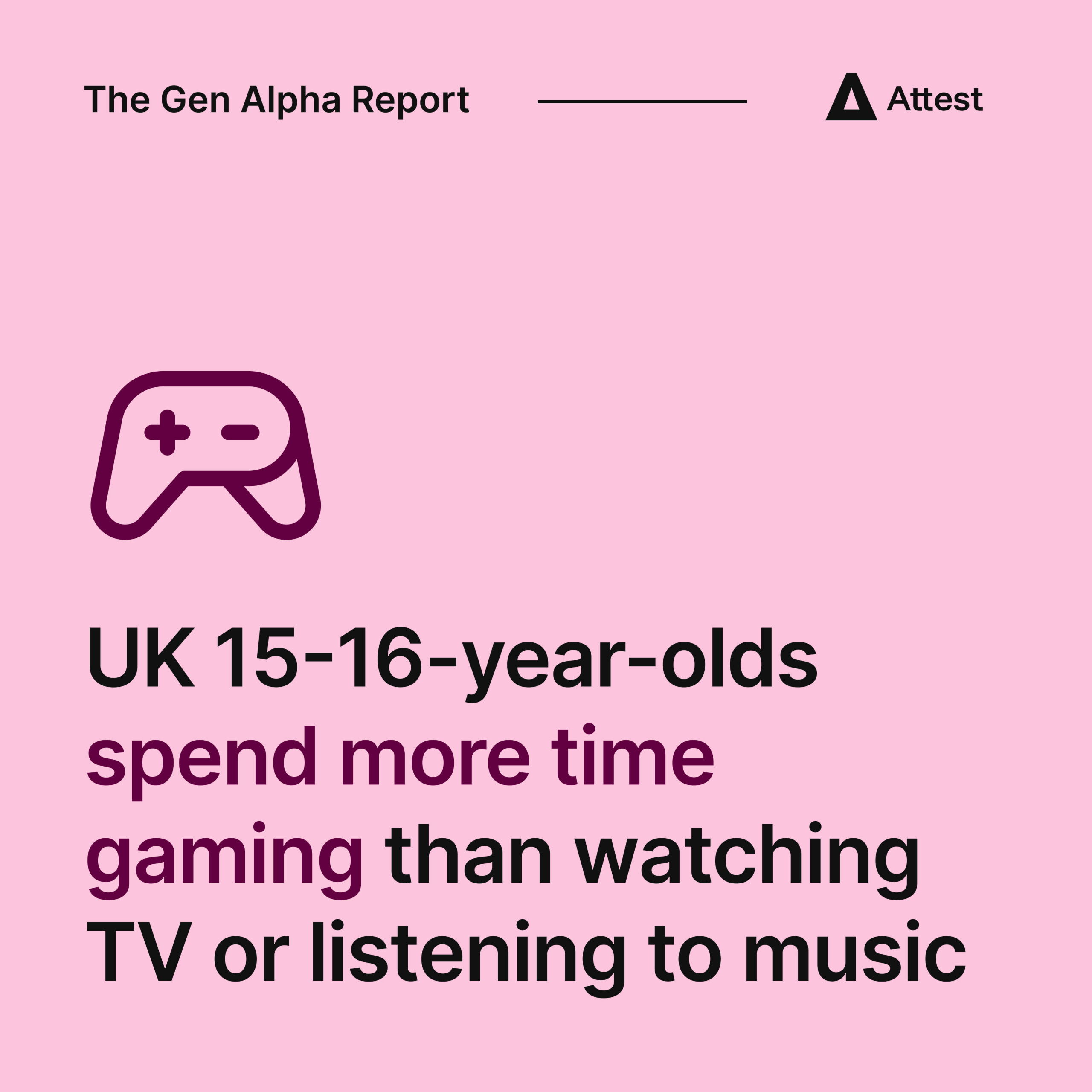
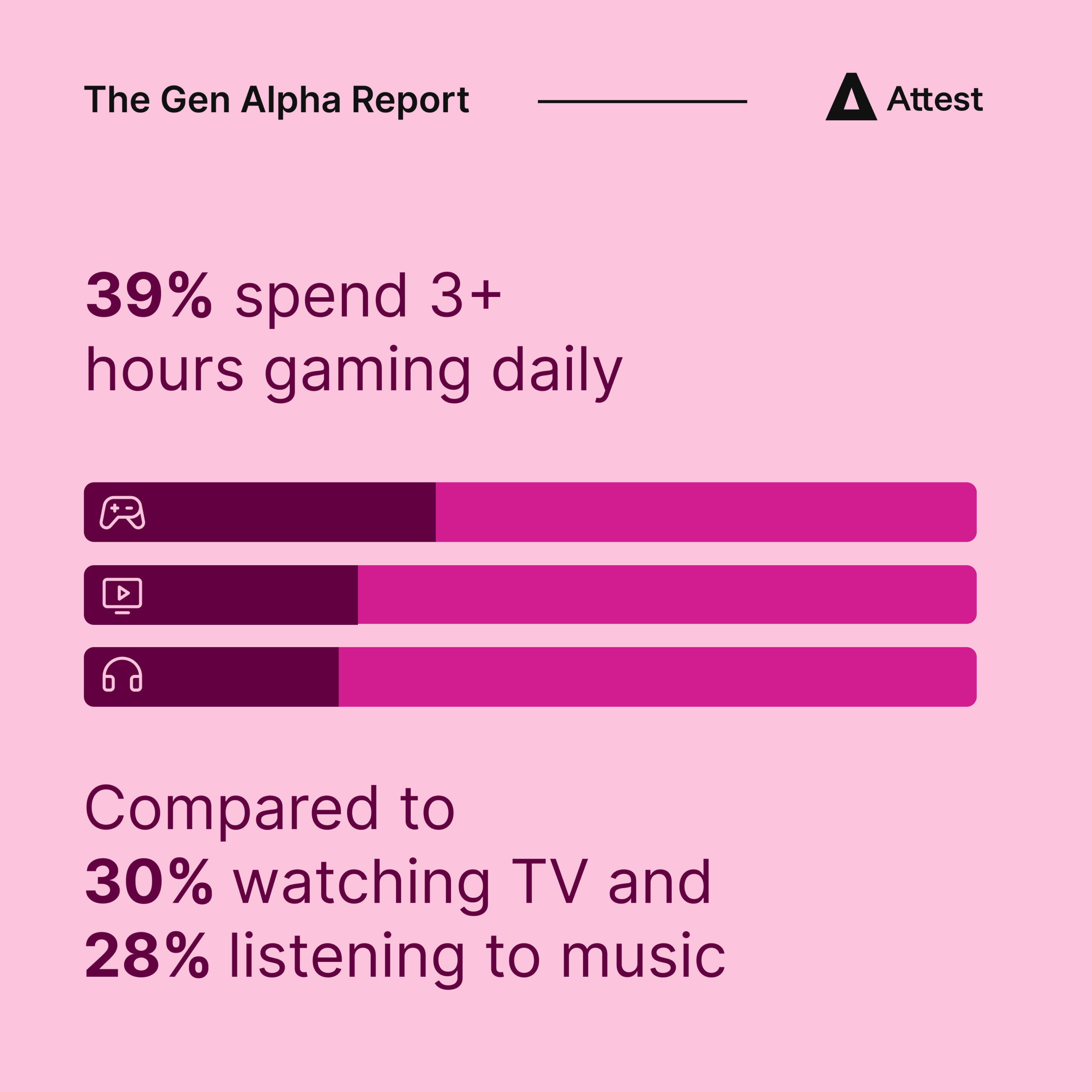
For Gen Alpha, gaming has overtaken television as their main form of media engagement. Our data shows that 39% of UK teens spend more than three hours a day gaming, compared with 29.5% who watch TV for the same duration, and 28% who listen to music or podcasts.
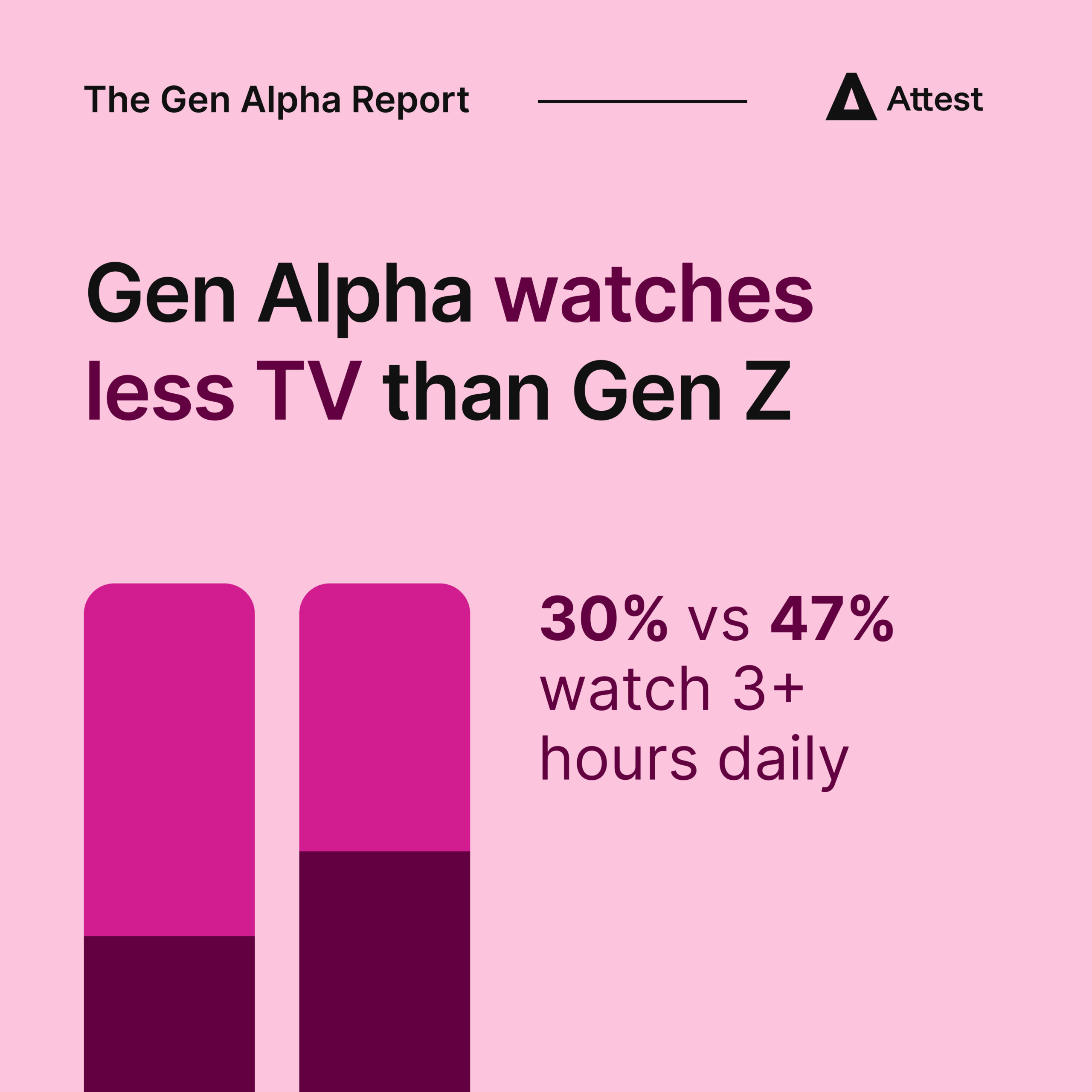
That’s a profound generational shift. For Gen Z, streaming was (and still is) king — a social experience built around binge-watching and fandom. Our UK Media Consumption Tracker shows 47% of Gen Z watch 3+ hours of TV daily. Gen Alpha, by contrast, sees gaming as a social lifeline: a space where they connect, compete, and express identity.
Overall, 93% of UK Gen Alpha teens spend time gaming on a typical day – and it’s no longer a heavily gendered activity. Whereas a decade ago, boys were 42% more likely than girls to play video games, our research uncovers that gaming is central to the lifestyles of both boys and girls.
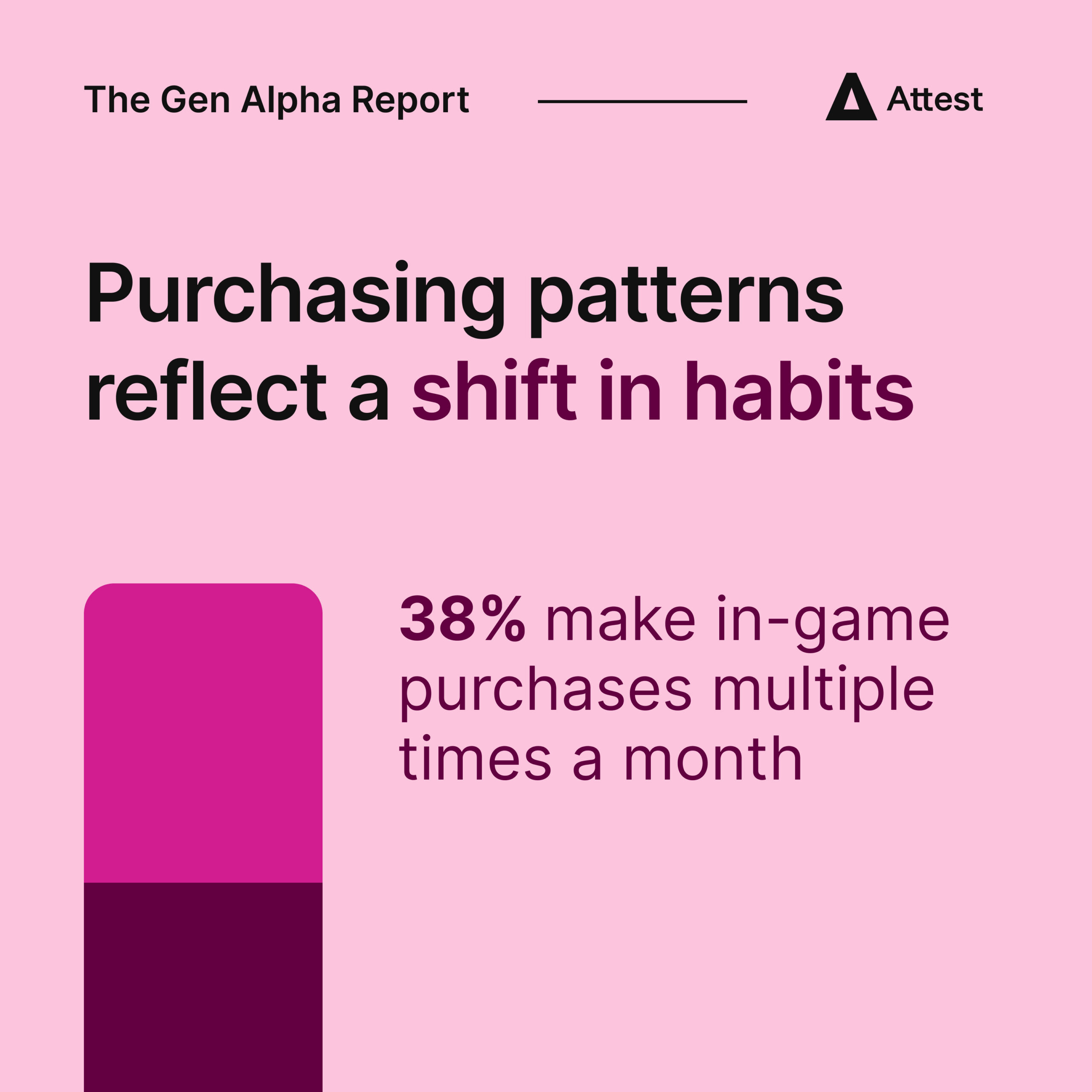
Further underlining this shift, we see that this age group spends a large part of its disposable income on digital purchases. Behind spending on fast food, most of Gen Alpha’s money goes on games, apps and in-game currency, with 38% shopping in this category multiple times per month.
Adapting content for the ‘digital architect’ mindset
While streaming TV still plays a significant role for Gen Alpha, it’s no longer the centrepiece of teen culture. Viewing times are shorter, with 41% of UK teens watching TV for 1–2 hours per day, and nearly 30% watching for less than this each day.
Why the change? Where older generations gathered around a TV show, Gen Alpha gathers around experiences – a shared world, a livestream, a co-op mission. Media for them is not something to watch, but something to do, and they’re less likely to want to spend time passively consuming content.
This desire for participation – and the expectation to be able to play a role in shaping content – is being fuelled by the rise of AI. Over a third of UK Gen Alpha teens are already experimenting with creating AI-generated images and videos, or even building their own websites and apps. Meanwhile, interacting with AI is becoming second nature, with 25% of Gen Alpha teens regularly chatting with bots.
Our research also finds that STEM careers are the top choice for Gen Alpha teens (with 13% specifically wanting to work in computer science). It’s a big shift from just five years ago, when most 15-year-olds had their sights set on a traditional job like teacher, police officer or lawyer, and it highlights the rise of the ‘digital architect’ mindset among this cohort.
Media multitaskers: five screens, one audience
Ownership of technology among 15-16-year-olds in the UK is near-universal. Ninety-three percent own a smartphone, 75% have a games console, 70% a PC or laptop, and 61% a smart TV. Half juggle five or more internet-enabled devices. These tools give them freedom to switch seamlessly between gaming, streaming, social apps and creation platforms – often within the same session.
They might stream a show while chatting with friends on Discord, check TikTok between game rounds, or watch gaming content on YouTube while playing. This blurring of categories challenges traditional audience measurement. For media researchers and planners, single-channel thinking no longer works. Understanding how and why Gen Alpha moves between formats is as important as tracking what they watch.
The intersection between social media and other forms of entertainment is especially important, since it remains the channel where Gen Alpha teens spend most of their time. More than 55% spend over three hours a day scrolling social media, while a further 31% spend between two and three hours.
US results
Gaming is Gen Alpha’s new streaming
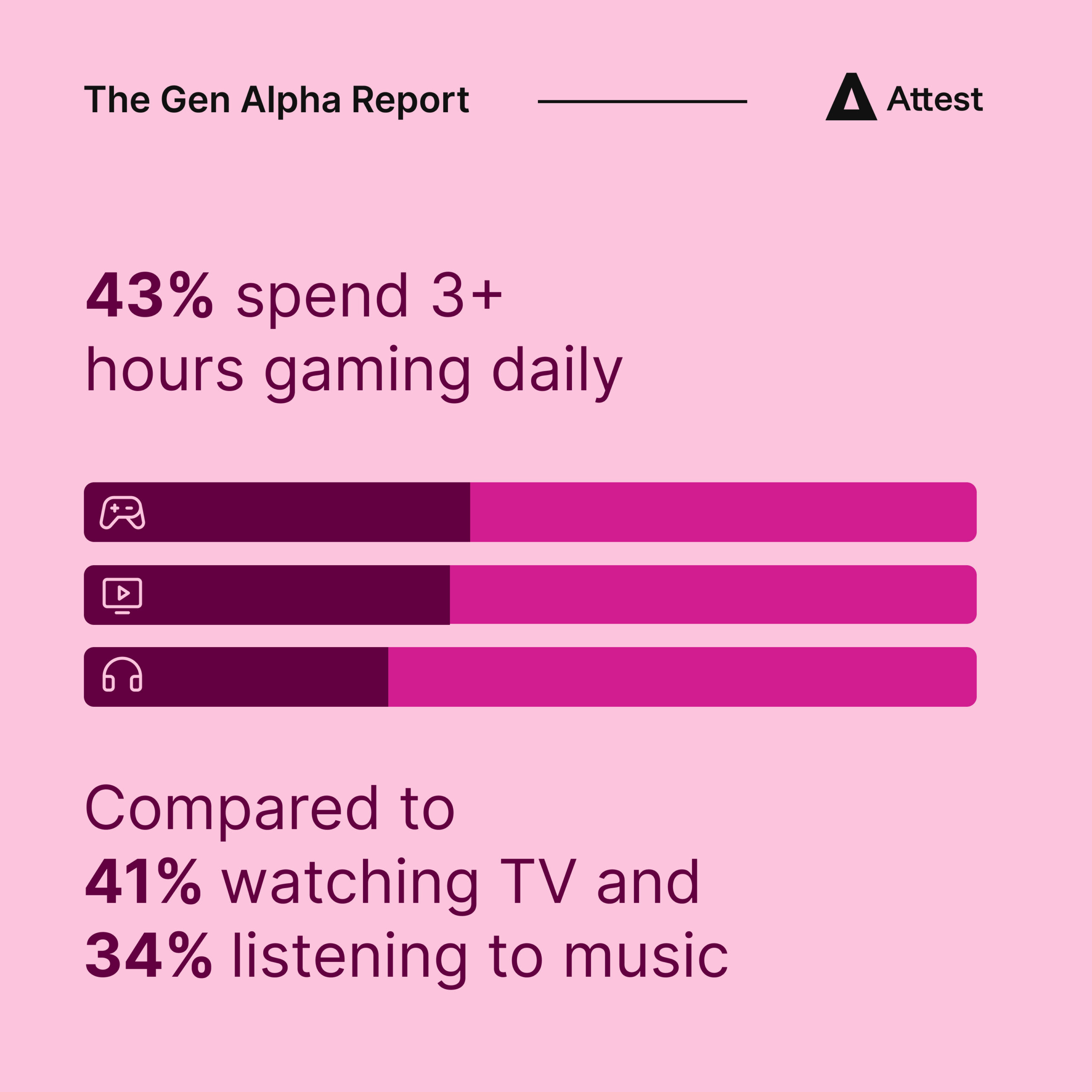
For US teens, gaming has overtaken television as their dominant form of entertainment. According to our data, 43% of Gen Alpha spend more than three hours a day gaming, compared with 41% who watch TV and 34% who listen to music or podcasts.
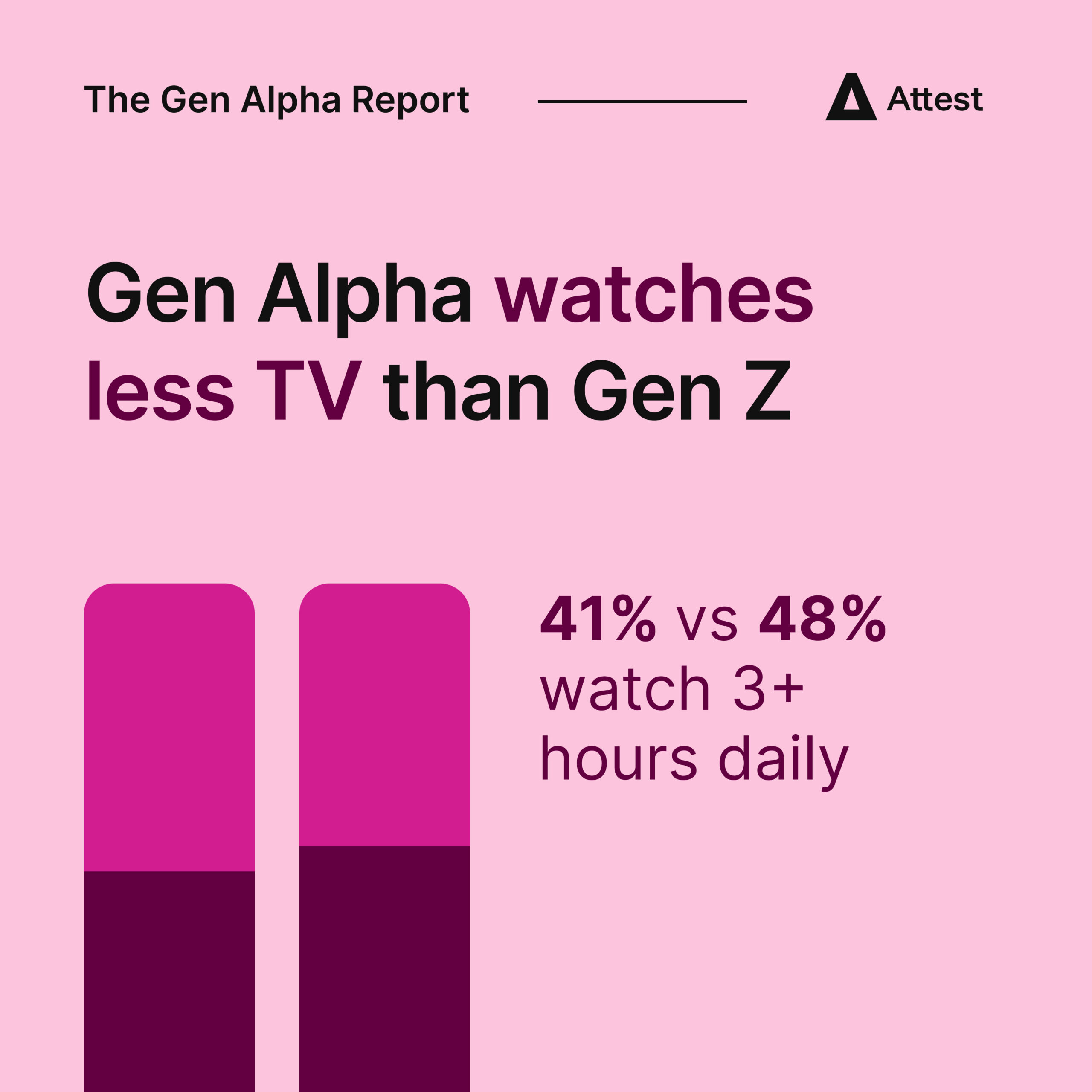
It’s a defining generational shift. Gen Z came of age during the golden era of streaming, with binge-watching shaping their cultural experiences. Our US Media Consumption Tracker shows 48% of Gen Z watch 3+ hours of TV daily. However, Gen Alpha has embraced gaming as its social lifeline, using it as a space to connect, compete, and express identity.
Overall, 96% of US Gen Alpha teens spend time gaming on a typical day – and it’s no longer a heavily gendered activity. Whereas a decade ago, boys were 42% more likely than girls to play video games, our research uncovers that gaming is central to the lifestyles of both boys and girls.
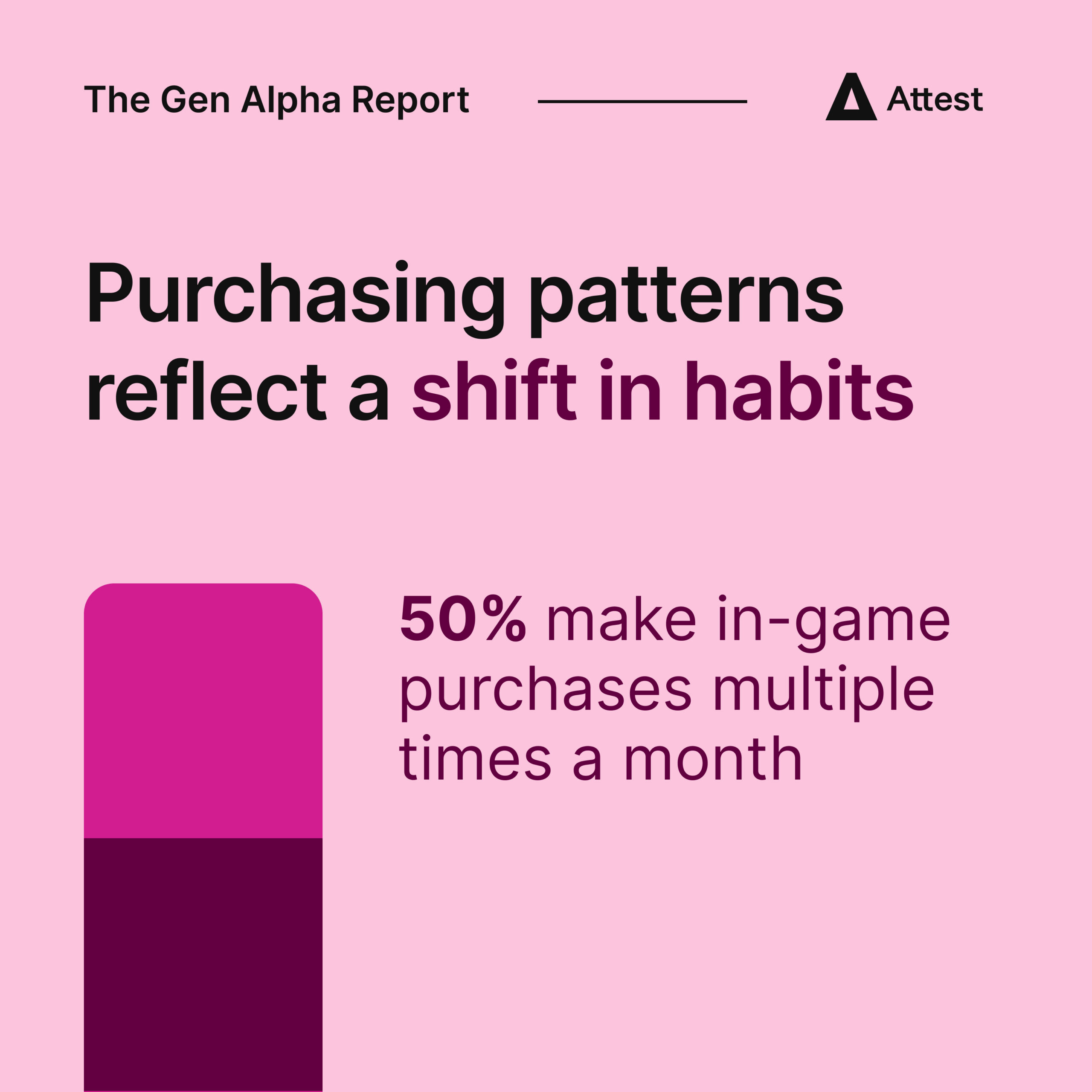
Further underlining this shift, we see that this age group spends a large part of its disposable income on digital purchases. Behind spending on fast food, most of Gen Alpha’s money goes on games, apps and in-game currency, with 50% shopping in this category multiple times per month.
Inside the ‘digital architect’ mindset
Streaming TV still has a presence in Gen Alpha’s day, but it’s no longer the centerpiece of their media life. Viewing times are shorter, with 39% of US teens watching TV for 1–2 hours per day, and 20% watching for less than this each day.
But for this generation, watching is secondary to doing. Where older cohorts gathered around shared shows, Gen Alpha gathers around shared experiences: collaborative gameplay, live streams, and interactive worlds that invite participation.
That participatory mindset is being driven by the rise of AI. Over a third (39%) of US Gen Alpha teens are already experimenting with AI tools to create images, videos, websites, or apps, and 25% regularly chat with AI for advice or conversation.
It’s no surprise that computer science is their top career aspiration (19% want to work in this field). It’s a big shift from just five years ago, when most 15-year-olds had their sights set on a traditional job like teacher, police officer or lawyer, and it highlights the rise of the ‘digital architect’ mindset among this cohort.
Five screens, one seamless experience
Gen Alpha’s world is defined by constant connectivity. Among US teens, 92% own a smartphone, 74% a games console, 70% a smart TV, and 67% a PC or laptop. More than half juggle five or more internet-enabled devices, switching seamlessly between gaming, streaming, chatting, and content creation – often all at once.
They might watch Netflix on a smart TV while texting on their phones, scroll TikTok during a gaming break, or stream YouTube walkthroughs as they play. Entertainment for them isn’t linear; it’s layered.
This multitasking, cross-platform behavior challenges traditional audience measurement. Single-channel thinking no longer works. To understand Gen Alpha’s attention, researchers need to study why they move between platforms as much as where they spend time.
And while gaming leads, social media remains the connective tissue. More than 55% of US Gen Alpha teens spend over three hours a day on social platforms, while a further 29% spend between two and three hours. For media and entertainment professionals, success with this audience will depend on designing experiences that feel fluid across screens, and forging communities that transcend platform boundaries.
Three takeaways for media and entertainment brands
- Gaming is your new competitor (and collaborator)
Gaming is no longer a niche to advertise around; it’s an environment to create within. Think branded experiences, in-game storytelling, and partnerships that add genuine value to play. - Short-form is king, but community is queen
Gen Alpha’s attention is fluid, but their loyalty is strong if you build communities around shared experiences. Combine storytelling with interactivity. - Rethink measurement
Engagement is no longer just about views or watch time. Metrics must evolve to reflect participation, co-creation, and community impact.