

Gen Alpha may not yet be managing mortgages or credit cards, but as the oldest among them turn 16 in 2026, they’re already showing signs of financial literacy and independence far beyond their years.
Our Gen Alpha Reports, featuring data from 2,000 parents of 15–16-year-olds across the UK and US, reveal a generation that’s pragmatic, cautious, and financially confident. They’re saving money earlier, learning financial concepts through experience, and using digital tools to manage it all.
For financial services brands – from banks and fintechs to insurers and payment providers – that makes Gen Alpha the most important emerging audience to understand. Read on to learn the defining behaviours of this cohort and what they might mean for the future of financial services.
UK results
Saving is the norm, not the exception
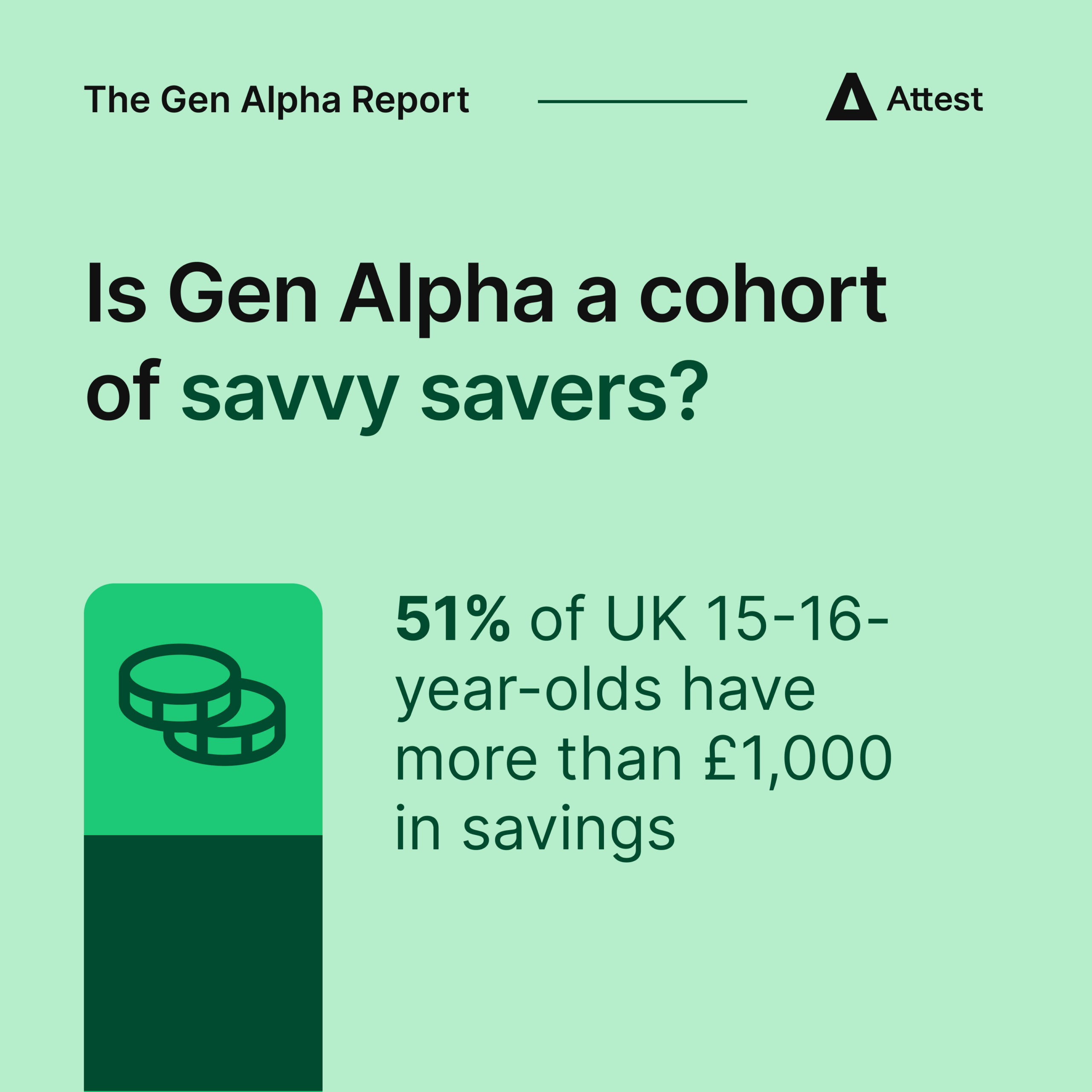
Gen Alpha teens are already thinking about their financial futures. A remarkable 51% have more than £1,000 in savings, and nearly one in ten have over £10,000 — including funds held by parents or in trust until adulthood. Only 6% say they have no savings at all.
That’s a significant cultural shift. According to research conducted by Halifax, just 70% of British children were putting any money aside a decade ago, but for Gen Alpha, saving has become a social norm.
This generation is growing up with parents who’ve lived through repeated economic crises – from the 2008 financial crash to the cost-of-living squeeze – and they’ve absorbed those lessons early. Saving is viewed not as optional, but essential.
Brands in banking and investing should therefore be aware that traditional “financial education” campaigns may feel outdated; this audience already understands why money matters. The real question is how brands can help them act on that understanding, through accessible, gamified, and purpose-driven tools.
Early adopters of financial products
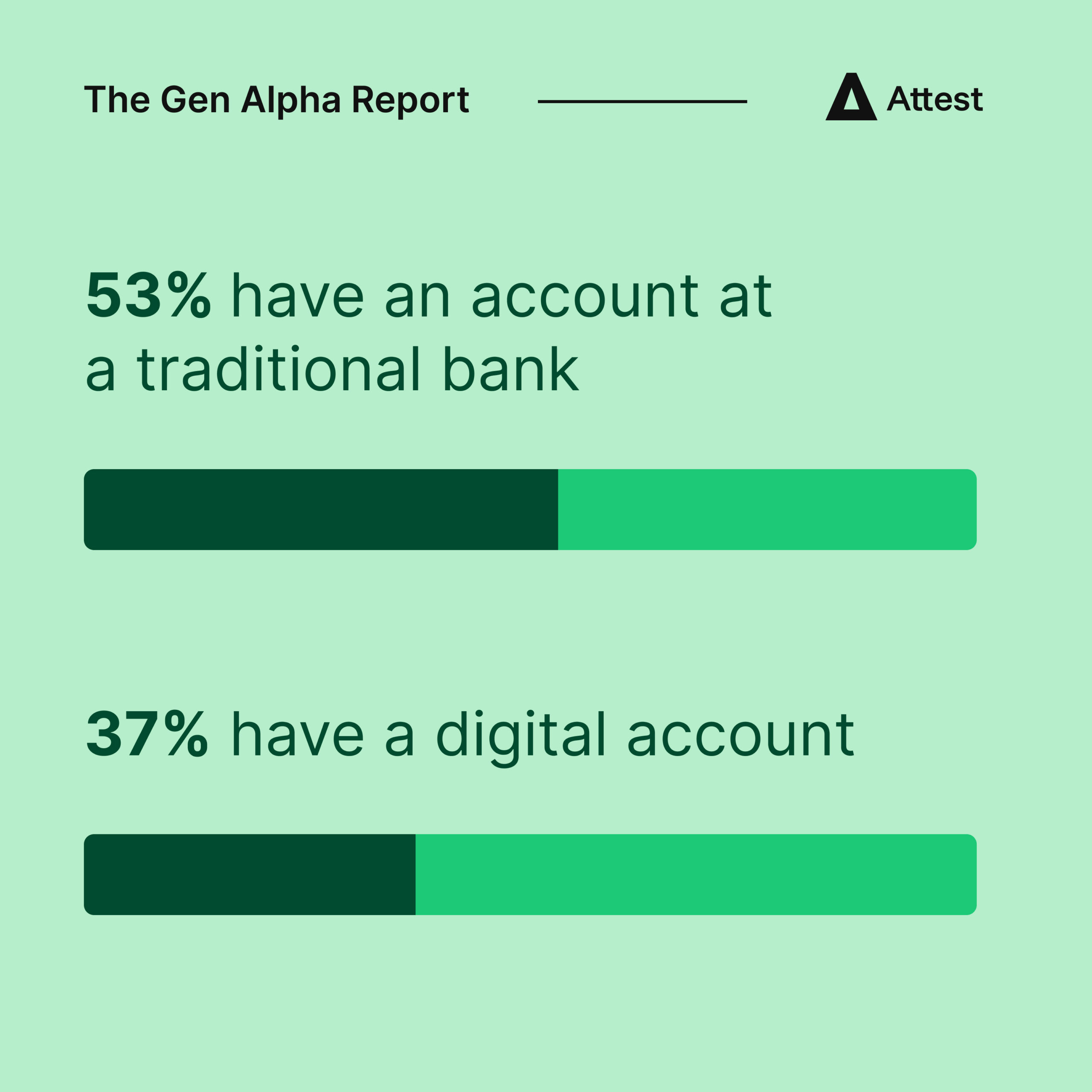
Gen Alpha isn’t just saving; they’re already participating in the financial system. Nearly half (49.5%) of UK teens own a debit card, and 54% have a dedicated savings account. Over half also hold a current account with a traditional bank, while 37% are already using digital-first banking apps.
That makes this the most financially connected generation of teens ever. Where older cohorts relied on piggy banks or cash gifts, Gen Alpha is learning about money through real-world management – digital payments, account tracking, and goal setting.
For fintechs, this opens a new frontier: a demographic that’s comfortable with automation and AI-powered experiences. And they’re not just open to digital finance; they expect it.
But there’s still a digital divide. Teens from higher-income households are more likely to have access to digital banks (47% vs. 25%) and savings products (64% vs. 40%). Bridging that gap will be critical for brands that want to make good on promises of accessibility and inclusion.
Financial confidence starts early – but so does inequality
Gen Alpha’s growing financial confidence is encouraging, but it also exposes socioeconomic fault lines. Among teens from households earning over £75,000 a year, 20% have more than £10,000 saved, compared to just 3% from households earning under £25,000. Similarly, 64% of higher-income teens have a savings account, versus 40% of those from lower-income homes.
For the financial services sector, that presents an opportunity to lead on education and inclusion – not just as a CSR talking point, but as a growth strategy. Building early trust through accessible, educational tools can help reduce long-term financial exclusion while establishing loyalty that lasts well into adulthood.
Brands like GoHenry and Revolut <18 have already set the pace, offering prepaid debit cards linked to parent dashboards. The next step is deeper: helping Gen Alpha understand investing, budgeting, and saving for the future in ways that feel empowering, not intimidating.
From pocket money to purpose-driven spending
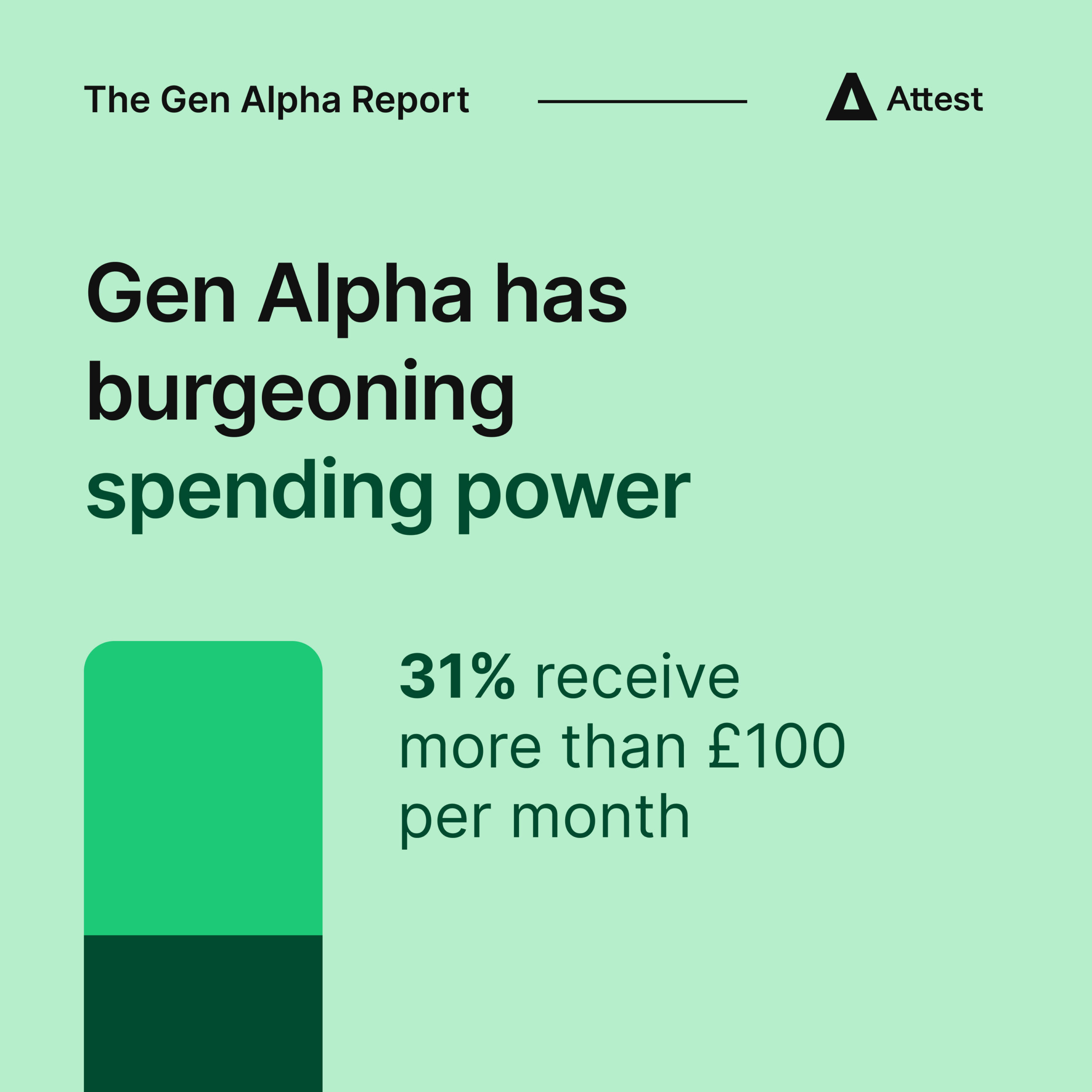
Financial independence isn’t limited to saving; Gen Alpha is already spending with intent. Nearly a third (31%) receive more than £100 a month, and 21% earn income independently, through part-time jobs, chores, or freelance tasks.
Here’s how they spend it:
- Fast food and takeaways top the list: 41% spend in this category at least once a week
- Digital purchases are close behind: 38% make in-game or app purchases multiple times a month
- Personal care and cosmetics follow, with nearly half shopping more than once a month
These patterns highlight how digital and physical consumption are merging. For financial brands, that’s an opportunity to help Gen Alpha manage spending across ecosystems, connecting real-world habits with digital wallets, savings goals, and responsible spending nudges.
Money management in the age of AI
It’s no coincidence that Gen Alpha’s rise is happening alongside the explosion of artificial intelligence. Almost half (46%) of this generation already use AI for search, while one in four regularly chats with AI tools for advice or companionship. As they grow older, that comfort with AI will extend to how they manage money.
Imagine a future where a 17-year-old asks an AI assistant to “find a savings account that helps me save for university faster”, or a chatbot that coaches them through their first investment decision. For Gen Alpha, that won’t feel futuristic; it will feel natural.
For financial services brands, this means AI literacy and ethical automation will become key trust drivers. Banks and fintechs must ensure that AI-led experiences are transparent, accurate, and age-appropriate.
US results
The generation that treats saving as a life skill
Gen Alpha teens in the US are already thinking seriously about their financial futures. Almost half (48%) have more than $1,000 in savings, and one in ten have over $10,000 set aside, including money held by parents or in trust until adulthood. Only 10% say they have no savings at all.
That’s a significant leap in youth financial engagement compared to previous generations. In 2017, just 31% of Gen Z teens had more than $1,000 saved, according to Ipsos. For Gen Alpha, saving has become a default behaviour, a habit reinforced by parents who’ve lived through multiple economic crises and understand the value of financial security.
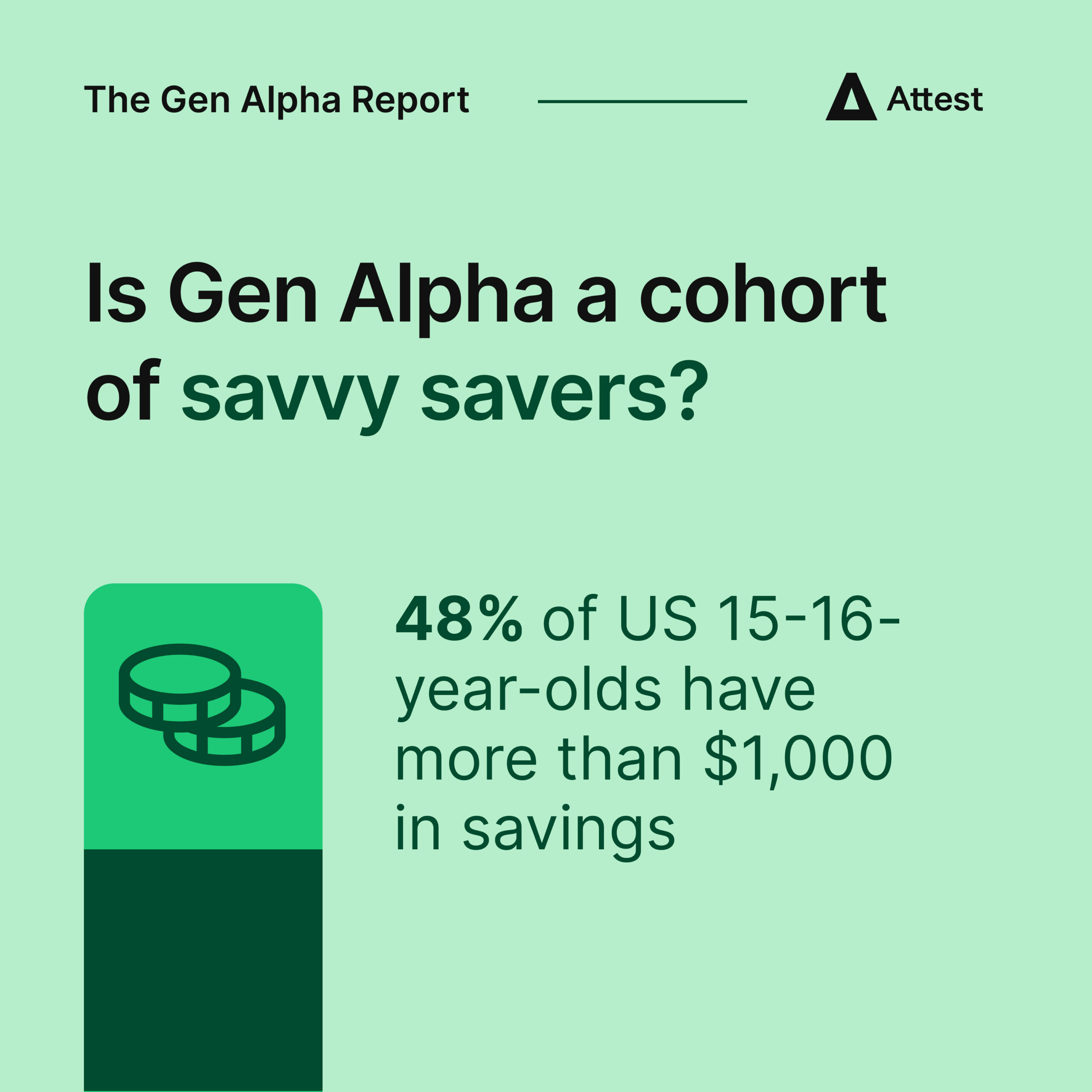
This generation doesn’t need to be convinced that saving matters; they already see it as a foundation for independence. For financial brands, the challenge isn’t awareness, it’s activation. How can you help a generation that already knows saving is important actually make it happen? The answer lies in gamified, digital-first, and purpose-driven tools that align with how Gen Alpha learns and lives.
From piggy banks to payment apps: Gen Alpha’s financial leap
Gen Alpha isn’t just saving; they’re already taking part in the financial system. In the US, 51% of Gen Alpha teens own a debit card, and a similar share (51%) have a dedicated savings account. Just over half hold an account at a traditional bank, while 37% use digital-first banking apps – signalling that this cohort is more financially connected than any generation before them.
Where previous generations relied on pocket money and piggy banks, today’s teens are learning by doing; managing real money through digital tools, tracking balances, and setting goals. For fintechs and financial institutions, this represents an extraordinary opportunity. Gen Alpha is the first generation to grow up fully fluent in digital finance, and they expect financial experiences to be seamless, mobile, and intuitive.
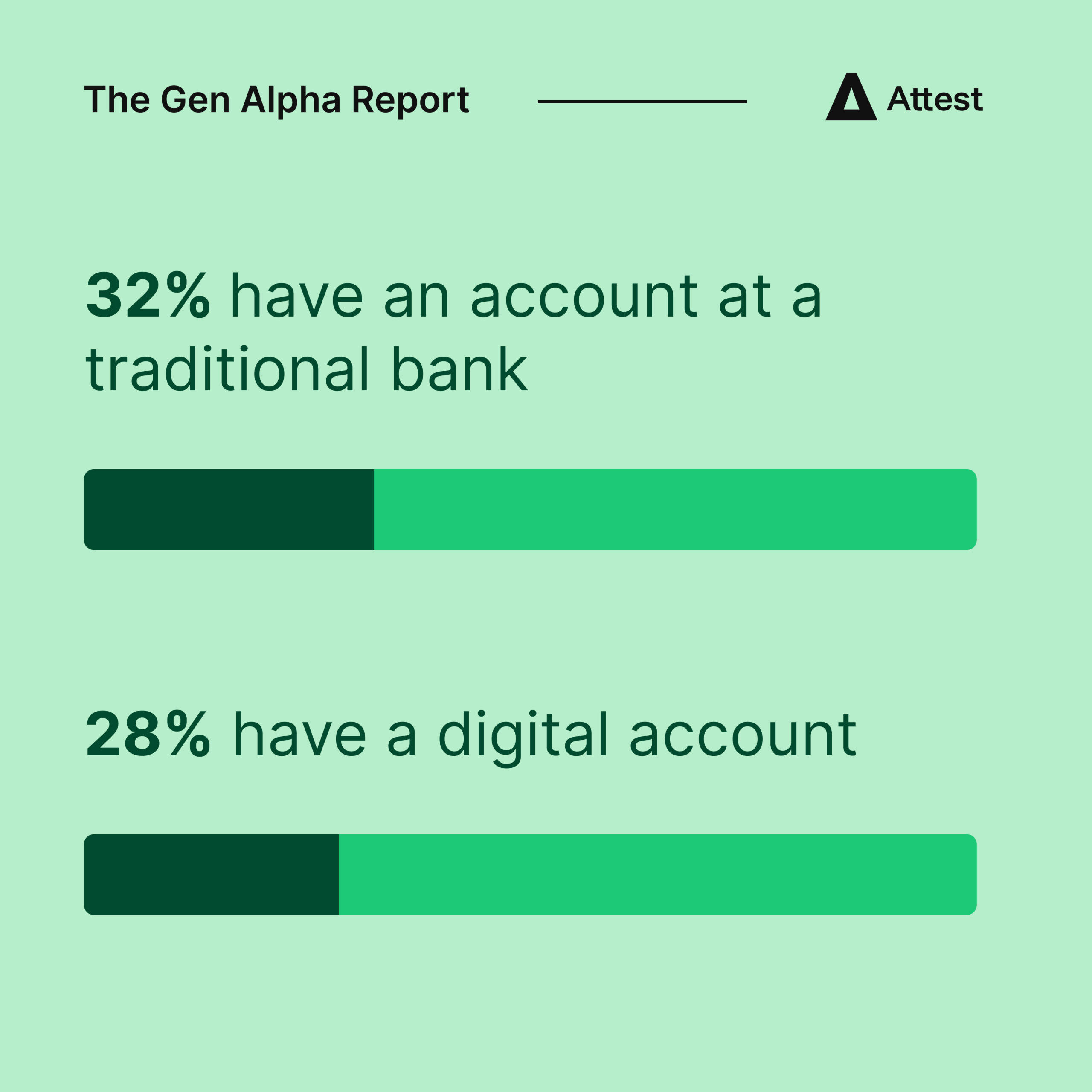
But access is not equal. Teens from households earning over $100k are significantly more likely to have a digital bank account (33% vs. 23%) and nearly twice as likely to hold savings accounts (64% vs. 35%). Closing that gap (through accessible products, education, and partnerships) will be vital for brands looking to lead on financial inclusion and build long-term loyalty.
Early financial confidence, unequal opportunity
Gen Alpha’s financial confidence is encouraging – but it’s not evenly distributed. Teens from higher-income households are significantly more likely to have larger savings balances: 15% have more than $10,000, compared with just 4% from households earning under $50k. The same pattern applies to access: wealthier teens are almost twice as likely to hold a savings account and are better represented in digital banking.
This widening gap highlights both a social issue and a brand opportunity. The financial services sector can play a defining role in building confidence and inclusion early, ensuring that money management tools and education aren’t reserved for the affluent few.
Forward-thinking brands, like Greenlight and GoHenry, have already shown how digital-first youth accounts can combine accessibility with empowerment. The next step is to move beyond basic spending control and into real financial capability: budgeting, investing, and saving in ways that feel empowering, not overwhelming.
Autonomous consumers in the making
Financial independence for Gen Alpha isn’t just about saving – it’s about spending with intent. More than half (53%) of US teens receive over $100 a month, and 26% are already working part-time or earning through side gigs like babysitting or dog walking. And they’re spending that money across both physical and digital worlds.
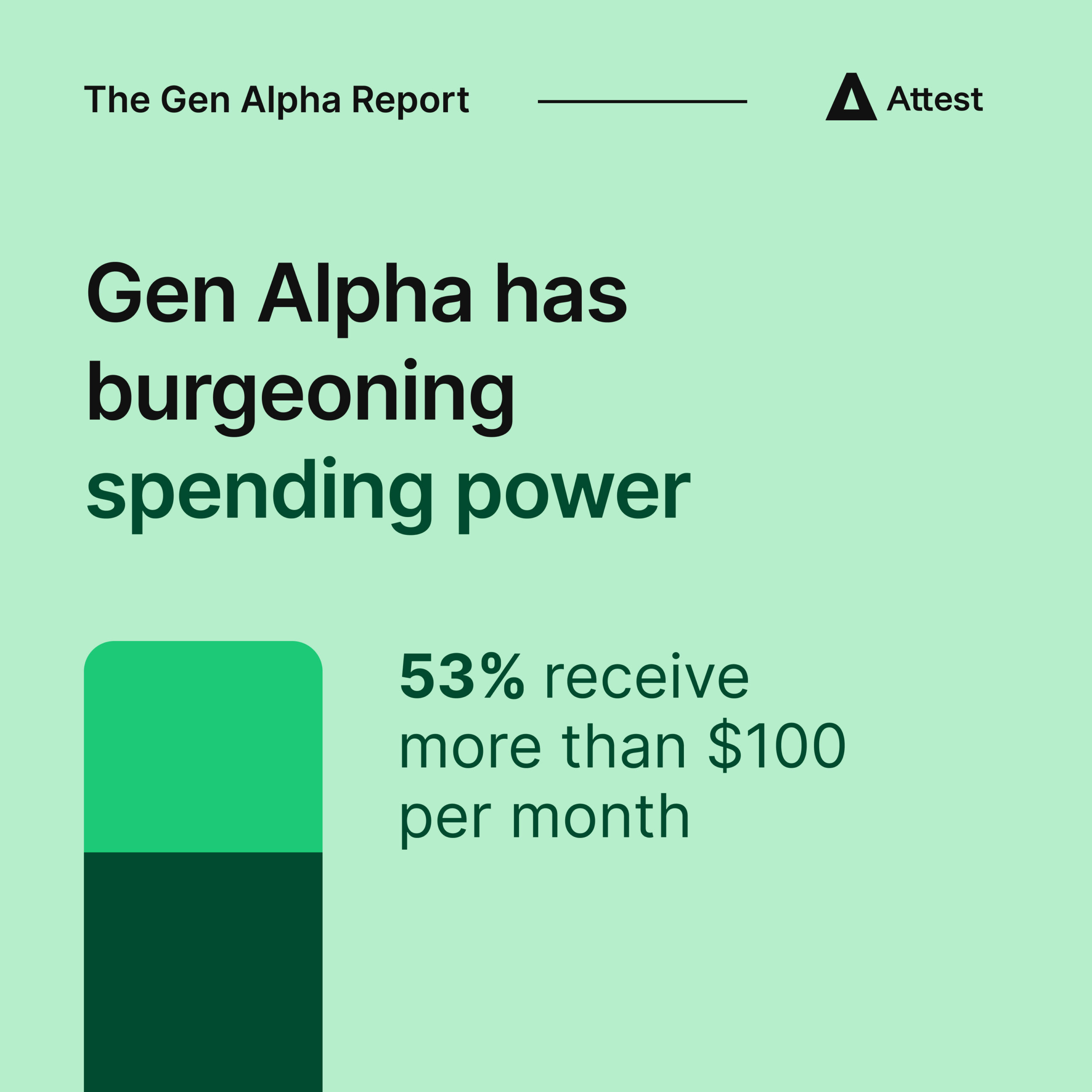
Here’s where it goes:
- Fast food tops the list, with 56% buying it at least once a week
- Digital purchases come next: 21% buy in-game items weekly and 50% buy digital goods multiple times a month
- Personal care and fashion follow closely, with nearly half shopping at least monthly
For financial brands, these spending patterns underscore a critical insight: Gen Alpha’s financial decisions are habitual, not impulsive. They make small, consistent purchases that reflect identity, belonging, and autonomy.
That opens new possibilities for financial products: from budgeting tools that connect to spending categories to micro-saving features that reward mindful consumption. The key will be meeting them in the moments where spending meets self-expression.
Why Gen Alpha will trust their first financial advice from a bot
Gen Alpha’s financial habits are forming in parallel with the rise of AI – and they’re completely comfortable with it. Nearly half (46%) use AI for search, and one in four (25%) regularly chat with AI tools for advice, ideas, or emotional support. As they age into financial consumers, this comfort with conversational tech will naturally extend to how they manage money.
Soon, AI-powered banking assistants won’t be a novelty, they’ll be an expectation. Picture a 16-year-old asking, “How much can I spend this week if I still want to hit my savings goal?” or “Find me a bank account that gives better interest for my allowance.” For Gen Alpha, that won’t feel futuristic, it will feel obvious.
For financial institutions, that means responsible AI design will become a cornerstone of brand trust. As automated tools handle more financial guidance, transparency, ethics, and data integrity will determine who earns this generation’s confidence.
Four takeaways for financial services brands
- Start building relationships early
This generation is forming financial habits before adulthood. Brands that engage now – through educational content, youth accounts, and partnerships with parents – will be front of mind later. - Design for autonomy and gamification
Gen Alpha learns by doing. Interactive savings tools, progress trackers, and gamified financial education can turn money management into empowerment. - Close the digital divide
Inclusion is non-negotiable. Provide accessible, low-barrier products that make saving and learning about finance possible for every teen, not just those from higher-income households. - Build trust through transparency and ethics
This generation has grown up amid misinformation and AI hype. Clear communication, fair data practices, and human-centered technology will be essential to winning their confidence.