
Gen Z’s approach to media consumption continues to evolve at speed. Their habits are defined by video dominance, platform fluidity, high social engagement and growing scepticism toward AI-generated content.
To understand what’s shaping their choices in 2026, we surveyed 1,000 Gen Z adults in the US aged 18–27 using the Attest platform. The findings reveal how this generation watches, listens, scrolls, shops and decides what – and who – to trust.
Here’s what the data tells us.
TL;DR
In this guide, you’ll learn:
- Video sharing platforms dominate: 43% watch 2+ hours daily, and just 5% watch none – compared to 38% who watch no live TV.
- Streaming remains the top paid format: 81% are willing to pay for streaming video services.
- YouTube leads daily usage: 63% use YouTube daily, ahead of Instagram (58%) and TikTok (56%).
- Social media is the main news source: 44% access news daily via social, and 25% say TikTok is their primary news platform.
- Interactive formats outperform immersive tech: 46% engage with polls/quizzes vs 24% with VR.
- AI backlash is growing: 72% hold negative or cautious views toward AI-generated content.
- Food and drink is the most influenced purchase category: 56% say social content affects these purchases.
What are the top Gen Z media consumption trends for 2026?

Trend #1: Video sharing platforms have overtaken everything else
What platforms does Gen Z use most? Our data shows video sharing platforms like YouTube and TikTok are now the centre of Gen Z’s media world.
- 43% watch 2+ hours daily on video sharing platforms
- 21% watch more than 4 hours daily
- Just 5% watch none
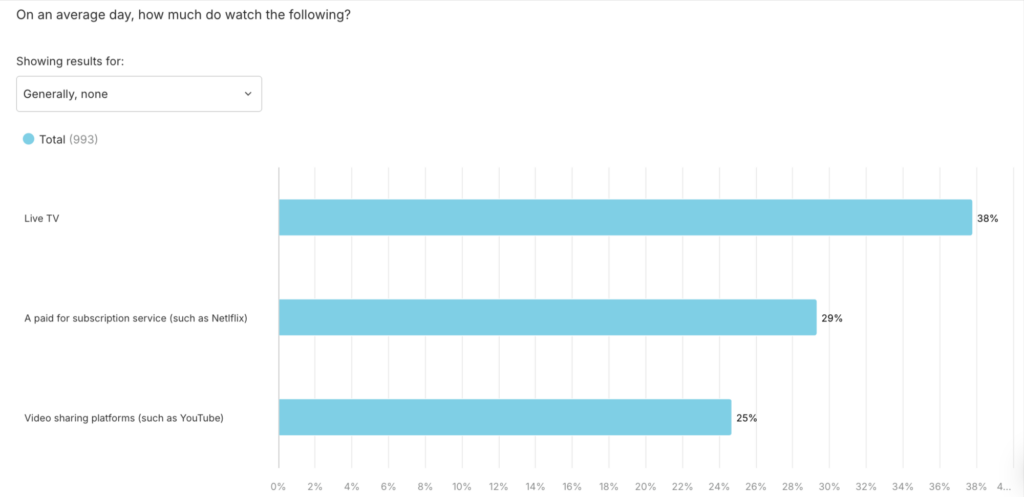
- By comparison, 38% watch no live TV at all
Live TV shows the highest abandonment rate and the most polarised audience. Only 14% watch more than two hours daily, confirming that traditional broadcast formats are no longer central to this generation’s routine.
Trend #2: Streaming is still the only media Gen Z consistently pays for
What media is Gen Z willing to pay for? Streaming video leads willingness to pay by a wide margin:
- 81% are willing to pay for streaming video services
- 64% for streaming music
- 43% for gaming subscriptions
- Just 6% for news and magazine subscriptions
There’s a 75-point gap between streaming video (81%) and news subscriptions (6%), showing just how little appetite exists for traditional paid media.
Netflix remains dominant, with 75% watching weekly. Hulu (45%) and Amazon Prime and Disney+ (38%) form the second tier.

Trend #3: YouTube is the most universal daily platform
Which social media platforms does Gen Z use daily? In 2026, YouTube has the broadest and most consistent daily engagement:
- 63% use YouTube daily
- Just 2% never use it
Instagram (58%) and TikTok (56%) also see high daily usage, forming a clear top tier of platforms.
Meanwhile, platforms like Twitch (53% never use) and Pinterest (33% never use) show high rejection rates.
This tier system matters for brands. The big three platforms command habitual attention. Others serve niche communities.
Trend #4: Social media is now the primary news ecosystem
Where does Gen Z get their news? Social platforms dominate news access:
- 44% access news daily via social
- 72% access it at least several times per week
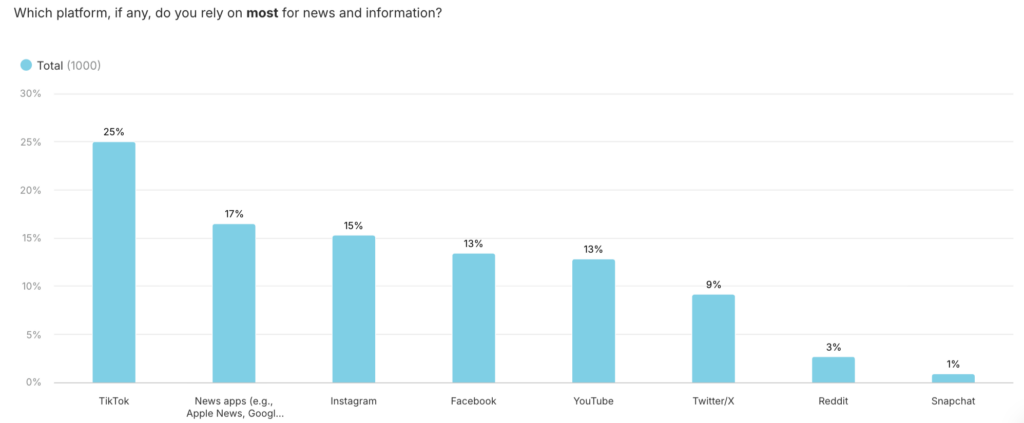
TikTok leads as the primary news source (25%), ahead of traditional news apps (17%), while Instagram also ranks highly (15%).
Trust is surprisingly resilient:
- Only 16% actively distrust the news they see on social media
- 53% find social media news trustworthy
Trend #5: Short-form humour dominates attention
What type of content does Gen Z prefer? Comedy and memes are the clear winner in short-form content:
- 67% enjoy comedy and memes
- 44% watch educational or how-to content
- 41% consume news content
- 39% engage with personal stories
The gap between comedy (67%) and educational content (44%) shows that entertainment still leads, but utility content performs strongly.
Trend #6: Interactive formats outperform immersive tech
Does Gen Z engage with interactive or immersive content? Here’s what the data says:
- 46% engage with polls, quizzes and Q&As
- 32% engage with choose-your-own-adventure content
- 30% engage with interactive livestreams
- 28% use AR filters
- 24% use VR experiences
There’s a clear gap between traditional interactive formats and immersive technologies, showing that simple participation tools outperform emerging tech.
Over half (55%) show some willingness to pay for enhanced immersive experiences – but 40% say it depends on the experience.
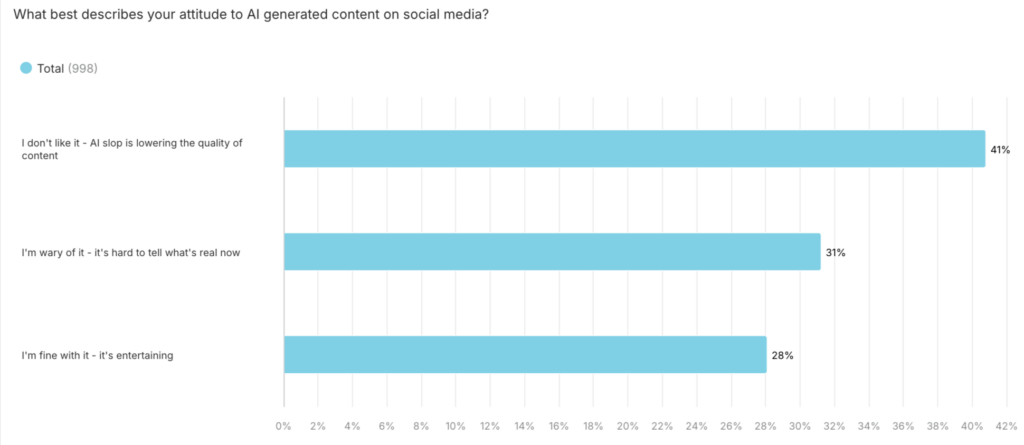
Trend #7: AI scepticism is intensifying
Does Gen Z trust AI-generated content? Our data shows AI-generated content faces strong resistance:
- 41% actively dislike it and believe “AI slop” is lowering the quality of content
- 31% are wary and state that it’s hard to tell what’s real now
- Only 28% are positive and find AI generated content entertaining
That means 72% hold negative or cautious views.
This reflects broader concerns about authenticity and trust in digital content.
Trend #8: Social commerce is strongest for food and beauty
What products does social media influence Gen Z to buy? Food and drink is the most socially influenced purchase category:
- 56% say social content affects food and drink purchases
- Fashion (42%) and beauty (41%) follow closely
Technology influence has declined, while beauty has grown significantly year on year.
Gender differences brands can’t ignore
- Males are significantly more likely to watch video sharing platforms daily.
- Females are more likely to be extreme social media users.
- Beauty purchases show the widest gender gap in social influence.
- Males are more likely to rely on YouTube for news, while females lean more toward TikTok.
These differences highlight why one-size-fits-all strategies fall short.
How can brands adapt to Gen Z’s media habits?

Generation Z’s media consumption habits and behaviors emphasize the importance of creating engaging, interactive, and authentic experiences. As digital natives, they value convenience and personalized experiences but remain cautious about the authenticity and reliability of information.
To win Gen Z attention:
- Prioritise video-first strategies
- Invest in YouTube, Instagram and TikTok
- Lead with humour and short-form
- Use interactive tools like polls and Q&As
- Keep sponsored content transparent
- Avoid over-reliance on AI-generated content
Gen Z is not overwhelmed by content – they’re selective about what feels real.
The cost of standing still
Gen Z’s media habits aren’t slowly evolving – they’re shifting in real time. Platforms rise and fall in relevance within months, trust dynamics change, and expectations around authenticity continue to tighten.
Brands that rely on outdated assumptions risk investing in the wrong channels, over-prioritising declining formats, or misjudging how this generation perceives AI, sponsored content and paid experiences. Even small misalignments – such as leading with the wrong platform or tone – can result in lost attention in a feed that moves at speed.
In a landscape where habits are measurable and shifts are trackable, the bigger risk isn’t change. It’s failing to measure it.
How can Attest help you understand your Gen Z audience?
Understanding how your Gen Z target customers interact with things like social media, digital content and everything else is essential for smarter planning and investment.
Getting to grips with how your target customers consume, think and buy lets you:
- Define your most valuable Gen Z customers
- Understand purchase barriers and drivers
- Find the right marketing channels
Attest gives you the platform you need to do all of this. With Attest, you can:
- Compare audience segments side by side
- Track wave-on-wave shifts
- Test content concepts before launch
- Understand platform, trust and purchase drivers
- Localise insights across multiple markets
Gen Z media habits evolve quickly. The brands that measure continuously will adapt fastest.
Research methodology
For this research, we ran a nationally-representative survey of 1,000 US consumers aged 18 to 27. The research was carried out on the Attest platform in February 2026.