As the beauty industry evolves, Gen Z continues to reshape expectations – balancing affordability with values like transparency, inclusivity, and self-expression.
The beauty and personal care market is expected to generate revenue of over $106 billion in the US this year, and while growth continues, Gen Z is redefining what “value” really means in this space.
To understand what drives their decisions, we surveyed 1,000 Gen Z consumers aged 18–27 using Attest’s platform and compared the results to data from 16-months earlier.
TL;DR: Gen Z beauty trends 2026
Definition:
Gen Z beauty trends reflect how 18–27-year-olds choose products based on price, identity, and selective values rather than brand loyalty alone.
Key insights:
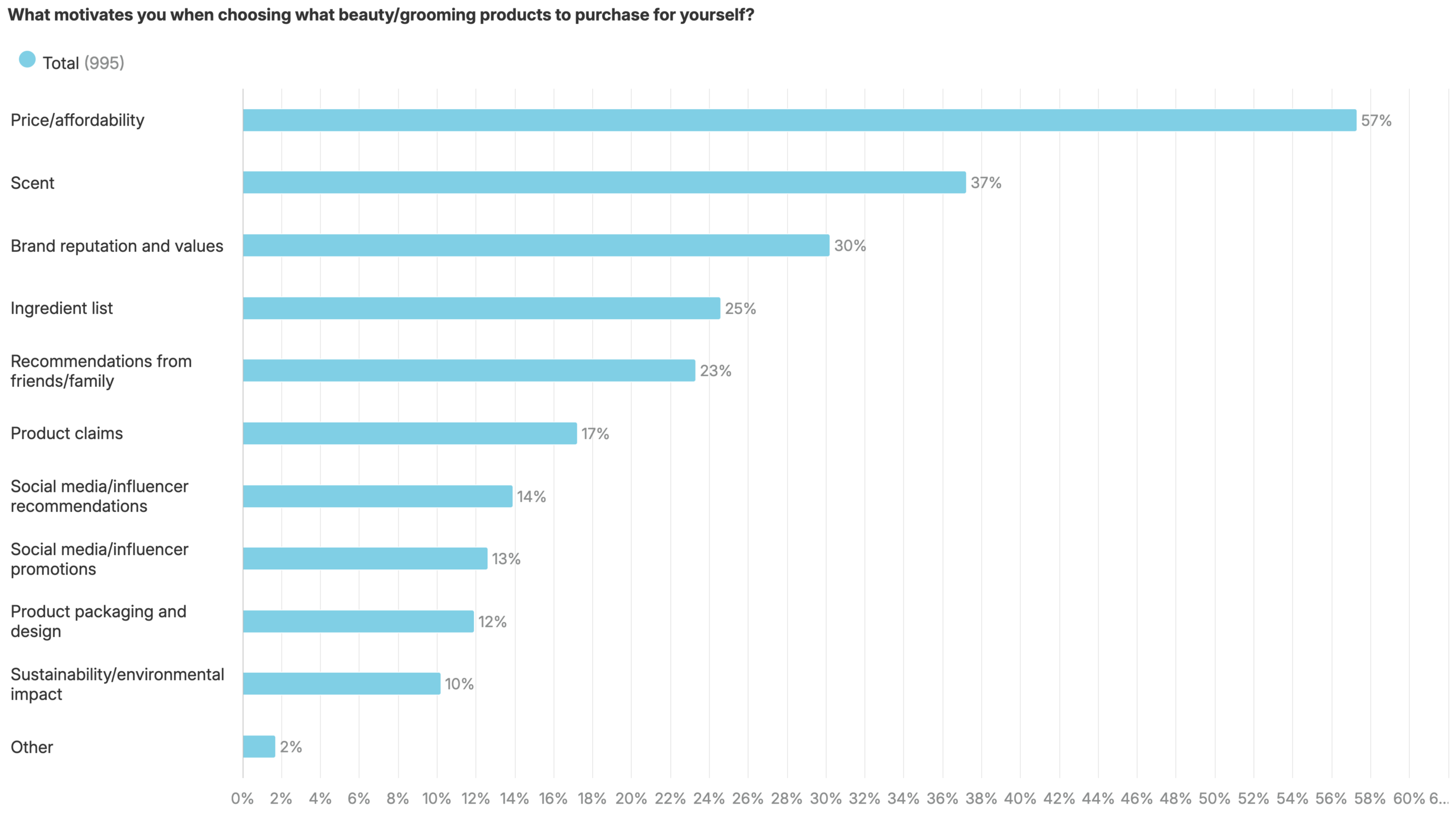
- Affordability dominates – 58% cite price as their primary purchase driver
- Spending is stabilizing – only 40% expect to increase beauty spend, down from 46%
- Sustainability matters – but selectively – 66% say it’s important, yet only 11% actively prioritize it in purchases
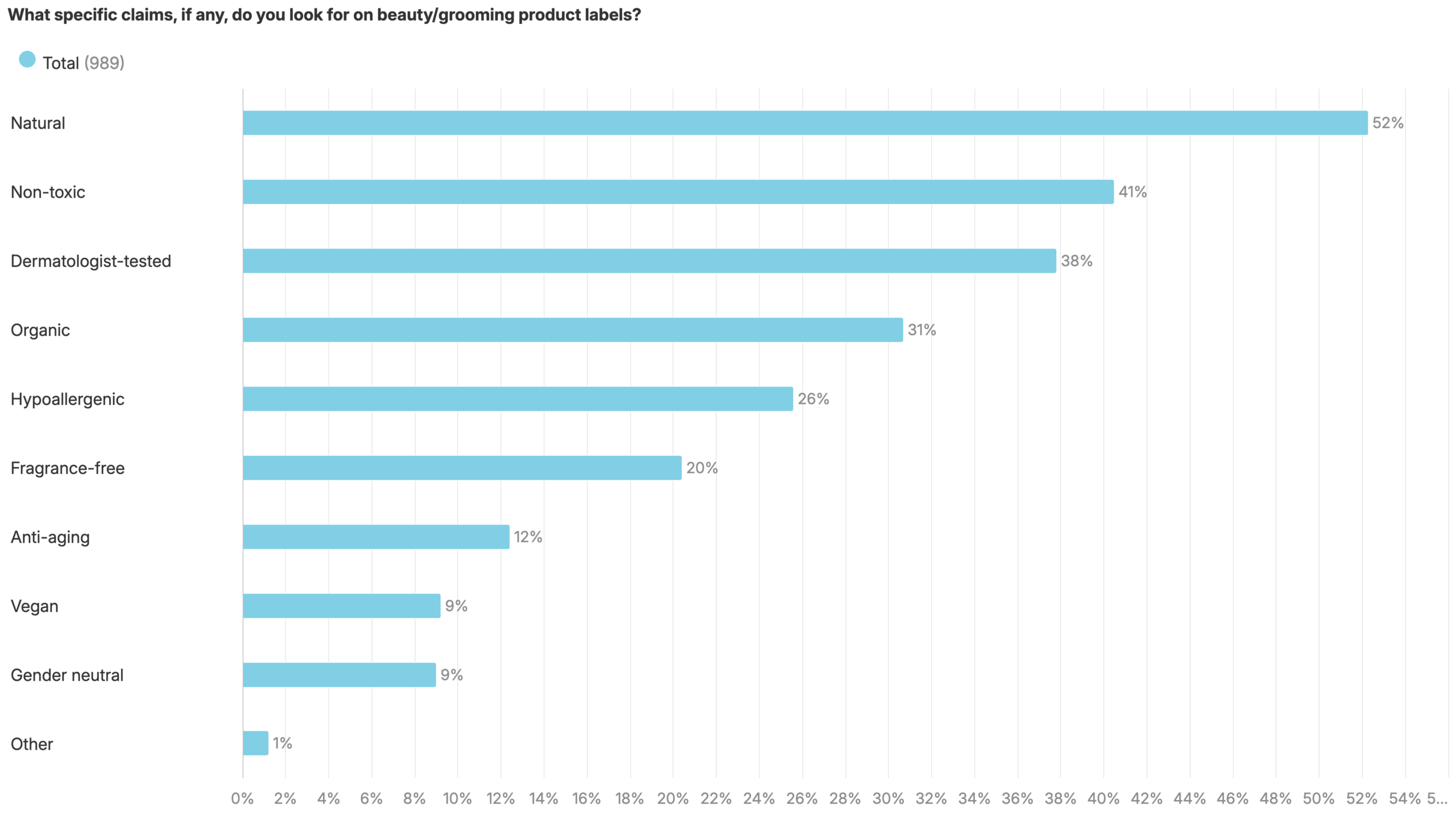
- Clean claims remain influential – 56% look for “natural” and 43% for “non-toxic” products
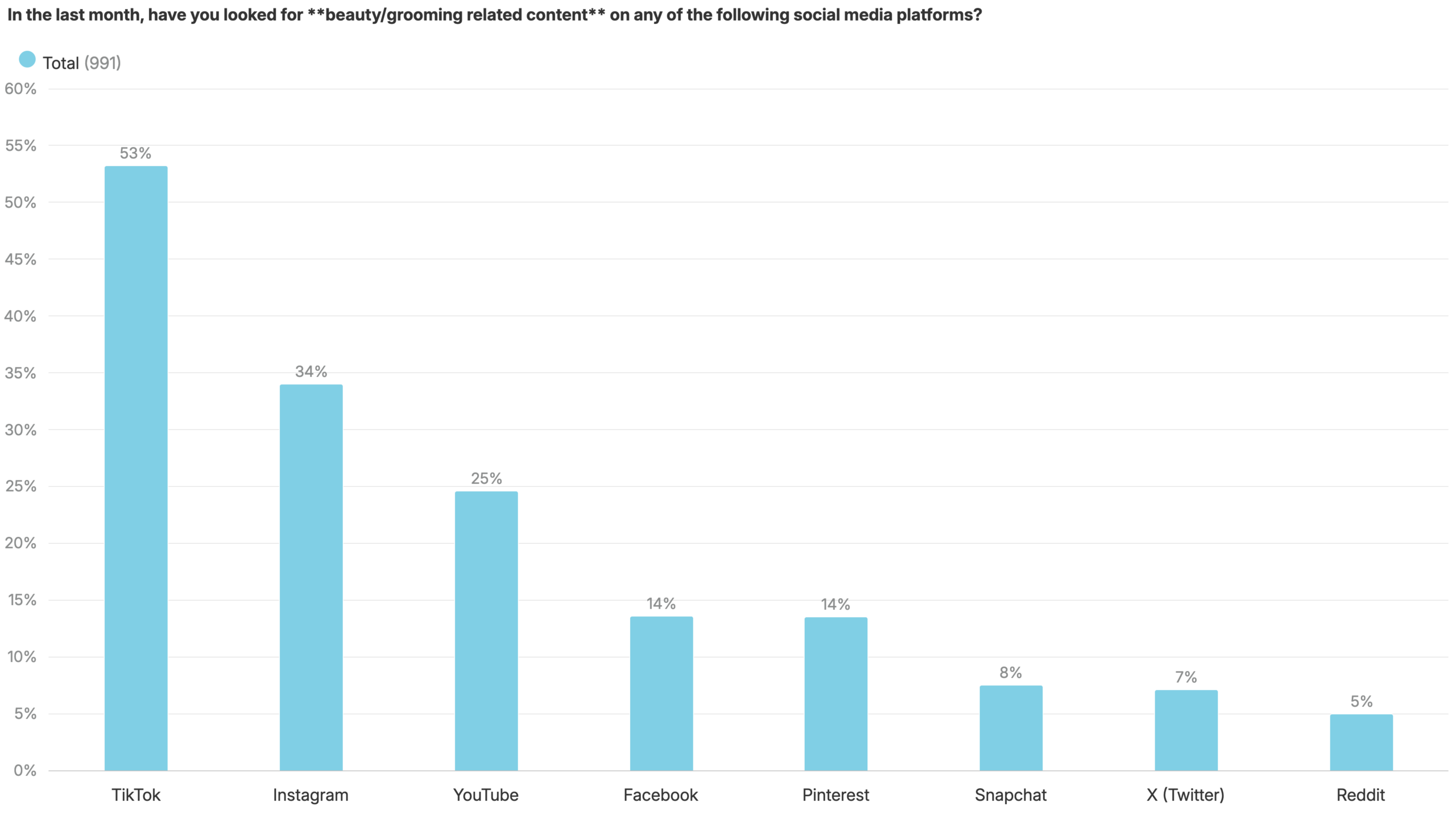
- Social discovery is dominant – TikTok usage for beauty content has risen to 53%
- Retail is still physical-first – 91% include in-store shopping in their journey
How Gen Z beauty trends are evolving year-on-year
Comparing our latest 2026 data with the previous wave, we’re seeing subtle but important shifts in how Gen Z shops for beauty. While core behaviors remain consistent, economic pressure, platform usage, and trust signals are evolving – shaping a more cautious, value-driven consumer.
7 Gen Z beauty trends for 2026
Trend #1: Affordability is the primary driver of Gen Z beauty purchases
Affordability is the most important factor influencing Gen Z beauty decisions – and its importance is increasing.
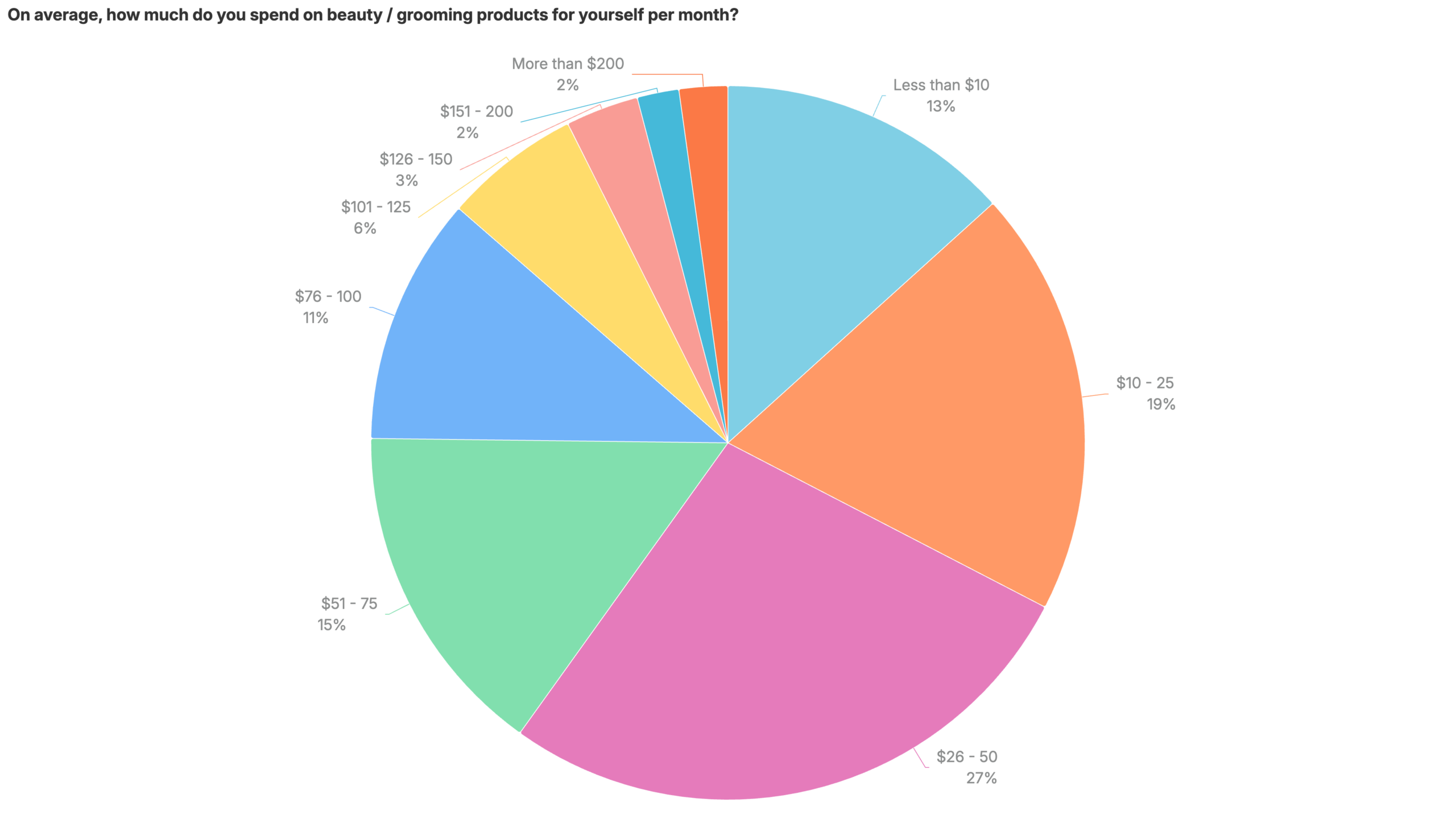
58% of Gen Z now prioritize price when choosing beauty products, up from 56% in the previous wave.
At the same time:
- The number expecting to increase spending has fallen (46% → 40%)
- Lower spending brackets are growing
What’s really happening here:
This signals a shift from price awareness to active financial caution. Gen Z is not just looking for value – they are becoming more selective about where they spend altogether.
This is being driven by:
- Economic pressure
- Greater access to price comparison and dupes
- Normalization of “budget-first” beauty via social content
Implication for brands:
Premium positioning alone is no longer enough. Brands must clearly justify price through:
- Performance
- Longevity
- Multi-use functionality
Trend #2: Sustainability matters – but price wins
Sustainability remains important to Gen Z, but its influence is weakening slightly over time.
66% still say sustainability is somewhat or very important, but intensity has declined:
- “Very important” dropped from 33% to 29%
- “Somewhat important” increased from 34% to 36%
At the same time, only 11% actively use sustainability as a purchase driver.
What’s really happening here:
Sustainability is shifting from a priority to a preference.
Gen Z still expects brands to act responsibly, but:
- Price is overriding principle at the point of purchase
- Confusion and fatigue around claims is growing
- Consumers are becoming more pragmatic
Implication for brands:
Sustainability works best when it is:
- Built into the product, not positioned as a premium add-on
- Clearly explained and easy to verify
- Secondary to strong functional value
Trend #3: Clean and “natural” claims drive trust
Clean and natural product claims remain a stable and expected part of Gen Z’s decision-making.
- 56% look for “natural” claims (up slightly from 55%)
- 43% look for “non-toxic” claims (down slightly from 44%)
What’s really happening here:
Clean beauty has moved from trend to baseline.
Rather than rapid growth, we’re seeing:
- Stabilization of demand
- Selective engagement with certain claims
- Use of simple labels as trust shortcuts
Gen Z isn’t deeply researching every ingredient – they’re scanning for signals that a product is “safe enough.”
Gender differences reinforce this:
- Women favor dermatologist-tested and hypoallergenic claims
- Men show more interest in ingredient purity signals
Implication for brands:
Overcomplicating messaging reduces clarity.
Simple, credible, front-of-pack claims are more effective than technical detail.
Trend #4: Social media – especially TikTok – drives discovery
Social media remains the dominant discovery channel, with TikTok strengthening its lead year-on-year.
TikTok usage for beauty content has increased from 46% to 53%, while YouTube has slipped from 33% to 25%, and Instagram from 38% to 34%.
What’s really happening here:
Discovery is becoming more concentrated, not more fragmented.
Gen Z is:
- Spending more time on fewer platforms
- Relying on algorithm-driven recommendations
- Discovering products passively rather than actively searching
At the same time, skepticism persists:
- Around 24% distrust influencer recommendations
This creates a paradox:
- Social drives awareness
- But trust must be earned beyond visibility
Implication for brands:
Success on social requires:
- Authentic creator partnerships
- Demonstrable product results
- Consistent presence, not one-off virality
Trend #5: Gen Z balances individuality with trends
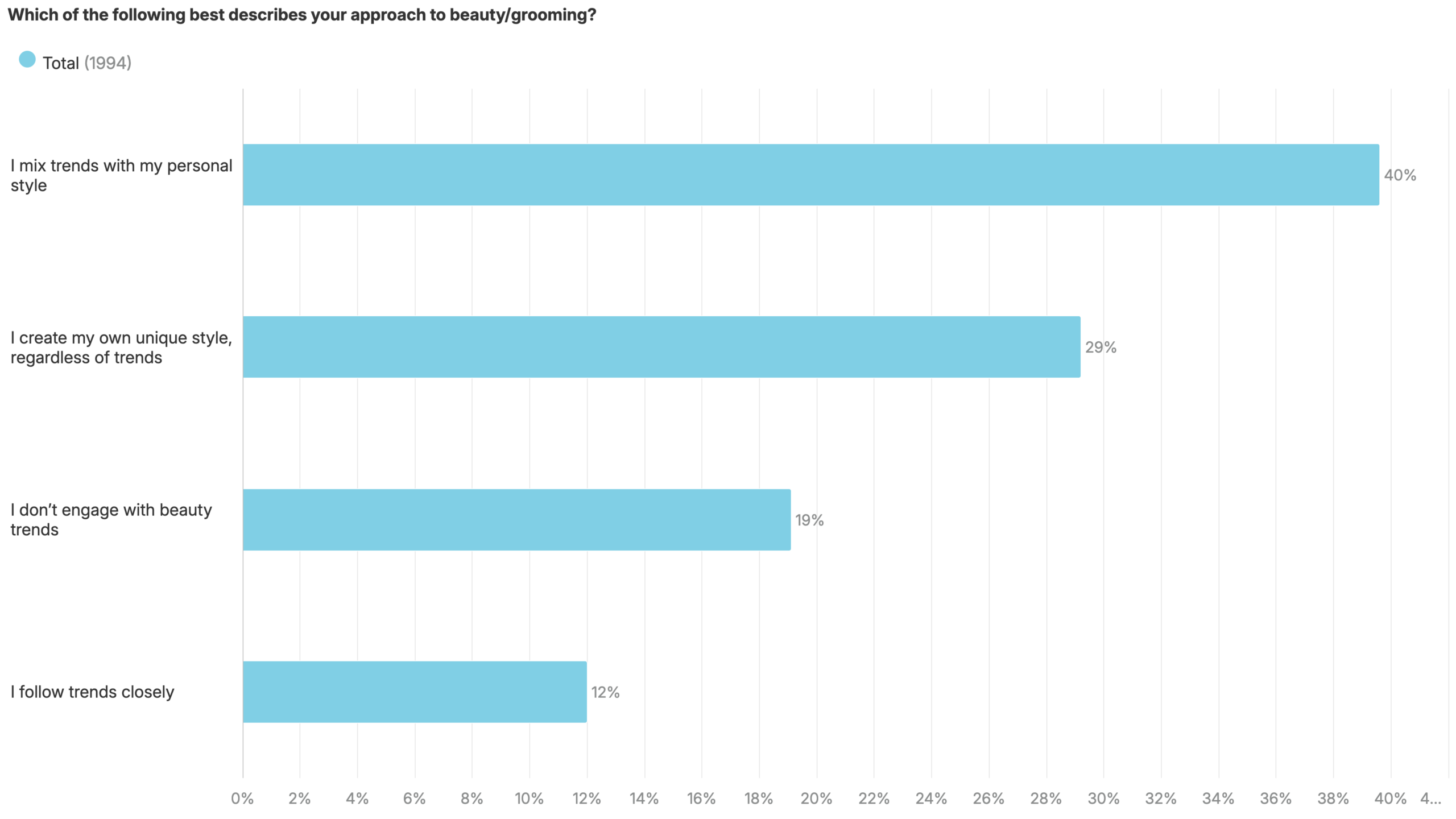
Gen Z is increasingly prioritizing individuality over trend-following.
- Mixing trends with personal style has decreased (42% → 38%)
- Creating a unique style has increased (28% → 31%)
What’s really happening here:
Gen Z is moving from trend adoption to trend adaptation.
Rather than copying looks, they:
- Personalize trends
- Combine multiple influences
- Prioritize authenticity over consistency
This reflects a broader cultural shift toward:
- Identity-first consumption
- Rejection of uniform beauty standards
- More fragmented aesthetics
Implication for brands:
Products should enable flexibility:
- Multiple use cases
- Customizable routines
- Messaging that shows variation, not a single ideal look
Trend #6: Physical retail remains essential
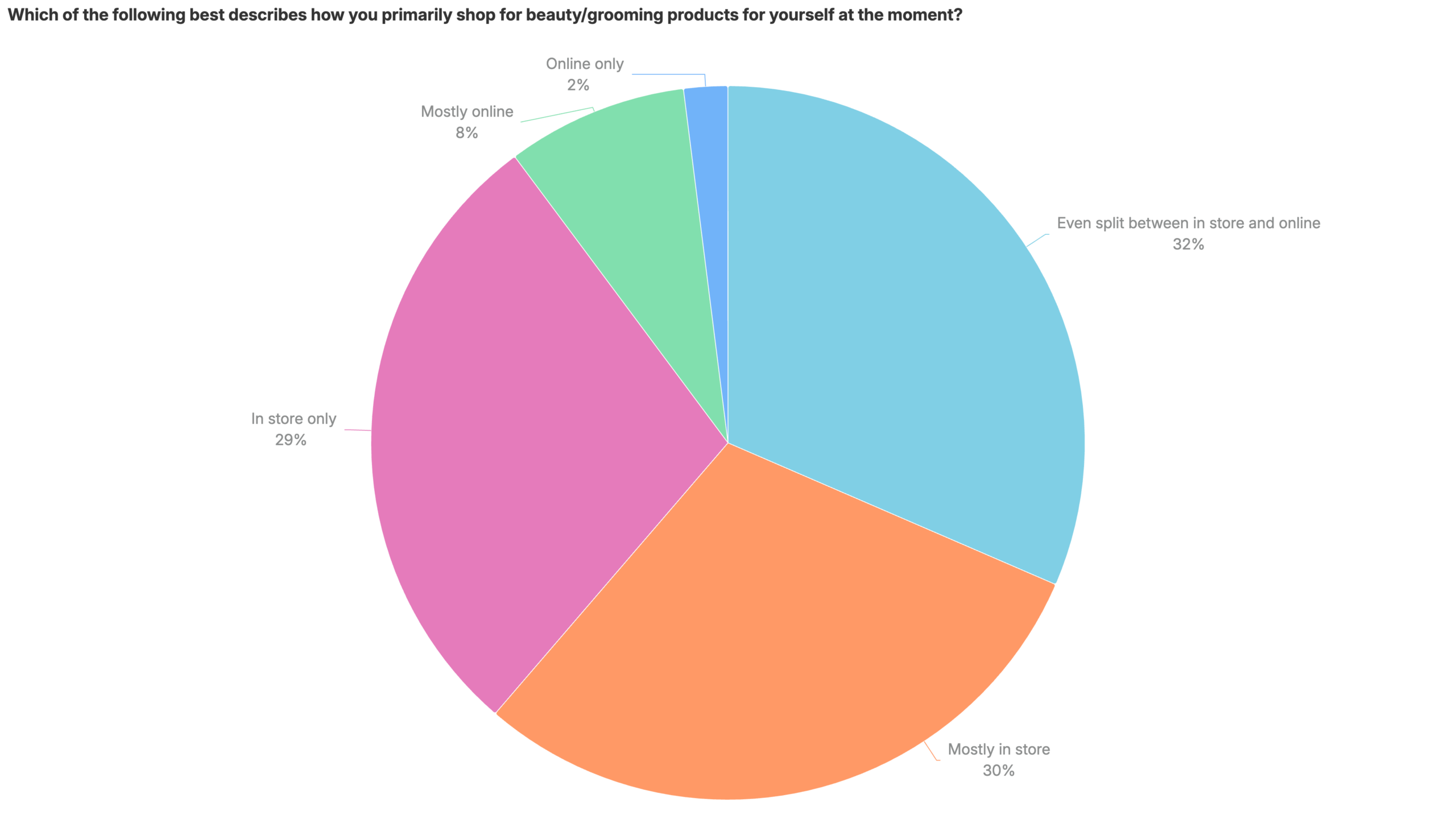
In-store shopping continues to play a dominant and stable role in Gen Z beauty purchasing.
91% of Gen Z include in-store shopping in their journey, with a slight increase in in-store-only shoppers (28% → 29%) .
What’s really happening here:
Despite digital influence, beauty remains a tactile, experience-led category.
Gen Z uses stores to:
- Validate products discovered online
- Test and compare options
- Reduce purchase risk
This creates a blended journey:
- Online for inspiration
- Offline for confirmation
Implication for brands:
Retail is not being replaced – it’s being redefined.
Brands need to ensure:
- Strong in-store experience
- Alignment between digital messaging and physical product
- Seamless movement between channels
Trend #7: Brand loyalty is cautious, not dead
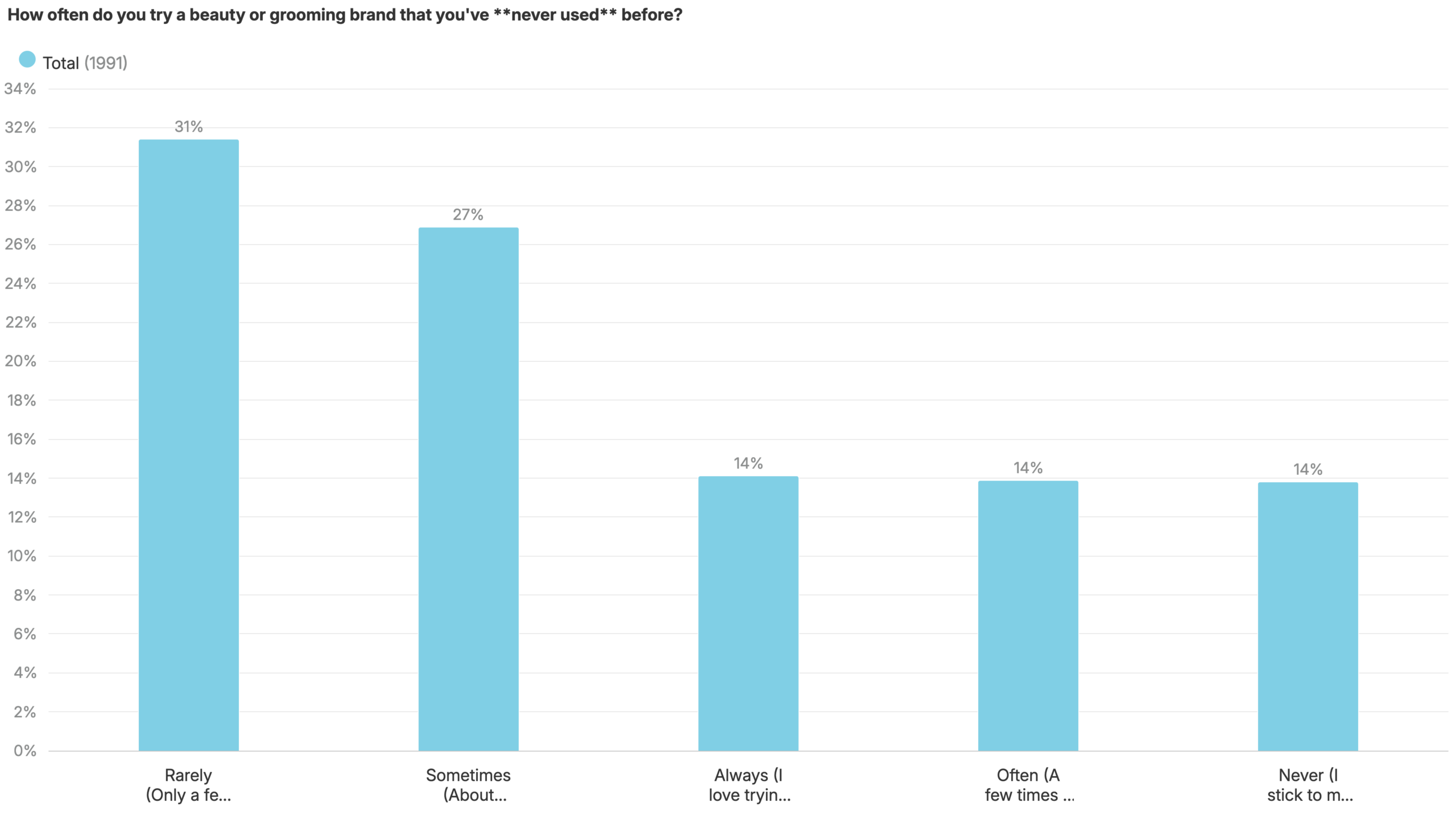
Gen Z is becoming less experimental and more selective when trying new brands.
- “Always trying new brands” has dropped (16% → 12%)
- “Rarely trying new brands” has increased (28% → 35%)
What’s really happening here:
Experimentation is being replaced by considered switching.
Gen Z still explores new brands, but:
- More cautiously
- With greater reliance on validation (reviews, reputation)
- Less frequently
This reflects:
- Tighter budgets
- Higher expectations
- Increased access to information before purchase
Implication for brands:
Acquisition is getting harder.
To win new customers, brands must:
- Build trust quickly
- Demonstrate clear differentiation
- Deliver consistent value to retain them
How Gen Z beauty behavior is shifting over time
| Trend area | 2024 data | 2026 data | What’s changed |
| Affordability as a driver | 56% prioritize price | 58% prioritize price | Price sensitivity is increasing, reinforcing value-first decision-making |
| Expected increase in spending | 46% expect to spend more | 40% expect to spend more | Spending confidence is declining, suggesting more cautious purchasing |
| Low spenders (<$10/month) | 9% | 13% | Growth in ultra-low spenders indicates tightening budgets |
| Sustainability – “very important” | 33% | 29% | Strong importance is softening, though still widely valued |
| Sustainability – “somewhat important” | 34% | 36% | Sustainability is shifting from priority to baseline expectation |
| “Natural” claims | 55% look for this | 56% look for this | Demand is stable, indicating maturity rather than growth |
| “Non-toxic” claims | 44% | 43% | Slight decline suggests more selective engagement with claims |
| TikTok usage (beauty content) | 46% | 53% | Continued platform dominance and growing influence |
| YouTube usage | 33% | 25% | Slight decline as attention consolidates on TikTok |
| Mixing trends with personal style | 42% | 38% | Decreasing reliance on trends alone |
| Creating a unique style | 28% | 31% | Growing emphasis on individuality and self-expression |
| Always trying new brands | 16% | 12% | Declining experimentation suggests more cautious behavior |
| Rarely trying new brands | 28% | 35% | Increased selectivity and reliance on trusted options |
| In-store only shopping | 28% | 29% | Physical retail remains stable and important |
Overall, Gen Z beauty behavior in 2026 shows a shift toward greater caution – with rising price sensitivity, reduced experimentation, and more selective engagement with values like sustainability.
What happens if brands ignore these trends?
Brands that fail to adapt risk:
- Pricing out Gen Z – losing relevance in a value-first market
- Overinvesting in purpose without payoff – sustainability messaging without affordability won’t convert
- Missing discovery channels – weak social presence limits visibility
- Breaking trust – lack of transparency reduces credibility
- Over-relying on loyalty – Gen Z will switch if value isn’t clear
How can businesses use these trends to appeal to Gen Z?
Balance affordability with value perception: price matters most – but perceived quality must still justify spend.
Make sustainability accessible: focus on practical, visible improvements, not premium positioning.
Prioritize transparency and clean claims: clearly communicate ingredients and product benefits.
Invest in social-first marketing: short-form video, creator partnerships, and reviews are essential.
Build omnichannel experiences: support both in-store testing and online discovery
How Attest can help
Understanding how Gen Z thinks, shops, and evaluates products is critical to staying competitive.
With Attest, you can:
- Compare customer segments side-by-side
- Carry out quant and qual research in one platform
- Identify purchase drivers and barriers
- Test messaging and positioning
- Track trends over time
All with fast, scalable insights from your exact target audience.
Research methodology
This multi-wave study explores beauty and grooming product purchasing habits, motivations, and social media usage among Gen Z consumers in the US. Data was collected across two waves, with the most recent wave completed in February 2026.
Participants:
- 1000 respondents based in the US, all English speaking
- Demographics:
- Ages 18-27
- Gender: 49% male, 51% female
- Regional quotas: Northeast (18.3%), Midwest (21.7%), South (37%), West (23%)