

The global functional beverages market has moved from niche to near-mainstream, becoming one of the fastest-growing segments in food and drink. Valued at around $163–192 billion in 2026 depending on the source, it’s on track to more than double within the next decade, driven by a fundamental shift in what consumers expect from what they drink.
That shift is simple: people no longer want just hydration. They want hydration that does something. From vitamin-enriched waters to adaptogen teas and probiotic sodas, functional beverages are now a mainstream purchase habit for the majority of working-age adults in the US and UK.
To understand what’s driving demand in these two markets, we surveyed 2,000 working-age consumers. Energy topped the list of desired benefits in both countries, but the picture is more nuanced than that. Taste, sugar content, clinical proof, and price all shape whether someone actually buys, and which brands they stick with. Here’s what the data shows.
Functional beverage market – at a glance
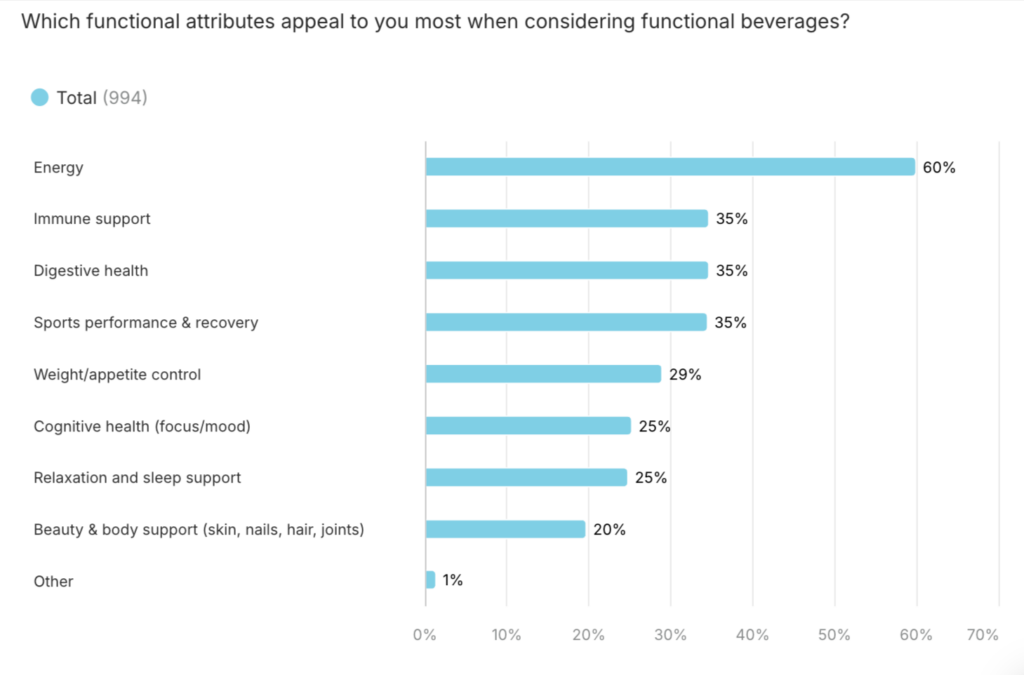
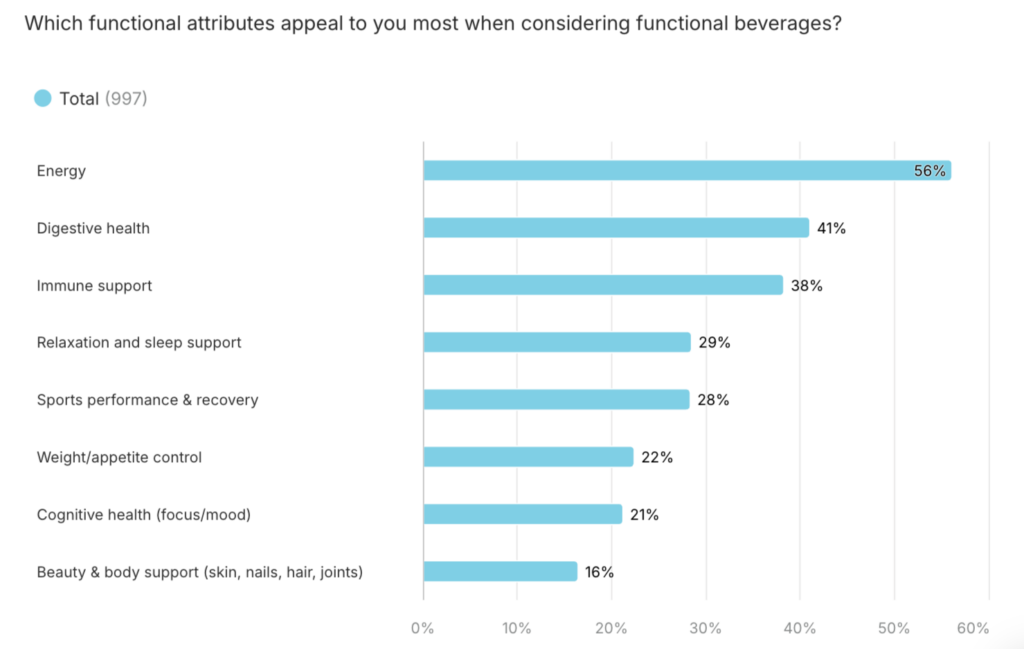
Energy is the #1 functional benefit in both the US (60%) and UK (56%), but digestive health, immune support, and cognitive function are gaining ground — especially among older consumers.
Taste is non-negotiable: 92% of consumers in both markets say it’s the most important purchase factor, ahead of price and health claims.
Scientific backing matters: 73% of US and 81% of UK consumers want clinical research behind functional claims — and that figure rises among regular buyers.
Sugar is a growing concern: 72% of older US consumers and 83% of regular UK buyers prioritise low or no sugar content.
Price pressure is real: 82% of US and 86% of UK consumers say price is important, even for products they already love.
Sustainability lags: Only 56% of US and 60% of UK consumers rate eco-credentials as important — the lowest-scoring factor in both markets.
What are functional beverages?
Functional beverages are non-alcoholic drinks that provide benefits beyond basic hydration, such as boosting energy, supporting immunity, improving digestion, or aiding focus. They typically contain added ingredients like vitamins, minerals, probiotics, or plant extracts. Common examples include energy drinks, sports drinks, kombucha, and vitamin waters.
Consumer trends in the functional beverage market
The US and UK are both mature, fast-moving markets for functional drinks, but consumer priorities don’t line up perfectly. Here’s a look at what’s driving demand in each.
US functional beverage market trends
Functional drinks go mainstream
Functional beverages are now firmly embedded in US consumption habits, with the vast majority of consumers buying into the category at least occasionally. While engagement is highest among younger consumers and men, energy stands out as the most universal benefit, cutting across age and gender groups.
Key stats:
- 83% of US consumers drink functional beverages at least sometimes
- 56% consume them often or very often
- 67% of regular buyers look for energy-boosting benefits
- Sports performance (39%) is the second most-wanted benefit
- Men prioritise energy more than women (67% vs. 53%)
- 31–49 year olds are the most likely to value energy benefits (68%)
Taste, sugar, and science: the decision trifecta
Function may draw consumers in, but flavor is what keeps consumers coming back when it comes to repeat purchase. Taste outranks every other factor — including health claims and price. But growing numbers of US shoppers are also scrutinising sugar content and demanding proof that the benefits they’re paying for actually work.
Key stats:
- 90% of US consumers say taste is important or very important (rising to 92% among frequent buyers)
- Taste outranks price (82%) and low/no sugar content (64%)
- Low/no sugar matters more with age: 72% of 50–67s vs. 53% of 18–30s (suggesting functional benefit still outweighs dietary concern for younger buyers)
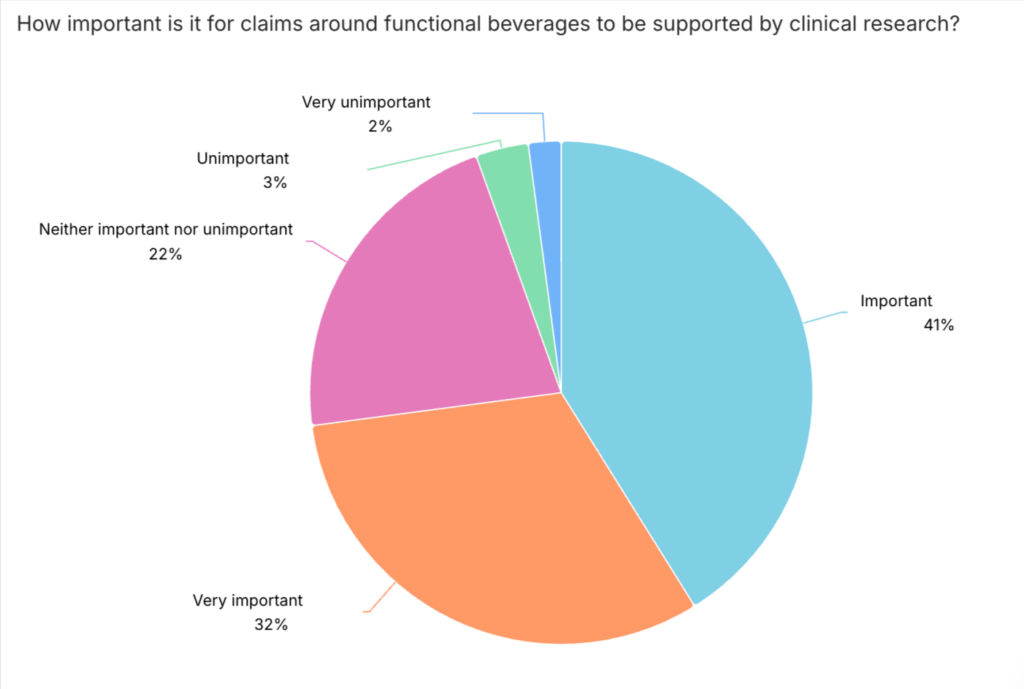
- 73% of consumers want clinical research to back claims (78% among regular drinkers)
Price and sustainability: still in the picture
Price remains a major consideration for US consumers, second only to taste when choosing functional beverages. Even highly engaged buyers expect strong value for money, putting pressure on brands to justify premium positioning. Sustainability, by contrast, plays a secondary role and is not yet a primary purchase driver.
Key stats:
- 82% of US consumers say price is important or very important
- 83% of regular buyers say cost influences their decisions
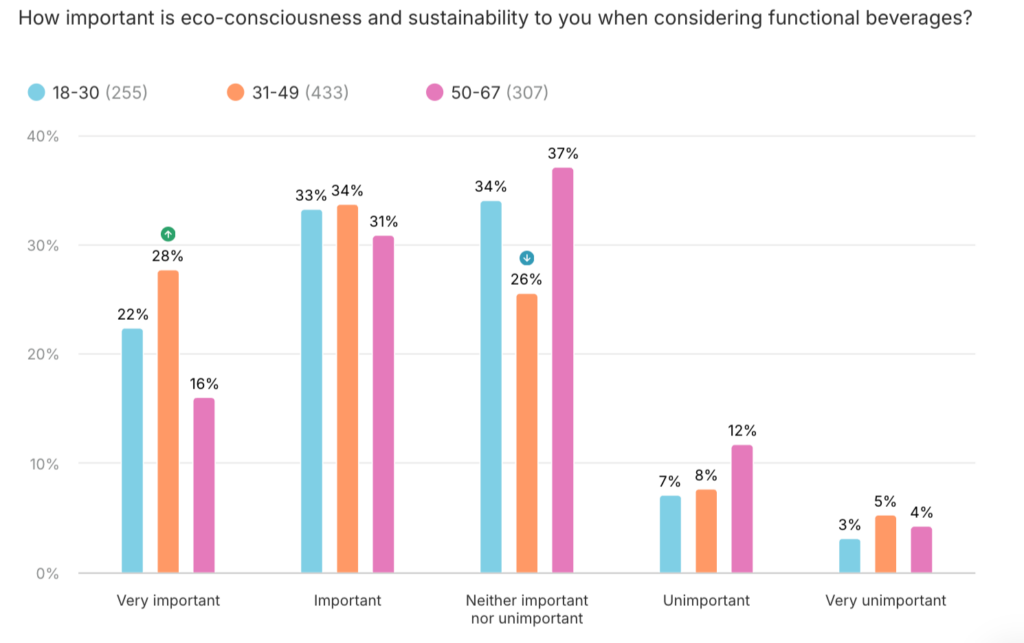
- 56% consider sustainability important, with nearly a third neutral
- Interest in sustainability rises to 64% among frequent buyers (but it still trails behind taste, function, and price)
- 31–49 year olds show the highest engagement with eco-conscious factors
US Takeaway: Functional beverage brands in the US need to lead with energy and taste, back claims with science, and stay price-competitive. Sustainability isn’t a leading driver, but it can be a useful differentiator for the right audience segments.
UK functional beverage market trends
Strong demand across the board
The UK functional beverage market is well-established, with widespread adoption across age groups. While younger consumers are the most frequent buyers, the category has broad reach, with most adults purchasing functional drinks at least occasionally.
Key stats:
- 85% of UK consumers buy functional beverages at least sometimes
- 55% consume them often or very often (21% very often, 34% often)
- 67% of 18–30 year olds are frequent consumers vs. 36% of 50–67 year olds
- Energy is the top benefit (56% overall, 60% among regular buyers)
- 50–67 year olds prioritise digestive health (44%) and immune support (38%) alongside energy (48%)
- Men over-index on energy and sports performance (38%), while women show higher interest in immune (40%) and beauty & body-related benefits (24%)
Flavour-first, but health-conscious
UK consumers are seeking benefits, but taste is still what gets them to buy and keeps them coming back. A clear majority also place real weight on sugar content — particularly among regular buyers — and expect brands to substantiate their health claims with evidence.
Key stats:
- 92% of UK consumers say taste is important or very important (rising to 97% among regular buyers)
- 86% say price is important
- 75% prioritise low or no sugar (83% among frequent buyers)
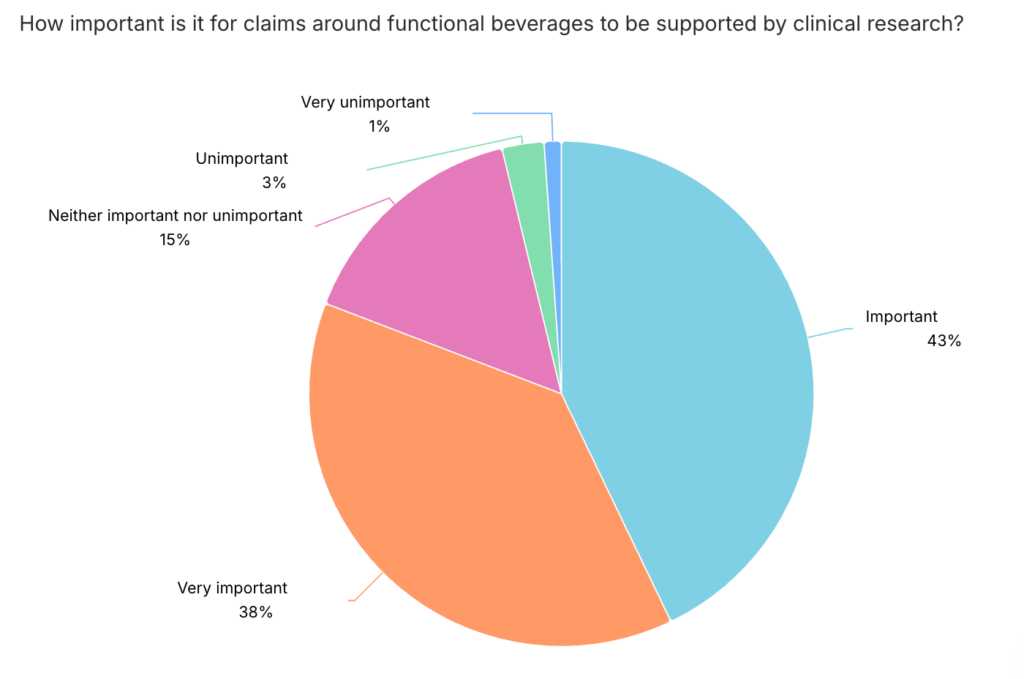
- 81% want clinical backing for functional claims (84% among regular drinkers)
Innovation welcomed, sustainability secondary
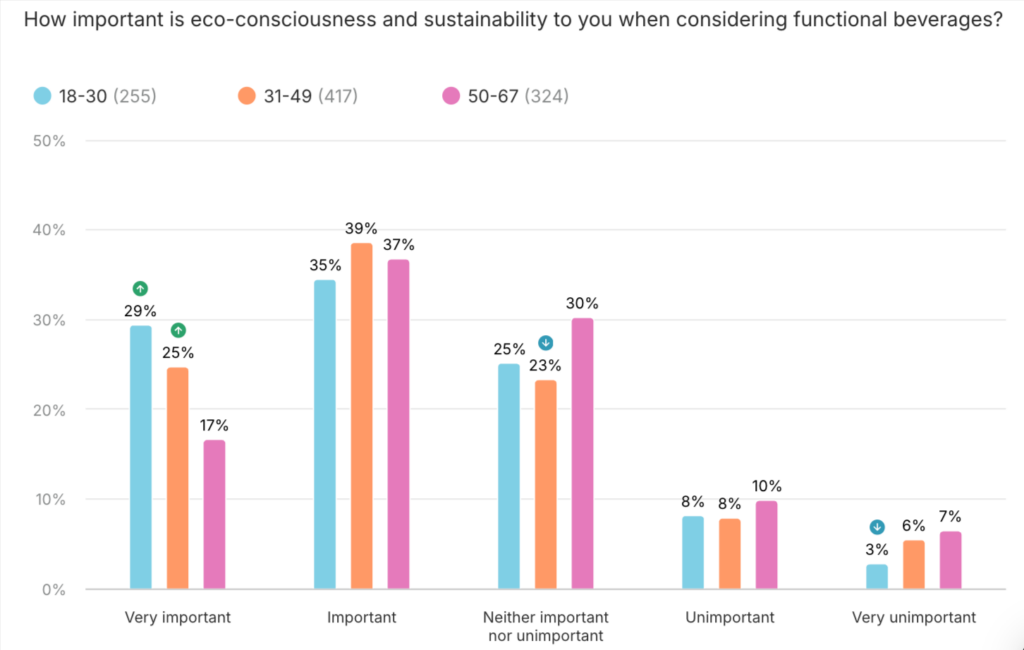
UK consumers — particularly younger ones — show a strong willingness to try new functional beverages, creating clear headroom for innovation. This openness is even higher among engaged buyers, especially when products deliver relevant benefits. Sustainability, however, remains a secondary consideration in purchase decisions. Younger consumers are the most sustainability-minded; older shoppers are the least engaged on this front.
Key stats:
- 86% of 18–30 year olds are likely to try new functional drinks
- 69% of 50–67 year olds say the same
- 93% of frequent buyers would try a new product with a desired benefit
- 60% of UK consumers consider sustainability important
- Interest rises to 70% among regular buyers
UK takeaway: For UK brands, the winning formula is energy-led innovation, clean ingredients, competitive pricing, and exceptional taste. Sustainability matters more here than in the US, particularly for frequent buyers and younger segments, but it’s still a differentiator rather than a core driver.
US vs. UK: where priorities diverge
Both markets share a common core: energy leads, taste is paramount, and sustainability trails behind other purchase drivers. The differences are more about emphasis than direction. UK consumers place greater importance on sugar content and show strong openness to innovation, particularly among younger buyers. US consumers, meanwhile, lean more toward sports performance as a secondary benefit and show slightly less emphasis on health-led trade-offs.
What this means for drinks brands
The US and UK data tell a consistent story with some important nuances. Energy is the dominant functional benefit in both markets, but brands that bank only on that are leaving growth on the table. Digestive health, immune support, and cognitive function are all gaining traction, especially with older consumers who bring high purchase intent and specific health goals.
Taste is the most decisive factor across both markets. It’s not a nice-to-have — it’s the baseline. Functional benefit and clinical credibility can earn the trial, but taste drives repeat purchase. Sugar reduction is increasingly expected, particularly among UK consumers and older US buyers, meaning clean formulations are now table stakes rather than a differentiator.
On pricing, both markets are cost-conscious even among regular buyers. Clear, credible communication of what a product does and why is the most effective way to justify a premium. Brands that can connect health outcomes to clinical evidence will hold stronger ground against price pressure.
Younger consumers are the most adventurous and open to new formats. Older consumers are more focused on specific outcomes and less forgiving of products that overpromise. Segment accordingly.

The functional beverage market encompasses non-alcoholic drinks enhanced with ingredients that offer specific health or performance benefits, including energy drinks, sports drinks, kombucha, fortified waters, and probiotic beverages. It’s a global multi-billion dollar category driven by rising health consciousness and demand for convenient nutrition.
A functional beverage is a drink formulated to deliver a targeted health benefit beyond basic hydration or nutrition. This could include boosting energy, supporting immune function, improving gut health, aiding cognitive performance, or enhancing athletic recovery, through ingredients like vitamins, probiotics, adaptogens, or electrolytes.
Yes. Functional beverages are one of the fastest-growing segments in food and drink globally. In the US and UK, the majority of working-age consumers already purchase them regularly, and adoption is accelerating, particularly among younger consumers who treat them as a core part of their health and lifestyle routine.
Estimates vary by source and methodology, but the global functional beverage market is broadly valued between $163 billion and $194 billion in 2026. Most forecasts project the market will grow significantly over the next decade, with projections reaching $300–370 billion by the mid-2030s, driven by health trends, product innovation, and expanding distribution.