

It’s too risky to rely on guesswork when launching a new campaign or product. So how does creative testing fit into this?

To recap, here are the two broad reasons for running creative testing:
- Helps you validate a concept—instead of using gut instinct alone, you can test your ideas with real target consumers before you sink a load of money into it. It also helps you ditch the ideas that won’t work, so you don’t waste time and money on them.
- Helps you refine concepts—don’t assume that your creative assets are working as hard as they could be! With creative testing you can find out what areas you could work on to make them more successful.
When every cent counts, creative testing will provide you with the data you need to be sure you’re not making a misstep.
Key reasons you should do creative testing
Understand how your ads make people feel
Through creative testing you track audience reactions to whole ads and the creative elements within them. You should be looking to understand what consumers like about the ad, what they don’t like, and whether there’s anything in the ad that confuses them or that they simply don’t understand.
Ultimately, the success of the ad will revolve around whether audiences find it memorable, and whether that memory will prompt people to buy.
Find out if the assets are right for your brand
You might also want to figure out whether the creative you’re working on is right for your brand. Consumers might already have an established perception of your brand and how it makes them feel.
Does your new creative contradict that existing perception? Will it change your brand image? This might be your intention; after a rebrand, for example. And if it’s not, you can rework your assets to reflect your values, purpose and image.
Risk-proof your assets
Tone-deaf creative assets could do more than just impact your sales figures in the short term—they can cause long-lasting reputational damage too.
No brand is immune from this. Even brands with huge awareness and sales, like Pepsi and Peloton, have launched ads that hit the wrong note and created massive reputational headaches. The benefit of mega brands like this is that they have the resources to bounce back—smaller brands might not have the clout to bounce back.
Pro tip: Make sure you test your assets in whichever local markets you’re aiming for. It can be easy to trip up over things like subtle cultural differences and badly translated copy, so if you’re going to get anything wrong, make it happen during your creative testing and not once you’ve actually launched!
Find out what action people perform from CTAs
What action do you want your audience to take after seeing your creative asset? Click a link to your website? Share the ad? Perhaps you need the creative to work as a standalone brand-boosting asset, in which case, the action might be to dwell on a new slogan or message.
Creative testing lets you trial different CTAs until you find the one that triggers audiences to perform the action.
Find out who your creative works best with
Different creative assets may work better (or worse) with different audiences.
For example, one approach could chime well with existing customers, while another might be better for prospective customers that you’re hoping to attract.
Creative testing can help you find out which creatives work best for different consumer segments. And with that intel you can more successfully publish assets you know will resonate with these audiences.
Pro tip 💡
Do you know what segments you should focus on?
If not, you should probably run some market analysis or consumer profiling research to give yourself a clearer and more useful understanding of exactly who you should (and shouldn’t) be targeting.
What types of creative assets should you test?
Creative testing isn’t limited to finished ads. You can test virtually any creative asset, or even any element of a creative asset, from taglines to imagery to CTAs and everything in between.
Let’s take a closer look at what creative assets are and all the types and elements that brand marketers and insight professionals commonly work with and test. We’ll also check out some real-life example questions from actual consumer research we’ve run.
First up, let’s make sure we’re all on the same page:
What are creative assets?
Creative assets are digital files of various formats that are used in marketing materials, ads, campaigns and other projects. They come in different shapes and sizes, from logos and images to videos and other rich media, which includes interactive elements such as GIFs or audio.
How to optimize different creative assets
Before we dive into specific tips for different types of creative assets, let’s set some ground rules. When developing, testing and refining creative assets, there are some key things to always keep in mind – whether you’re creating moving images or a line of copy.
- Know your crowd: like a restaurant asking you if you have any allergies, get to know the people who will see your assets. Find out what they’re allergic to in ads, and what they love. The best creative assets are built on a foundation of solid target audience research.
- Aim for brand consistency: some creative ideas are great and exciting, but might not be in line with what your brand usually does. That doesn’t mean you have to throw these ideas out of the window, but do find a way to make it relevant to your branding to remain consistent.
- Quality is key: we’re talking about high-resolution images, professional videos, and crystal-clear sound. They’re the basics, but don’t overlook them.
- Create for different platforms: we’re not quite handing our TV’s on the walls vertically, so make sure there’s a TikTok and Instagram version, and a TV or YouTube version of a video. Always adapt and design for the platforms and screens that are relevant to your brand.
- Accessibility is non-negotiable: creativity should be accessible to anyone. With everything you create and put out, ask yourself how you could make it more accessible. Alt text for images and captions for videos are just the start.
- Test, learn, adapt: test various versions of your assets. Not just internally, but with the people we mentioned in our first point: your target audience. Attest can help you optimize and test your creative assets. Start by exploring our creative testing survey template.
Now, let’s get even more specific and look at our tips for all kinds of creative assets.
Video/TV ads
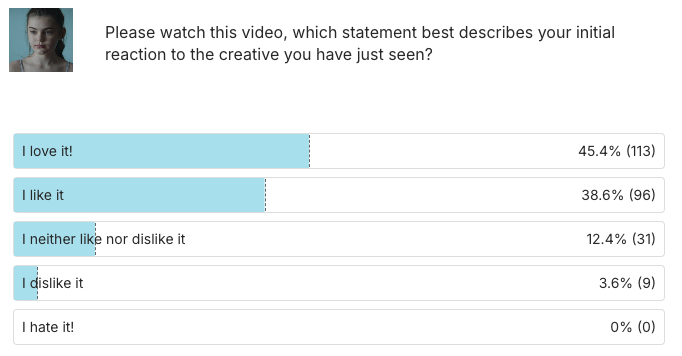
Video or TV ads are a creative testing classic! And because so much work goes into them (storyboarding, scripting, shooting, editing, voiceover…), it’s crucial to make sure it’ll be time and money well spent. that
Bear in mind the location of your ad, and how this might affect the creative. For example, people are more likely to sit through a network TV ad (they don’t have much choice) so those ads can have a slower pace than a YouTube ad, which people might be able to skip after 5 seconds.
Static ads
Billboards, social media, newspapers… static ads are as relevant as ever.
Again, think about placement. People’s attention spans on social media are much shorter than they are when they’re waiting at a subway station, so make sure your creative works in its context.
Website elements
Imagery, headers, copy, CTAs, the general user experience. When it comes to your website—arguably your brand’s biggest ‘always-on’ advert—the list of elements that can benefit from creative testing goes on and on.
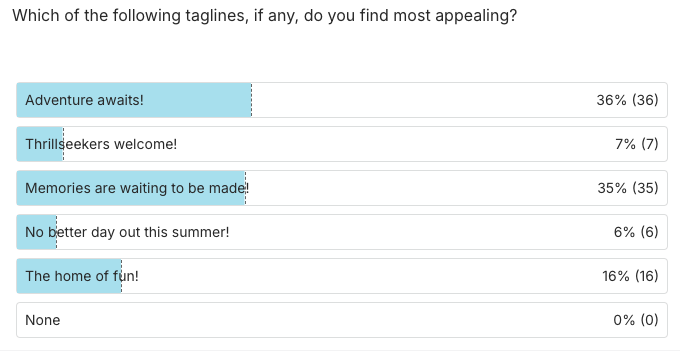
Taglines
A small number of words—a huge impact.
Your tagline should neatly summarize what your brand stands for—no pressure. Whether you’re working on a tagline for a static or video ad, or for your website’s homepage, or for your latest product’s packaging, creative testing helps you find the one that’ll make the biggest impact.
Claims and proof points
This is all about testing the proof points you add to your creative.
Think about something like toothpaste. You could say Recommended by 85% of dentists or you could say Contains protection against plaque. Both of these might be true, but which one will impress your buyers the most?
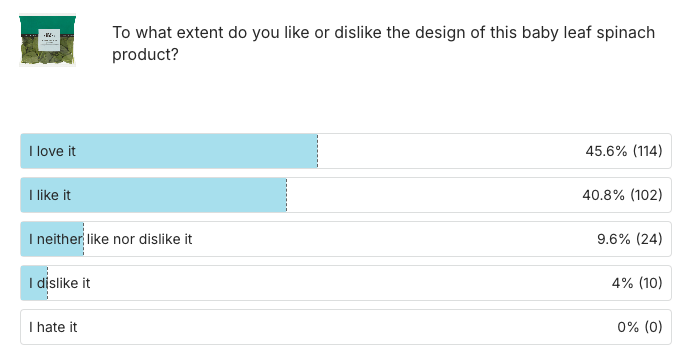
Product packaging
Among all your competitors’ products on a shelf, what will make yours stand out? From design to color choice to material, creative testing is how you find out.
Logos
We’ve all seen those graphics showing how massive brands’ logos have changed over time. In almost all cases, those brands will have run extensive creative testing to make sure their update won’t ruin all of that valuable brand equity and reputation they’ve built up.
Because your logo is so fundamental to your brand awareness, even subtle tweaks can have a big effect.
Audio
Effective audio for your creative can be the difference between buying and bypassingTesting your song choice or voiceover is a must!
How to run creative testing: best practices

You’ve worked hard on your ad/website/packaging (delete as applicable).
While good creative testing is how you guarantee its success, bad creative testing can guarantee failure. Inaccurate insights can send you in the wrong direction—and no one likes having to scrap a project and start from scratch.
We’re here to make sure your creative testing research is thorough, useful and efficient. Here’s our essential guide to running good creative testing research.
The two methods of creative testing: sequential and monadic
There are two main methods for creative testing.
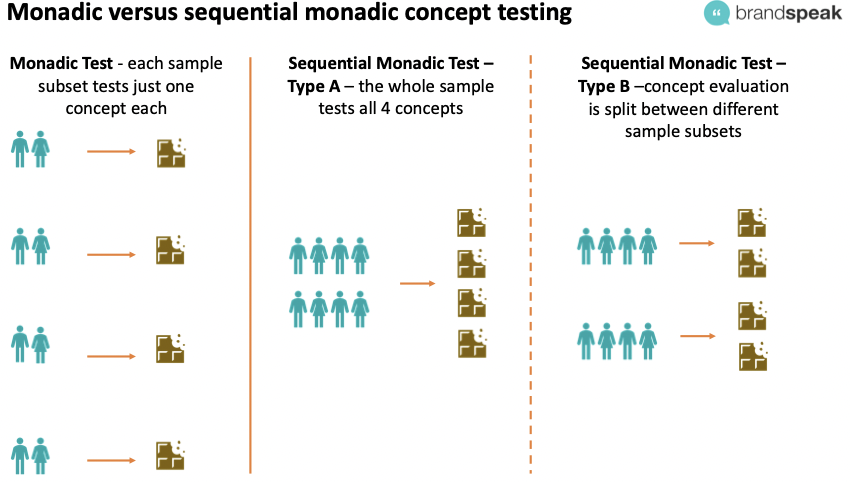
There’s monadic testing, where you divide your respondents into the number of creatives you want to test, then ask each group to review one creative idea without them seeing any of the other ideas. This usually stops people’s answers being biased by their views on any of the other ideas they see in your survey.
Then there’s sequential monadic testing, where you can test multiple creatives against each other, one after the other, in a single survey. You can ask the audience to compare and contrast the creatives and ask which one they prefer.
What are the benefits of creative testing?
Whichever way you choose to do creative testing, you’ll find there are some big benefits to it. You’ll improve the effectiveness of your ads, streamline creative processes, and more.
Creative testing (and acting on the results) ensures that every element of your advertising, from visuals to messaging, resonates deeply with your target audience. It significantly reduces the risk of costly missteps and enhances the potential for campaign success.
You can’t go on guesswork. There are a lot of numbers flying around about how many ads we see a day, some going up into the thousands. While that has been debunked (the number might even be closer to ‘just’ 100 a day), it’s absolutely true we see ads all the time, everywhere. And it’s becoming more challenging for brands to come up with something people won’t skip or walk past. One research showed that 65.9 percent of app users stated that they always skip in-app video ads – and numbers across other platforms are similar.
This makes it all the more important to put out creatives that stand out and resonate with your audience.
Let’s take a closer look at the benefits of both monadic and sequential testing.
The benefits of monadic testing include:
- Focused feedback: If respondents only have to evaluate one creative concept (instead of lots), you’ll probably get more thoughtful feedback. You learn more about the impact of each individual creative, which should give you more actionable feedback.
- Reduced bias: If participants look at a single creative, they’re not going to be influenced by other creative works. This makes sure that their responses are more likely to be unbiased and genuine.
- Dive deeper into the details: Monadic testing allows for a deeper dive into each concept and its specific elements. If you’re working on complex or nuances creatives, this could be incredibly valuable.
- Measure performance more accurately: If the stakes are high, the margin of error should be low. With this type of creative testing, you can often more accurately gauge the performance of individual creatives.
Leaning toward sequential testing? Here are the benefits:
- Direct comparisons: Letting respondents evaluate multiple creatives in succession makes it easier to understand which one stands out the most.
- Broader insights: The results you get from sequential testing might be more reflective of what happens in real-world scenarios. This is because they’re seeing multiple creatives, and in the real world people see loads of ads and creative assets every day.
- More cost and time-efficient: Testing multiple creatives in one go is simply quicker and often more cost-efficient. Perfect for those tight deadlines.
- Flexibility in your research design: Testing a range of creatives against each other can be particularly useful in the early stages, when you’re still not sold on which creative direction to take.
How to run creative testing research
What types of questions should you ask in a creative testing survey?
Ideally, you should ideally ask a mixture of both quantitative and qualitative questions. But if you ask too many qualitative questions then your respondents may get tired of answering, giving you low-quality data, and there’ll be a lot of answers to read through, taking a lot longer to analyze.
Qualitative questions are generally best to use in the early, exploratory stages of creative research—getting a vibe for what type of creative you should be publishing. While quantitative questions will give you a comprehensive amount of data for finding out which creative ideas work—because the numbers are bigger, you can have a bit more confidence in their authority.
Here are some example questions you could ask to get you started. We’ve also got more creative testing example questions to inspire your research. If you’re pressed for time, we have a creative testing survey template with all the best practices built-in.
Sequential testing survey questions
Quantitative
- Having seen both designs, which one do you prefer?
- Which ad makes you want to buy the product more?
- Which ad gives you a better feeling about the brand?
Qualitative
- Why did you choose that one? Please provide as many details as possible, we really appreciate any feedback.
- Why don’t you like X ad?
- How could X ad be better?
Monadic testing survey questions
Quantitative:
- Does this ad make you want to buy the product?
- Does this ad make you feel good about the brand?
- What is your favorite thing about the ad?
- In your opinion how clear was it that this advert was for [brand]?
Qualitative
- How does the ad make you feel?
- What don’t you like about the ad?
- How could the ad be improved?
- Please can you explain why you have given this answer?
- What do you think was the main message of this advert?
How to reduce bias in your creative testing: 4 best practices
You want your respondents to give you insights that are completely unbiased. Biased responses = decisions based on unreliable insights.
To avoid bias, you need to be clear about the things you want respondents to focus on and remove other distracting elements.
Here’s how.
1. Remove logos and familiar branding
If you were testing different types of packaging, you could remove brand logos to make sure any preconceptions the respondent has about the brand don’t influence their responses.
It’s also worth removing any colors that might remind people of your brand. Who doesn’t recognise the Coca Cola red or McDonald’s yellow?? (You shouldn’t need to worry about this if your brand isn’t as huge as these – only think about this if your brand is synonymous with your colors.)
2. Even remove products
You might also want to remove the product name, and perhaps even the product itself, to get people’s view on the packaging alone.
Imagine you’re testing packaging for a snack or soft drink:respondents could be swayed if they knew it was their favorite (or least favorite) flavor.
3. Test creative you know doesn’t work
This might sound counterintuitive, but you’ll thank us later!
By testing old or ineffective assets, you give yourself a benchmark to compare your new assets against. So, if you get similar results as the old asset, it’s not something you can justifiably launch. But if your new research shows improvements in key areas, that’s a green light!
Pro tip 💡
Don’t tell anyone, but it’s totally fine to test your competitors’ assets. In fact, we advise brands to make it standard practice.
By doing this, you have another benchmark to compare your assets with. But you also get an understanding of your competitors’ creative successes or failures.
4. Test an exaggerated version of your creative
If there are certain elements of your assets you want opinions on, exaggerate or highlight them.
For example, if you’re testing packaging and want to know what people think about your imagery choices, you could make the imagery more prominent on the version you test. Or you could remove other distracting elements so that people focus more on the elements you want them to see.
Best practices for setting your creative testing audience
Here are some pointers on how to reach the right people with your creative testing.
Work out who’s in your target audience
You should make sure your creative testing audience represents your target audience.
Pro tip 💡
Do you have doubts about who you should be running creative testing to? You’ll need to run some consumer profiling to get a proper sense of who’s in your target audience.
Widen your audience, and narrow it down later
You should slightly expand the parameters of your target audience for creative testing. This will allow you to compare the reaction of your non-target audience with that of your target audience. If the reactions are broadly similar, then you might find it worthwhile to expand your main target audience in the future.
For example, if your target audience is 30- to 40-year-olds, then conduct your test on 25- to 45-year-olds.
Set audience quotas
Put audience quotas in place, especially if you are conducting monadic testing. Audience quotas are where you pre-set certain amounts of respondents from specific groups to make sure you have a good spread of responses.
If you don’t set audience quotas and only use nationally representative samples, you could end up with different audiences reviewing different creatives, and this could mean your results are inaccurate. Putting quotas in place means you can be sure that similar, target customers audiences are reviewing your creatives, rather than a bunch of irrelevant people.
Randomize!
Make sure you randomize your creative assets (if you’re testing more than one at a time). If you don’t, then order bias might mean you end up with skewed results.
If you randomize, then you’ll get reliable insight into how effective each of your assets is.
Test with your own audience too
While you would typically carry out creative testing on people who fit your target audience—AKA prospective customers—it can also be a good idea to carry out creative testing on your loyal customers as well.
You can safely assume that your existing customers know your brand better than most people. That familiarity can mean that existing customers give you additional insights you hadn’t thought of before. For example they could tell you whether the creative you show them matches the brand purpose and image that they already have an understanding of.
Know when to move on
Although it’s useful to keep testing and iterating your creative ideas throughout the process of their creation (and even after they’ve been published, to a certain extent), you need to know when to stop!
If your new creative ideas are out-performing previous creatives that you tested in the past, then there’s no need to keep tweaking and testing. If the reactions are positive overall, then you’re probably ready to launch your creative ideas to the world for real.
And if you focus too much on tweaking existing ideas, that might not give you the space to test the game-changing, off-the-wall ideas that might take your brand to the next level.
Before you launch your creative testing project, make sure you know the key mistakes you should avoid.
What do you do after running creative testing?
You’re not done yet (sorry!).
In fact, this is where the real effectiveness of your creative testing study is determined. You need to be willing and ready to act on the results that come out of your creative testing. Let’s look at how you can navigate this part of the process.
- Start by deciphering the data: With Attest, you’ll immediately get an overview of the data and analytics, but it’s up to you to start interpreting this and looking at every piece of feedback. Are there overarching themes? Those will require most of your attention, but pay attention to the details as well.
- Identify standouts and underperformers: If you compared different concepts in your testing process, look at which ones have been voted best and worst, and dive into the why. These key insights are indicators of what works and what needs rethinking. This is where you need to look at the data, and not your own emotion: trust what your target audience is telling you.
- Contextualize with quantitative and qualitative feedback: If you did it right, you will not only have asked what works and what doesn’t, but also why. This data will help you determine what elements to change.
- Share insights with your team: Start doing this early on. They might come up with their own interpretations or ideas based on the data. Don’t be afraid to present data to creatives!
- Refine and iterate: Rework your concepts based on the feedback. Keep checking in if your alterations are actually in line with the feedback you got.
- Document and learn from the process! This is an often overlooked step. But don’t just look at the survey results and the new concepts – also keep account of how the whole process is going. This can be of great value next time you work on creative concepts.
- Launch your refined creatives into the world 🚦 They’re ready. Just keep an eye on how they’re performing!
Creative testing mistakes to avoid
We’ve covered what you SHOULD do. Here’s what you SHOULDN’T do in your creative testing research.
Don’t test too many assets
If you’re asking people to compare several creatives in a sequential survey, fatigue can quickly set in. Don’t try to test more than five or six ideas in a single survey—ideally, you should aim for just two or three.
Remember: the type of creative you’re testing will affect your respondents’ reactions. They could find multiple video ads overwhelming, while showing them two static ads would be much less stressful. And regardless of asset type, keep an eye on how busy the visuals are—even a static ad can be overwhelming if it has lots of visual elements or colors, so keep in mind what is impactful for different types of creatives.
Don’t ask too many questions
You should also limit the number of questions you ask respondents in creative testing so they don’t lose focus.
For example, if you were testing three different creative assets, ideally don’t ask them more than five questions per asset. If you do, their attention may wander.
Pro tip: A good way to judge how many questions you need is to look at the whole survey. You can get away with asking a few more questions per asset if, overall, your survey isn’t too long. With Attest you have a limit of 40 questions per survey, so you have the freedom to go as deep with your research as you need to.
Only focus on the questions that really matter. If you have a predefined idea of what your success metrics look like before you conduct the iterative creative testing, you’re more likely to get the data you need to inform your decision-making.
Don’t test creatives that are too similar to each other
If you test three very similar creatives in a sequential test, you’re unlikely to find a clear winner. Also, don’t test multiple similar ideas alongside one that is wildly different—they’ll see that the different one is unusual, and this might bias their responses.
If you want to test very similar ideas, use monadic testing (one asset per survey) so respondents just focus on one asset and aren’t aware of the other ideas that are being tested.
What is monadic testing? How to use it to your advantage
Feedback from consumers is crucial.
Whether you work in marketing, product development, or sales, you can’t improve without feedback. But the type of feedback you get matters just as much. Because not all feedback is created equal.
For example: when a customer is trying out a whole range of perfumes at once in a store that already smells of bubblegum, the feedback on the scents you sell is somewhat useless. The solution to that is monadic testing: a market research approach in which you show your audience concepts in isolation. That way, you get focused, unfiltered feedback on that specific idea—nothing else is competing for their attention.
But what if you need to know what they think about multiple concepts? That’s what sequential monadic testing is for. It’s similar, but here, you test one concept after another with the same audience, giving you a way to compare reactions while still keeping the feedback clean and focused.
Of course, (sequential) monadic testing applies to much more than just perfume, cheese or wine. You can use it for digital products, in retail, and anywhere else where feedback is key. And the best thing? You can do it at scale, with Attest. Let’s explore what it is, and how you can use it to your benefit.
What is a monadic test?
A monadic test is a method used in market analysis where you present only one concept or product idea at a time to respondents. The goal is to get their honest reaction on that single concept without other ideas clouding their judgment or having them compare it to other options they’re seeing. By isolating a single concept, you learn how well it actually resonates with your audience, without any outside influences muddying the waters. Respondents won’t put it on a scale, but give focused feedback.
Monadic testing vs. sequential monadic testing
If you need to test more concepts than one, but still want uncluttered, unbiased feedback, you can use sequential monadic testing. The difference between monadic testing and sequential monadic testing is in how you present your concepts to your audience.
In monadic testing, respondents see only one concept in isolation. This eliminates the influence of other concepts.
With sequential monadic testing you can test multiple concepts one after the other with the same group of people.
This method is perfect for comparison testing because it lets you see how different ideas stack up against each other in real time.
Pro tip: Keep in mind that with sequential monadic testing there’s a slight risk of order bias, meaning the sequence in which concepts are presented can affect the feedback. Still, sequential monadic tests are incredibly useful when you need to test several ideas with fewer respondents.
Both methods have their strengths, but your choice depends on what you’re trying to achieve, and what needs testing. If you’re looking for in-depth feedback on a single idea, monadic tests are your best bet. But if you need to understand how different concepts compare directly, sequential monadic tests are the way to go.
The benefits of monadic testing
Market researchers, product designers, data-driven marketers: they all love monadic testing.
Whether you’re trying to refine products, messages, or packaging, it’s one of the more clean ways of getting data to support your ideas and guide next steps.
Here’s why this method is so effective:
1. Clarity: Understanding your concept without distractions
One of the most benefits of monadic tests is the level of clarity they provide.
When your respondents are shown just one concept – whether it’s a product idea, an advertisement, or a value proposition – they focus solely on that idea without being influenced by comparisons. Because when you’d show even only two concepts at a time, people will automatically start comparing them. Which is not always what you want.
You’ll get feedback that reflects the true perception or first impression of the concept. You’re not left wondering which part of a comparison swayed the response; you get a clear, unambiguous read on what your audience really thinks.
2. Predictability: Consistent results with fewer surprises
In monadic testing, each respondent evaluates a single concept in a vacuum, free from the influence of other concepts.
This means you’re more likely to increase the predictability of your results. Now, why would you want that? It’s (fairly) simple: when there are fewer variables at play, the data you gather is more consistent and reliable. This allows you to forecast outcomes with a lot more accuracy.
For consumer brands making high-stakes decisions – like whether to greenlight a new product or spend money on a daring campaign – this predictability is invaluable in making confident decisions, and getting stakeholders on board.
3. Reliability: Minimizing bias for more accurate insights
Reliability in market research hinges on eliminating biases, and monadic tests are great at exactly that.
By showing respondents only one concept, you minimize the risk of order bias and interaction effects – factors that can skew the results in comparison testing methods.
With monadic testing, the feedback is purely about the concept itself, which often leads to more accurate insights that you can trust.
4. Cost-effectiveness: Maximizing ROI in the long run
While monadic testing typically requires a larger sample size compared to other methods, it’s more cost-effective in the long run.
The reason? The data you collect is highly focused and actionable, reducing the need for repeated tests.
This also allows you to make informed decisions faster. In other words, if you do monadic testing right, it can give you all the benefits of qualitative market research: better resource allocation, quicker time to market, and ultimately, a higher return on investment.
5. In-depth insights: taking it to the next level
Monadic testing is a great place to start if you want to go into the deep end with your audience.
Because respondents in a monadic test focus entirely on one idea, you get clear inspiration for asking more detailed follow-up questions and qualitative questions. This can give you a richer understanding of your concept’s strengths and weaknesses, even the ones your team may have not seen before.
For more on the benefits of consumer research, check out this article.
Types of monadic concept testing
Monadic concept testing is more versatile than you may think. There are several variations you can choose from, depending on your specific goals and resources.
We’ll have a look at how each approach offers its own advantages, so you can tailor your testing strategy to gather the most relevant and actionable insights.
1. Split cell testing
With split cell testing, you divide your audience into separate groups, with each group exposed to only one concept.
This method is great for testing multiple concepts without letting the feedback from one group influence another. You get to see how different ideas perform in isolation, ensuring that the feedback you receive is purely about the concept in question.
This approach is ideal for testing multiple concepts simultaneously while maintaining the clarity and focus that monadic tests are known for.
2. Partially sequential testing
Partially sequential testing gives you the best of both worlds. It strikes a balance between monadic and sequential monadic testing.
In this hybrid approach, respondents might be shown one concept first, followed by others after a break or in a different session.
The aim of this method is to reduce order bias – the tendency for earlier concepts to be remembered more favorably – while still allowing some level of comparison between ideas. Use this when you want to do consumer research that compares concepts but are concerned about the potential influence of seeing them back-to-back, for instance with concepts that are strikingly similar.
3. Sequential monadic testing
If you do want to compare opinions, you can use a sequential monadic test.
This method of concept testing involves showing the same respondents multiple concepts, one after the other. When you need to understand how concepts stack up against each other in the same respondent’s mind, this is the way to go.
But while it offers valuable comparison insights, be mindful of order bias, as the sequence in which concepts are shown can impact how they are perceived.
Explore how Attest’s creative testing services can support your market research efforts.
How to set up a monadic test
Below you’ll find what steps to keep in mind in general when setting up a monadic test, and how Attest makes it even easier:
Step 1: Define your objective
Every other step in the process will be influenced by the goal of your monadic concept testing.
What is it you want to learn, and what do you want to do with that information? Are you testing a new product idea? Trying to refine your value proposition? Is this to convince stakeholders, or to give your team fresh ideas? The more clearly defined your objective, the more useful the outcome of the research will be.
Step 2: Select your concepts
Choose the concepts or ideas you want to test.
Whether it’s a product concept, an ad headline, or a landing page design, make sure each is clear and well-defined. Know what limitations each concept has, depending on the stage of development it is in. You should either communicate this to your target audience, or keep it in mind when analyzing their feedback.
Step 3: Design your survey
Time to create a monadic survey design or sequential monadic test.
Your survey should include follow-up questions that dive into why respondents feel the way they do about the concept. With Attest, you can easily do this. Just check our tutorial here.
Step 4: Choose your sample size
Determine your sample size based on your research needs.
A larger sample can provide more reliable data, but it’s essential to balance size with practicality and cost. For comparison testing or clean monadic concept testing, the ideal sample size can differ.
Step 5: Analyze the results (and take action)
Once your monadic test is complete, analyze the data to identify the strengths and weaknesses of each concept.
Look for trends in the responses that can inform your next steps, based on your initial research goals.
For more detailed insights on setting up sequential monadic tests or split cell monadic testing, check out our guide on gathering consumer insights.