Black Friday is one of the biggest sales days of the year, and most brands feel they have to take part. The discounts bring in a rush of orders, and the numbers for that week usually look good.
But what does a brand have to show for it once the sale is over? Does Black Friday actually do anything for long-term customer acquisition or brand awareness?
To find out, Attest surveyed 2,000 Black Friday shoppers in the US and UK and asked them to think back to what they bought last year. We asked if they could remember which brand they bought, and whether they’d bought from that brand again since.
The answers suggest Black Friday does very little for brand building.
Most shoppers can’t remember who they bought from
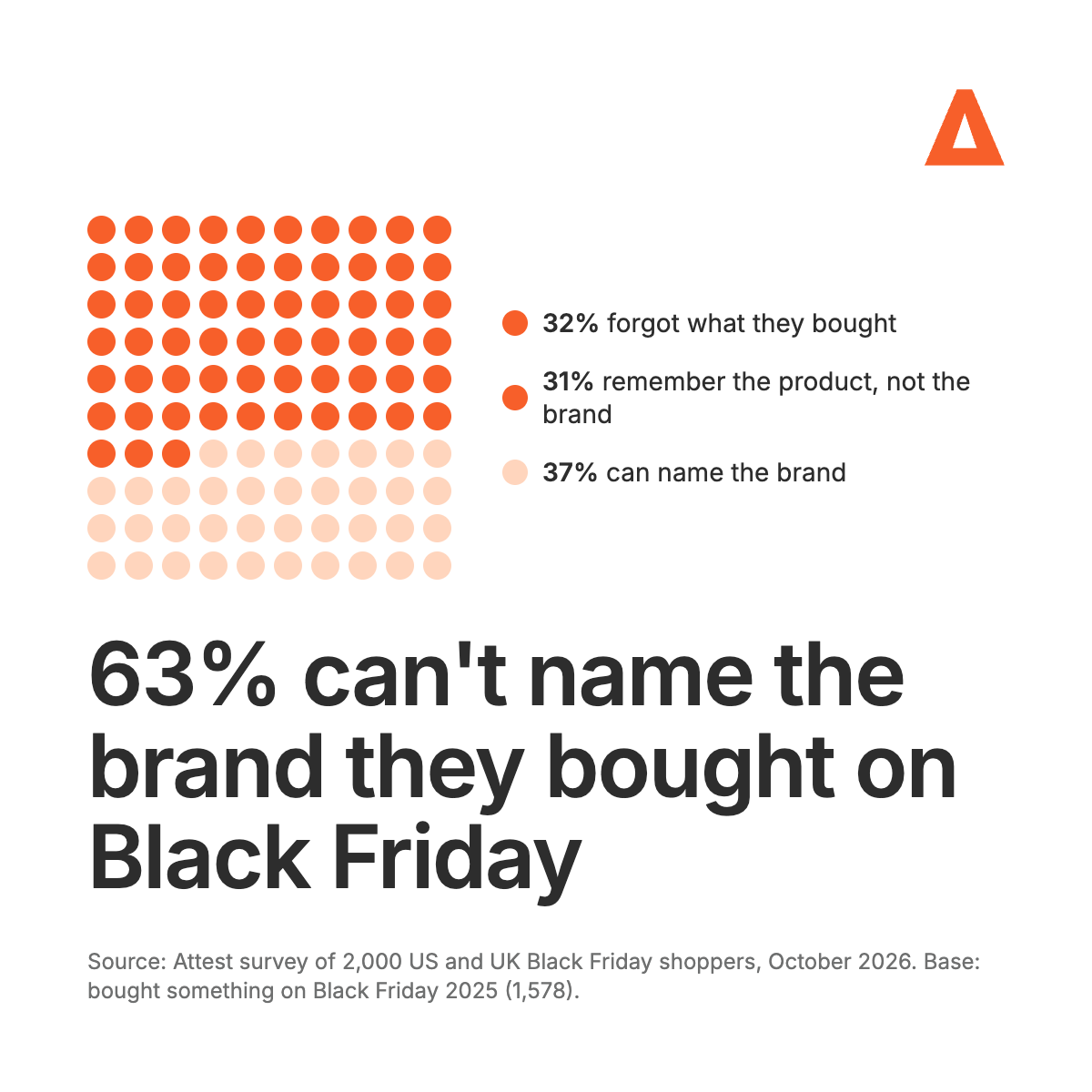
Among people who bought something on Black Friday last year, nearly two-thirds (63%) can’t name the brand it was from. About a third (32%) have forgotten what they bought altogether, and another 31% remember the product but not who made it. The figures were the same in the US and the UK.
That matters if brand building is part of the reason for taking part. A sale that people can’t connect to a brand a year later has done little to make that brand more memorable.
The brands people remember are ones they already knew
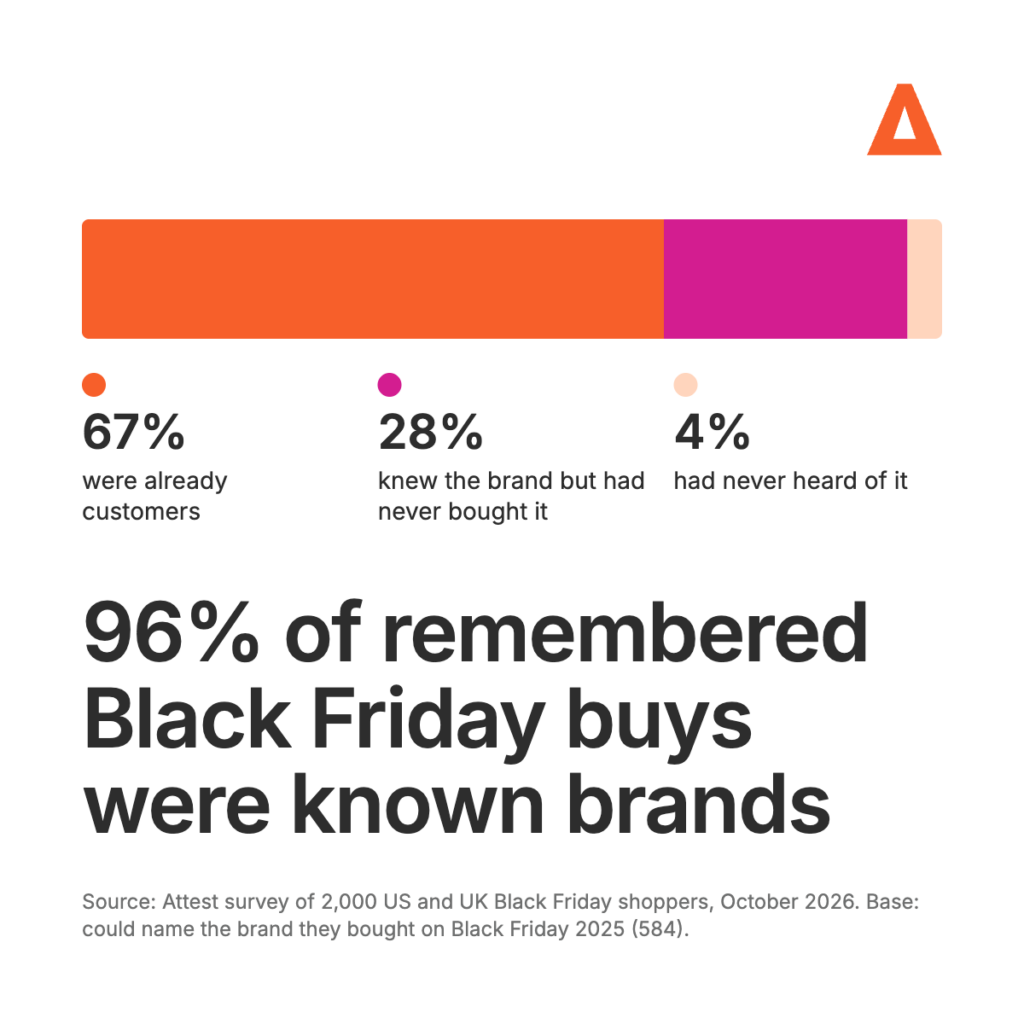
We asked the shoppers that could remember the brand whether they knew it before the sale. Almost all of them (96%) did. Two-thirds (67%) were already customers, and another 28% had heard of the brand but never bought from it. Only 4% bought from a brand they had never heard of.
So the brands that stick in people’s minds after Black Friday are mostly the ones that were already there. A discount can help someone finally buy a brand they’ve had their eye on, but it rarely makes a new one memorable.
Existing customers are the ones who come back
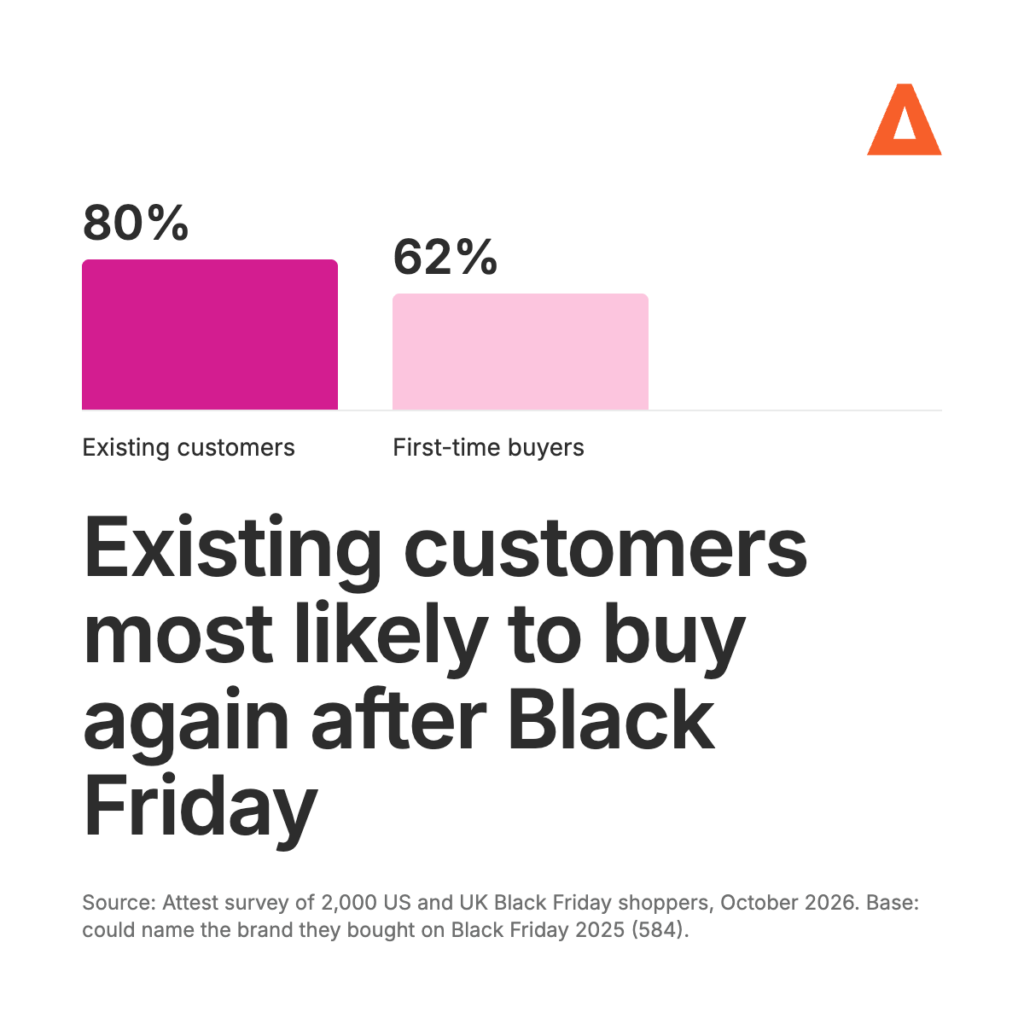
The people most likely to have bought from the brand again since were the ones who had bought from it before. 80% of existing customers have bought from the brand again in the year since Black Friday 2025, and 59% have done so more than once. Among people buying from the brand for the first time, 62% have bought again.
Brands that were completely new to the shopper barely feature. Of the 584 shoppers who could name the brand they bought, only 21 had never heard of it before, and just 6 of them have bought from it again.
In other words, Black Friday mostly rewards the loyalty a brand has already earned, and does little to create more of it.
Some of those sales might have happened anyway
If most of the Black Friday purchases people remember went to existing customers, some of those customers would probably have bought from the brand at another time, at full price. Some may have bought earlier than they would have done to catch the deal. Others may have held off until the discount arrived. Either way, a sale the brand might have made at full price became a discounted one.
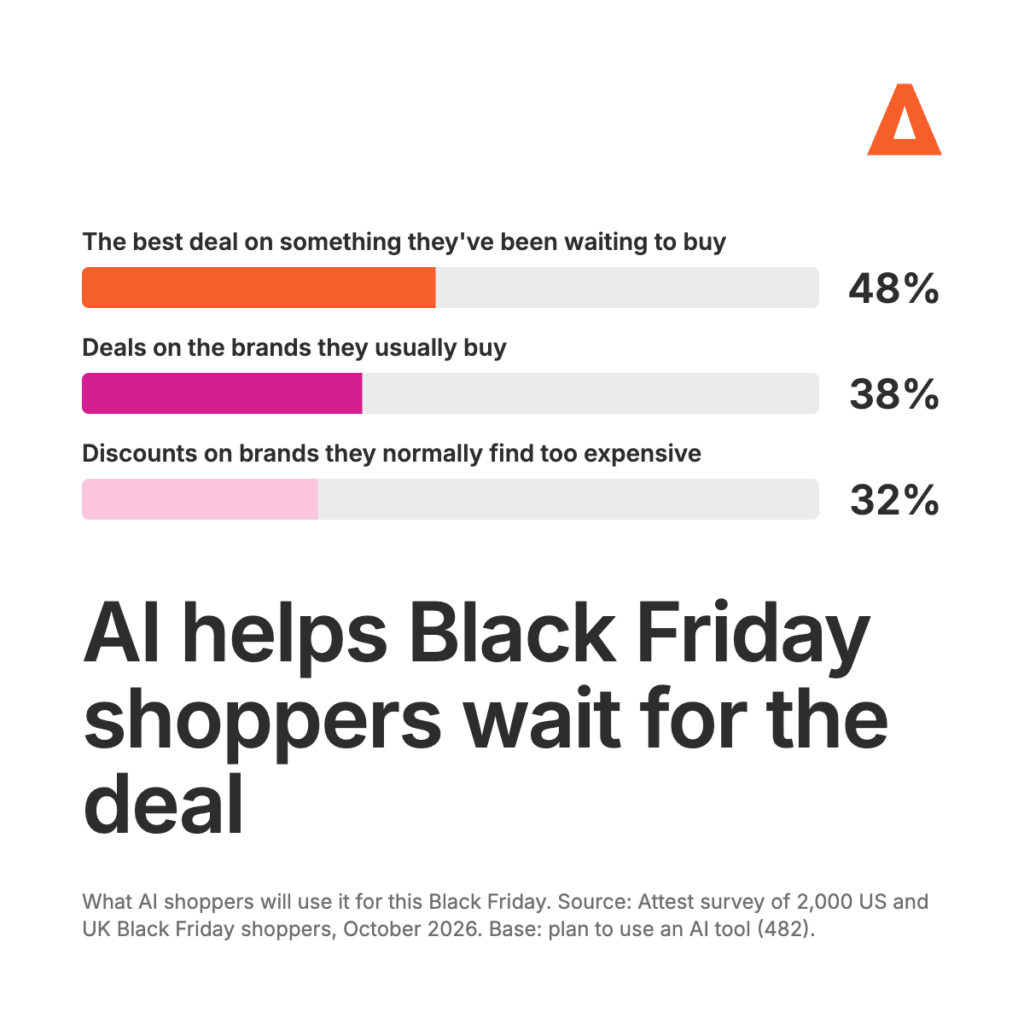
AI is making that easier. A quarter (24%) of this year’s Black Friday shoppers plan to use an AI tool such as ChatGPT or Google Gemini to help them, and in the US that’s more than double the 11% who planned to in 2024. Of the shoppers using AI, 48% will use it to find the best deal on something they’ve been waiting to buy, 38.5% to find deals on the brands they usually buy, and 32% to find discounts on brands they would normally find too expensive.
The survey can’t tell us whether these shoppers would have paid full price without the deal. But it does show that most remembered purchases went to people who already bought from the brand, and that AI is making it easier for loyal customers to wait for a deal.
How to tell whether a sales event is building your brand
None of this means brands should sit out Black Friday. The sales spike is real, and for some brands it can make or break the year, whether that’s hitting annual targets, clearing stock or bringing in cash. But if part of the reason for taking part is to build the brand, it’s worth checking whether that’s happening.
Sales and repeat purchases in a brand’s own data only tell part of the story. They don’t show whether those customers would have bought anyway at full price, or whether heavy discounting is training them to wait for the next sale, giving away margin, or cheapening a premium brand.
AI-moderated interviews can fill some of that gap by digging into buyers’ motivations and thought process, while brand tracking can show whether your promotions moved the numbers.
Measuring awareness, consideration and preference before and after a sales event shows whether the brand got any lasting uplift, or whether things went back to where they were once the discounts ended. Tracking competitors at the same time shows whether the brand gained any ground on them, or simply rose and fell with the rest of the category.
The same applies to Prime Day, Cyber Monday, Boxing Day and every other sales event. If the discount isn’t building anything, it’s worth knowing before planning the next one.

About the research
Attest surveyed 1,000 consumers in the US and 1,000 in the UK who plan to shop on Black Friday in 2026, nationally representative by age and gender, in October 2026. Figures are combined across both markets, where the two told the same story. The 2024 comparison comes from an Attest survey of 2,000 US Black Friday shoppers in November 2024.
Figures on brand recall are among the 1,578 people who bought something on Black Friday 2025. Figures on the brands people remembered, and whether they’ve bought from them since, are among the 584 who could name the brand, because only they were asked about it. Figures on AI use for deals are among the 482 who plan to use an AI tool this Black Friday.