
We surveyed 1,000 nationally representative Americans ages 18-66 using Attest’s platform to provide a snapshot of upcoming traditions, spending habits, and emotions prior to the holidays.
Quick summary
- 92.7% of respondents celebrate Christmas, with 63.5% celebrating New Year’s.
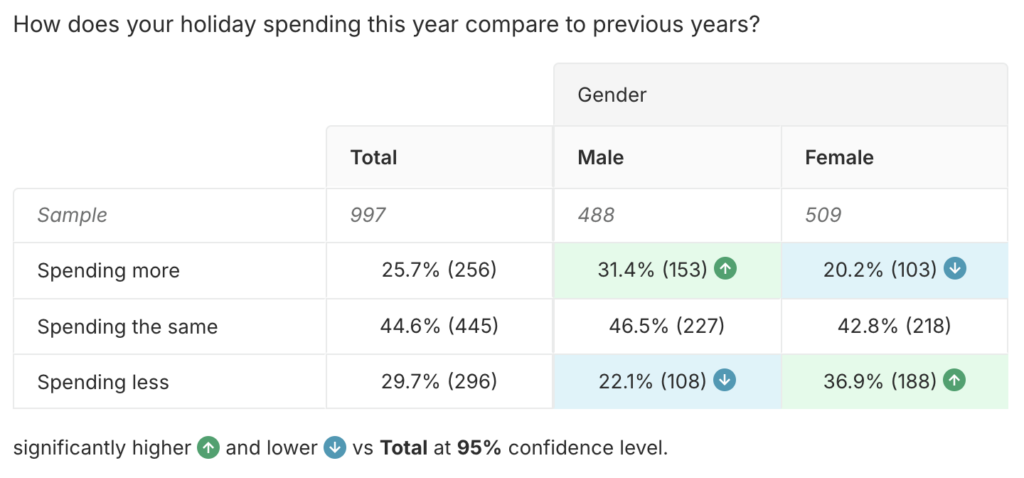
- 44.6% plan to spend the same as last year, with gender differences in spending habits.
- 52.5% start planning during November, with Black Friday and Cyber Monday being key.
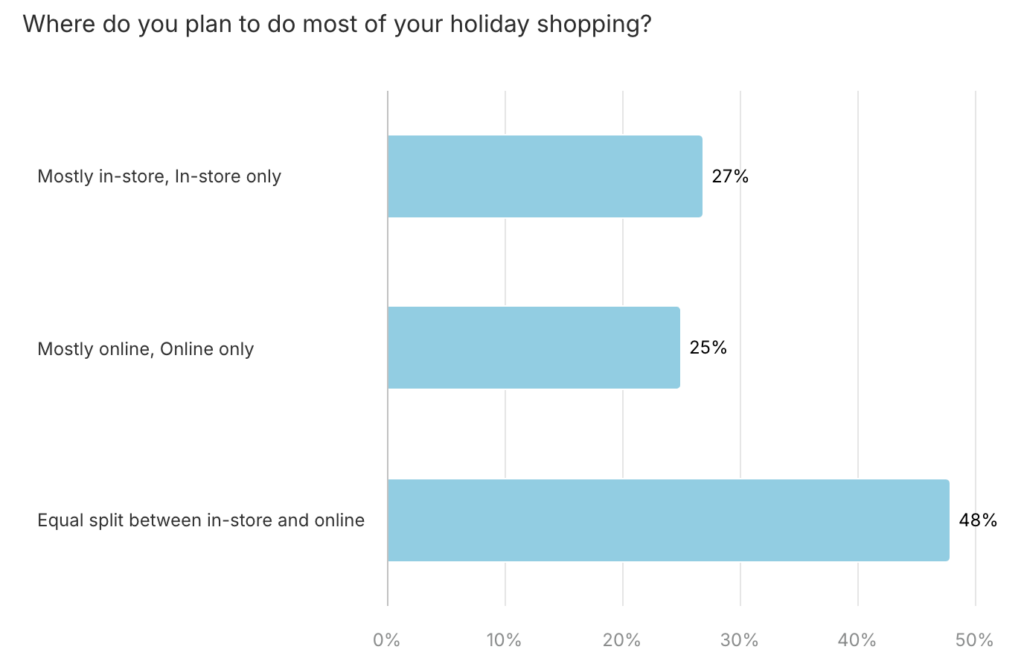
- 25% will shop entirely online, while 47.9% will split between in-store and online.
- 57.5% prioritize gift cards or cash, and 51.8% prefer practical gifts.
- 36.8% use AI tools like price tracking during shopping.
Holiday spending and shopping location trends
Unsurprisingly, Christmas celebrations dominate the winter holidays, with a majority (92.7%) of respondents taking part. This is followed by New Year’s festivities with 2 in 3 saying they will celebrate (63.5%).
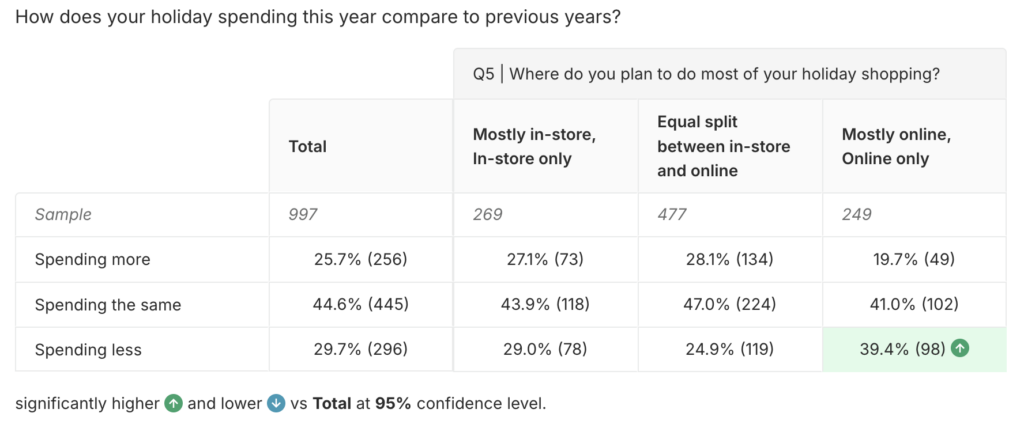
Despite concerns about the economy and lingering inflation worries, 44.6% of respondents plan on spending the same as last year with the remaining group almost split on spending more or spending less this year.
Gender differences within this question do appear, with females more likely to say they will spend less and males more likely to spend more this year.
For most respondents, holiday planning typically starts in November with more than half (52.5%) beginning their preparations during the month of Thanksgiving, Black Friday and Cyber Monday, where savings are well recognized.
Will people shop instore or online?
Even with the continued rise of online shopping, diversified shopping channels on things like social media, and quicker than ever shipping, in-person retail shopping remains an important outlet. Only 1 in 4 (25%) plan to do most of their holiday shopping only at online stores. Close to half (47.9%) of respondents plan on doing their holiday shopping via an equal split between in-store and online.
Interestingly those that prefer online shopping only are more likely to say they will be spending less this year.
What types of gifts will people buy in 2024?
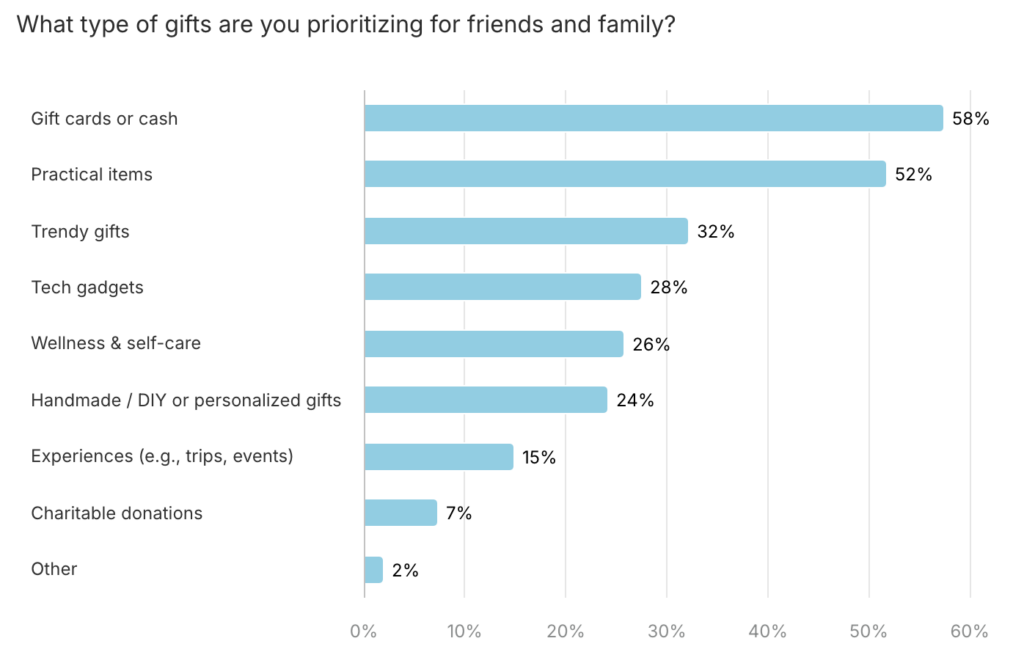
Gift-giving trends reveal a preference for practical and meaningful items. More than half (57.5%) prioritize gift cards or cash, offering flexibility to recipients. Practical items also tops the list (51.8%), reflecting financial pragmatism.
Handmade gifts and experiential presents (24.2% and 14.9% respectively) underscore the desire for personal and memorable tokens. Charitable donations and experience type gifts remain less popular.
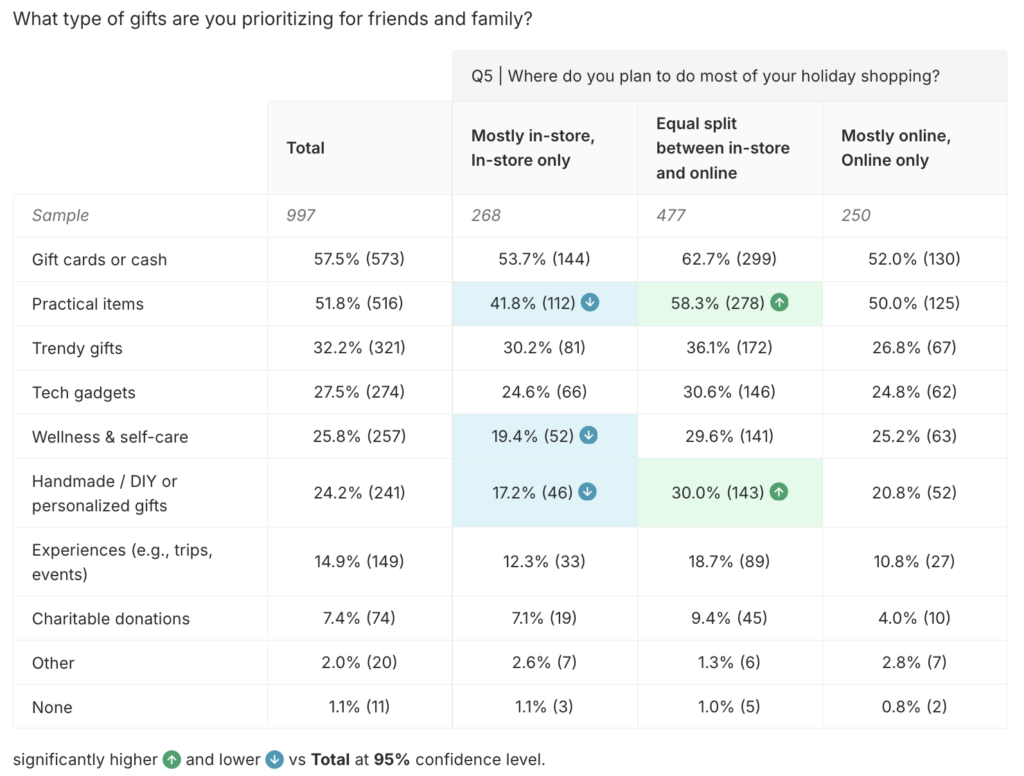
When looking at the types of gifts people are prioritizing, differences emerge based on shopping location preference.
In-store shoppers are less likely to prioritize items like wellness, handmade or practical gifts. Those that equally split in-store and online shopping are more likely to look into purchasing practical and handmade/personalized gifts.
Using AI for Christmas shopping
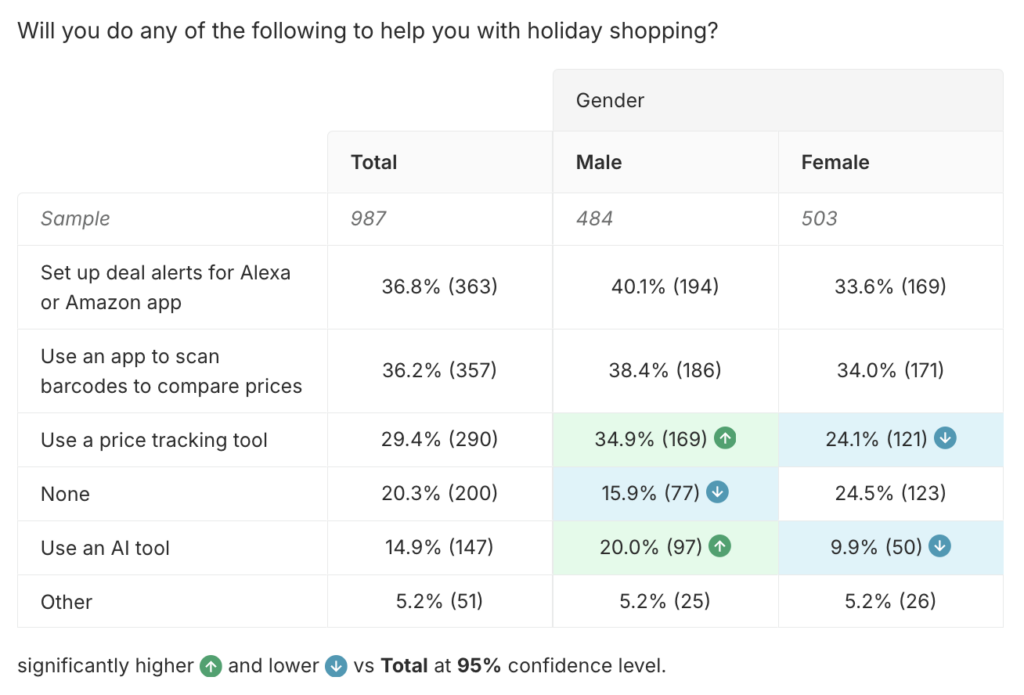
Price tracking is a key usage for AI with more than 1 in 3 respondents (36.8%) setting up alerts for Alexa or Amazon app, or using an app to scan barcodes to compare prices.
The data shows that men are significantly more likely to use an AI tool or price tracking tool overall. This suggests a gender gap in AI adoption, which marketers and retailers might address through targeted campaigns emphasizing ease of use and accessibility for female shoppers.
How people are dealing with holiday stress
As most people can relate to, the holidays are a time of mixed emotions.
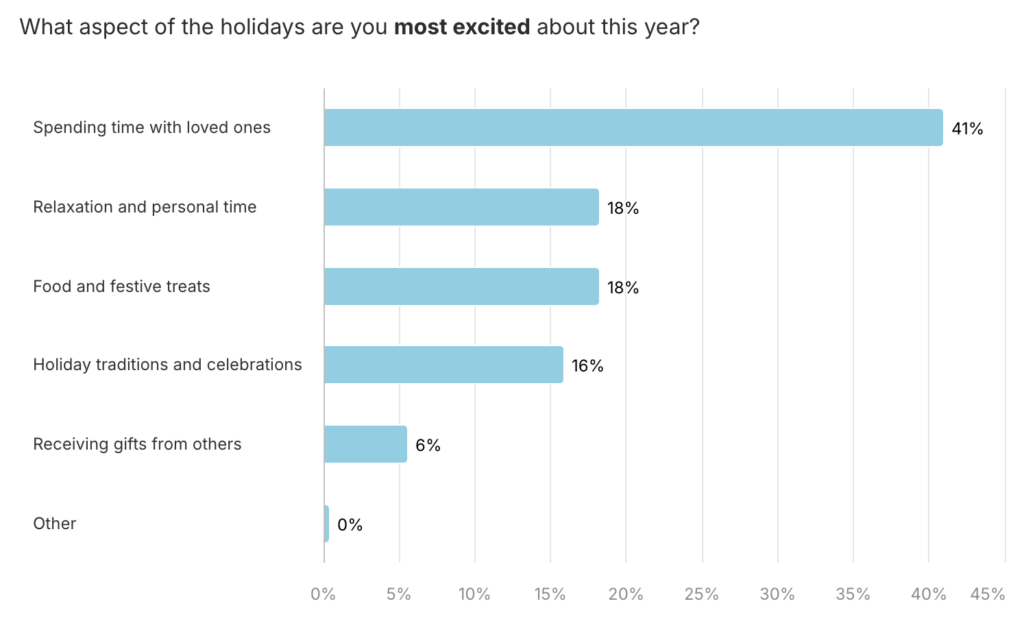
For 41% of respondents, spending time with loved ones is the most anticipated aspect of the season. Relaxation, holiday traditions, and festive treats also bring joy, and despite the commerciality of the season, receiving gifts ranked lowest as an exciting factor of the season with only 5.6% prioritizing this as the most exciting aspect.
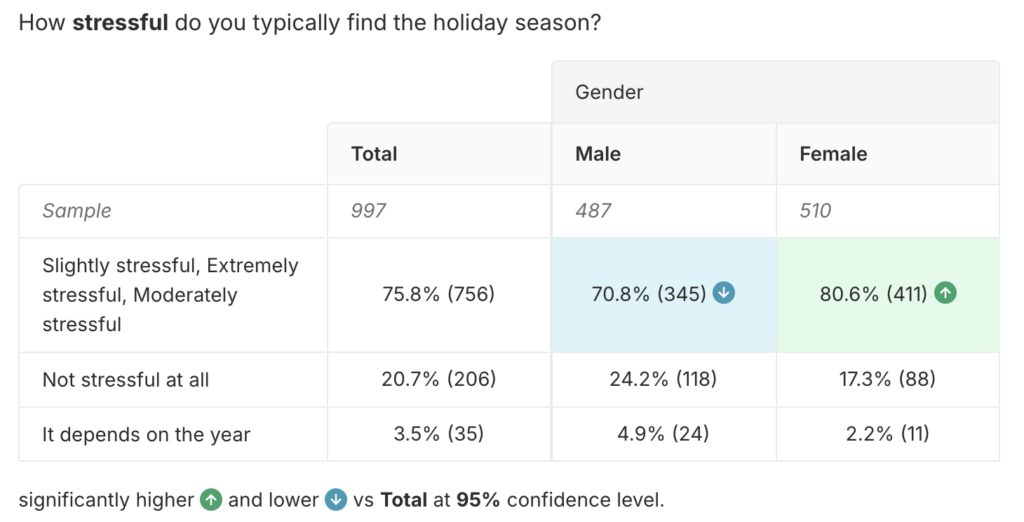
Unsurprisingly, stress remains a common theme during this time of celebration, with 3 in 4 (75.8%) respondents finding the season stressful, and with women feeling the stress significantly more.
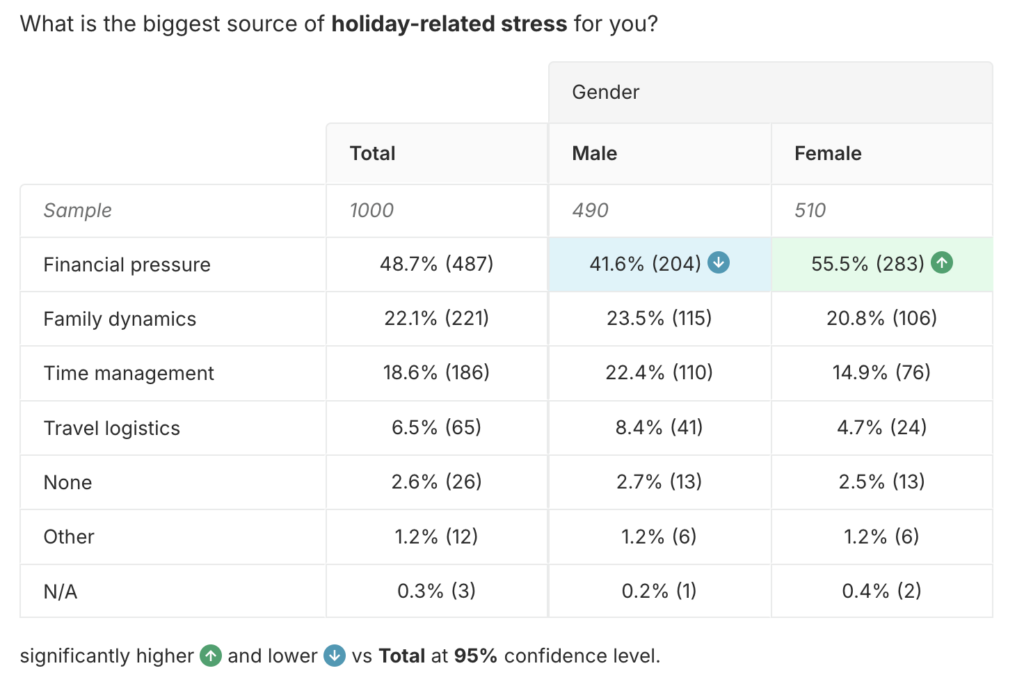
Beyond financial concerns, family dynamics (22.1%) and time management (18.6%) contribute to the strain. Women are feeling the financial pressure significantly more than men.
Shifts in societal norms and political climates have also influenced holiday traditions. Close to 2 in 3 (62.3%) respondents report noticing some sort of change in their holiday traditions due to shifts in the political climate or societal norms.
All in all, the 2024 holiday season reflects a blend of tradition and adaptation. Whether gathering around the table or scaling back festivities, shopping in store or online, or feeling stressed and excited, the holidays remain a time for connection and joy.